The Politics of Unsolved Problems
This is The Reality of President Trumps Executive Order on Birthright Citizenship and Why We must Stop the Madness.
 Rick Hallman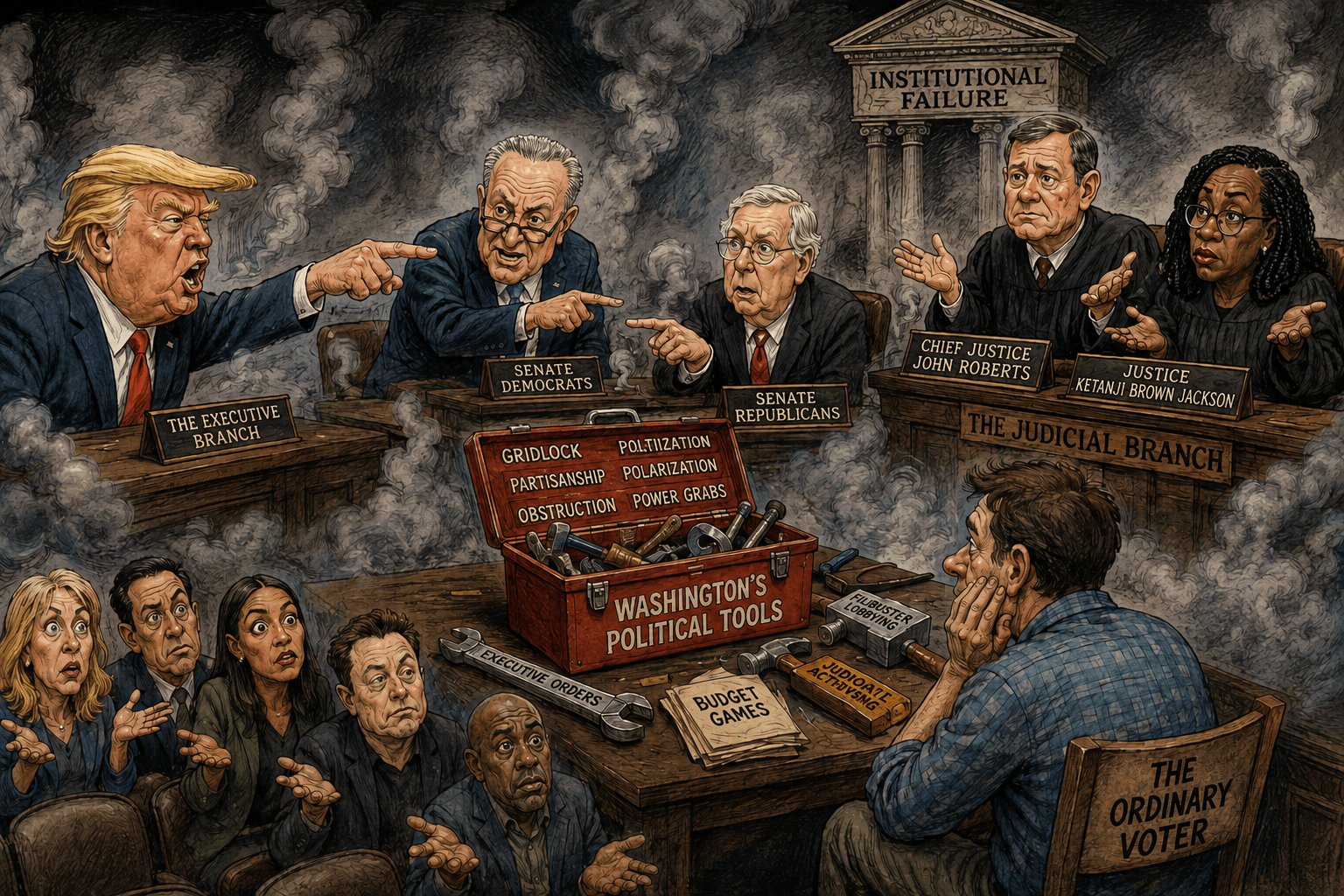
________________________________________
When Problems Become Political Currency
________________________________________
Congress leaves the issue unresolved, courts are asked to decide, but courts provide limited answers because the law has not been made or changed, presidents act within the uncertainty and temporary fix of Executive Orders, the issue returns for the next election cycle and the parade marches on.
The Supreme Court had another opportunity to provide clarity on one of the nation's longest-running constitutional debates. Instead, the Court resolved a procedural question and left the central issue of birthright citizenship unanswered. The decision did not settle the constitutional debate; it allowed the debate to continue.
And that is where Congress must answer for its failure. If this question has existed for generations, if politicians from both parties have repeatedly discussed it, and if the courts continue to be asked to resolve it, why has Congress refused to provide a clear legislative answer? Their job is to make laws.
Even one of the dissenting opinions argued that the Court should have addressed the broader question rather than allowing the issue to remain unresolved. The result was familiar to Americans who have watched Washington struggle with difficult issues for decades: the can was once again kicked down the proverbial road.
For decades, one of the most controversial questions in American immigration policy has been left unresolved—not because the issue lacked importance, but because Washington lacked the political will to address it. President Donald Trump's effort to challenge the long-standing interpretation of birthright citizenship has once again thrust that debate into the national spotlight. Whether one agrees with his approach or not, one thing is undeniable: the conversation is long overdue.
Supporters of the current interpretation often point to the Fourteenth Amendment as though the matter is settled beyond debate. They argue that anyone born on American soil is automatically a citizen of the United States. I believe the Constitution deserves more careful reading.
The Fourteenth Amendment states that those "born or naturalized in the United States, and subject to the jurisdiction thereof," are citizens. While those words have been interpreted broadly for generations, the phrase "subject to the jurisdiction thereof" has been debated by constitutional scholars since the Amendment was ratified. Many contend that the authors intended the phrase to apply to those who owed complete political allegiance to the United States—not merely anyone physically present within our borders.
This is where I believe both the Supreme Court and Congress have failed.
The Supreme Court has had opportunities over the years to provide greater constitutional clarity. Instead, the legal landscape has remained clouded by interpretations that many Americans believe extend beyond the original meaning of the Fourteenth Amendment. Whether the Court's reasoning is ultimately correct is a matter of legitimate legal debate, but what is beyond dispute is that the uncertainty has persisted for decades.
________________________________________
Why Congress Never Solves Anything
________________________________________
Congress, however, bears even greater responsibility. They are the body of law; they have had the opportunity to fix and define the issue yet have not.
If lawmakers believed the Constitution required universal birthright citizenship regardless of a parent's immigration status, they could have enacted legislation reinforcing that position. If they believed the current interpretation was too broad, they could have pursued legislative reforms or even proposed a constitutional amendment. Instead, Congress chose the safest political option of all: doing nothing and use it for their political talking point.
Perhaps the most frustrating aspect of this debate is that it has become one of the few issues that seems to unite politicians only when they are campaigning. For decades, leaders from both political parties have spoken about the need to secure the border, end incentives for illegal immigration, and address what critics call "anchor babies"—the idea that having a child born in the United States can provide immigration benefits to family members through chain migration. Yet once elected, meaningful action has rarely followed.
The list is surprisingly long. During various campaigns and public statements, leaders such as Ronald Reagan, Bill Clinton, George W. Bush, Barack Obama, Joe Biden, and Senator Chuck Schumer have all acknowledged serious flaws in America's immigration system and the incentives that encourage illegal immigration. While they often proposed different solutions, many recognized that the status quo was unsustainable. Yet administration after administration and Congress after Congress, comprehensive reform failed to materialize.
That raises the question.
It is common knowledge that the majority of Americans believe immigration should have strict law, they should be enforced or the value of citizenship of this great nation becomes just another cheap talking point for propaganda of the nation we once were.
It leads to massive problems with issues like election integrity, census value, states’ rights, taxation, health and welfare and the list goes on. Without a true value of citizenship most problems become an extension of this failed debate.
If leaders from both parties have repeatedly acknowledged the problem, why has neither party successfully resolved it? Is the issue simply too politically difficult, or has it become too politically valuable to solve?
________________________________________
Washington's Tool Chest
________________________________________
Americans should ask themselves whether unresolved national issues have become political assets rather than policy failures. Immigration is hardly unique. The national debt, border security, entitlement reform, and countless other issues appear every election season accompanied by promises of immediate action, only to disappear once the ballots have been counted. Like him or not President Trump is the exception to this rule.
This pattern leads many Americans to wonder whether Washington has become more interested in preserving campaign issues than producing legislative results. Is it possible that both parties benefit from keeping certain controversies alive because they motivate voters, drive fundraising, and provide convenient campaign talking points every two or four years? This is evident when, like with immigration, both parties have shared the same context of the same content yet made no move to fix it.
I am not suggesting there is evidence of a formal conspiracy or secret agreement between Democrats and Republicans. But the incentives of modern politics often seem to reward delay more than decisive leadership. When solving a problem means losing one of your most effective campaign issues, the temptation to postpone reform becomes obvious.
Whether one calls it partisan dysfunction or something more troubling, the outcome is the same. Americans continue to wait while Congress debates, campaigns, and blames the other side. Constitutional questions remain unresolved, public confidence continues to erode, and meaningful reform is endlessly postponed. Even when both parties have used the same issue in the same context when out of power.
President Trump's actions did not create this debate. He exposed a debate Congress refused to have.
Whether his policy ultimately survives judicial review is almost secondary to the larger issue. Americans deserve a government willing to confront difficult constitutional questions instead of avoiding them for political talking points and pretend election issues.
The Constitution established three coequal branches of government for a reason. Courts interpret the law. Congress writes it. The Executive Branch enforces it. When Congress repeatedly declines to address major constitutional controversies, it shifts responsibility to the courts and forces presidents to test the limits of executive authority. That is not how our constitutional system was designed to function.
________________________________________
When Problems Become Political Currency
________________________________________
Reasonable people can disagree about what the Fourteenth Amendment requires. That disagreement is healthy in a constitutional republic. What is unhealthy is allowing unresolved constitutional questions to linger for generations because elected officials refuse to do the hard work of making law.
Perhaps the larger issue is not birthright citizenship at all. Perhaps it is whether Americans have become comfortable electing leaders who campaign on solving problems but govern by preserving them.
At some point, citizens have every right to ask whether our political system has become better at maintaining power than fulfilling its constitutional duty.
The real story is not simply whether one supports or opposes birthright citizenship. The real story is how Washington allowed one of the nation's most significant immigration questions to remain unresolved for generations. That failure belongs to Congress more than anyone else.
If President Trump's actions accomplish nothing else, they will have accomplished this: forcing the nation to finally confront a constitutional question that Congress has spent decades avoiding.
For that alone, this debate is worth having and this question must be asked. Why is it necessary for a president to be forced into making executive orders. Why is it necessary for the SCOTUS to be forced to make judgements on law that was never made, all because of the failure of the constitutional law-making body of this nation.
The Congress of the United State must do their job and stop kicking the can down the road for future election fodder.
Support Independent Conservative News
RWTNews is independent conservative news — no corporate backing, no agenda driven by advertisers. We rely entirely on readers like you to keep the lights on and the truth coming. If you've found value in what you read here, consider supporting us with a one-time or monthly contribution. Every dollar goes directly toward keeping this site running and growing.
Secured by Stripe. Your payment info is never stored on our servers.