War Powers Clock Debate Intensifies as Administration Claims Ceasefire Pauses 60-Day Limit
The 1973 War Powers Resolution requires the president to notify Congress within 48 hours of introducing U.S. forces into hostilities and limits unauthorized military engagements to 60 days unless Congress approves an extension or declares war.
 Tommy Flynn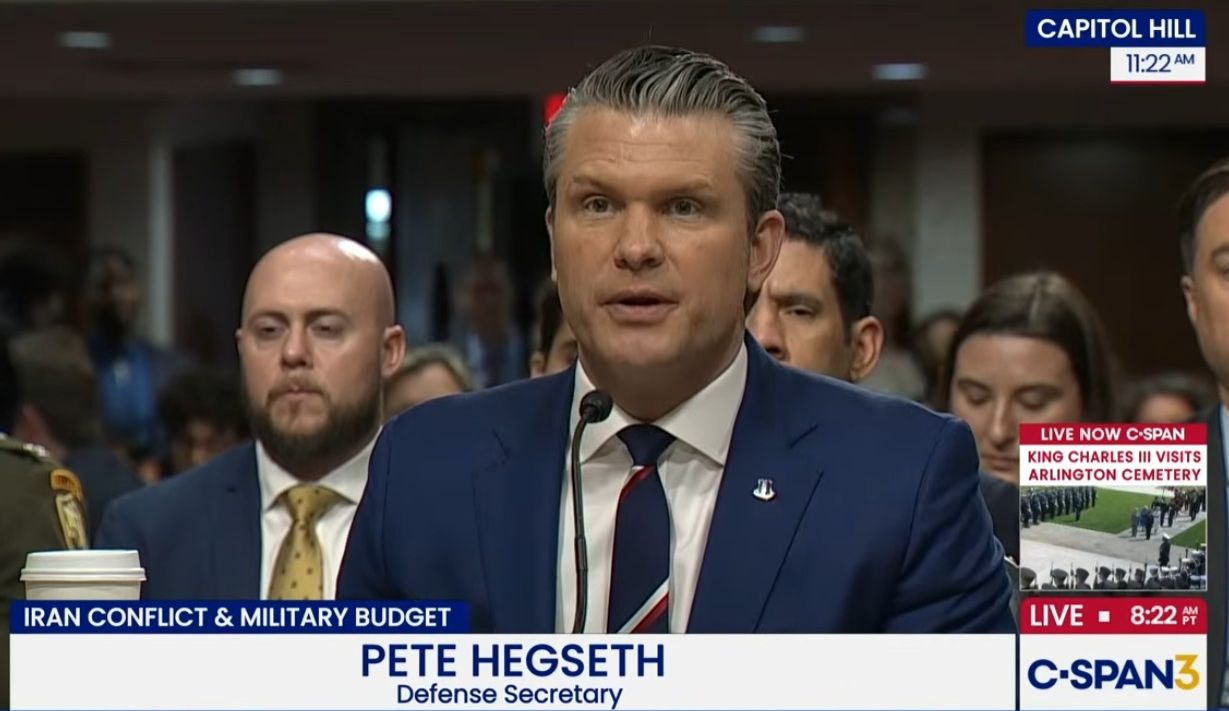
WASHINGTON — As the 60-day deadline under the War Powers Resolution approaches this Friday, the Trump administration is asserting that the U.S.-Iran ceasefire has paused or stopped the clock on congressional authorization requirements, while lawmakers from both parties question whether the law allows such a pause amid the ongoing naval blockade.
The 1973 War Powers Resolution requires the president to notify Congress within 48 hours of introducing U.S. forces into hostilities and limits unauthorized military engagements to 60 days unless Congress approves an extension or declares war. President Trump formally notified Congress on March 2 following initial U.S. strikes on Iran, setting the current deadline for May 1.
Defense Secretary Pete Hegseth told the Senate Armed Services Committee on Thursday that the administration views the ceasefire — announced in early April and later extended indefinitely — as having “terminated” active hostilities for purposes of the law. “We are in a ceasefire right now, which our understanding means the 60-day clock pauses or stops in a ceasefire,” Hegseth said. Senior administration officials have echoed this position, arguing the blockade and sporadic incidents in the Strait of Hormuz do not restart the clock.
Critics, primarily Democrats but also some Republicans, contend the War Powers Resolution contains no provision for pausing the timeline and that the continued naval blockade, enforcement actions against Iranian vessels, and U.S. military presence in the region still constitute hostilities. Sen. Susan Collins (R-Maine) broke with her party to vote for a Democratic-led resolution to limit further action, marking the first time she supported such a measure. Sen. Rand Paul (R-Ky.), a longtime skeptic of unauthorized military engagements, also backed the resolution, which ultimately failed 47-50 on the Senate floor.
The debate centers on a core legal question: Does a ceasefire automatically pause the 60-day clock, or does the law require Congress to affirmatively authorize any continued military involvement once the deadline arrives? The administration maintains the ceasefire effectively ended the hostilities that triggered the clock, while opponents argue the resolution’s text is clear and does not contemplate pauses.
The situation remains fluid. The indefinite ceasefire has prevented large-scale fighting, but the U.S. naval blockade of Iranian ports continues, and Iran has carried out limited enforcement actions against commercial shipping in the Strait of Hormuz. No new congressional authorization has been sought or granted.
With the deadline looming, the administration’s interpretation allows operations to continue without immediate congressional approval, while critics warn that bypassing the law undermines Congress’s constitutional role in decisions of war and peace. The outcome could set a precedent for how future presidents interpret the 1973 statute during periods of limited or paused conflict.
Lawmakers on both sides continue to debate the issue as the May 1 deadline arrives, with no resolution yet on whether the clock has truly stopped or simply continues to run.
Support Independent Conservative News
RWTNews is independent conservative news — no corporate backing, no agenda driven by advertisers. We rely entirely on readers like you to keep the lights on and the truth coming. If you've found value in what you read here, consider supporting us with a one-time or monthly contribution. Every dollar goes directly toward keeping this site running and growing.
Secured by Stripe. Your payment info is never stored on our servers.