Vindicated! Democrat-Appointed Judge Dismisses Lawfare Case Against the Michigan Alternate Electors
Judge Simmons, appointed by Governor Gretchen Whitmer in 2021, methodically dismantled the prosecution's case during a preliminary examination that spanned months.
 Tommy Flynn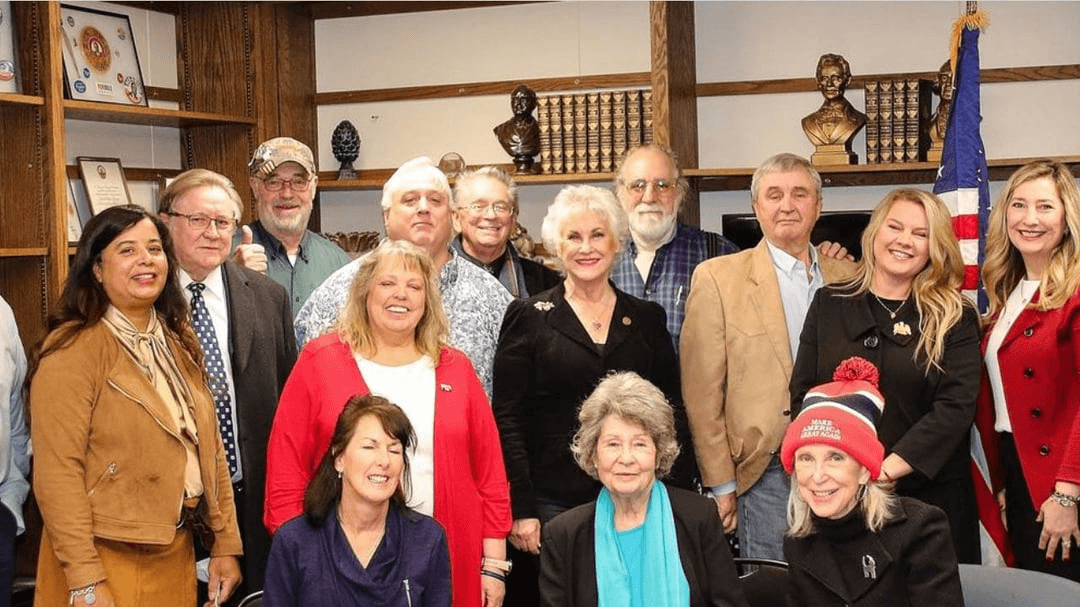
In a resounding affirmation of justice over political persecution, Ingham County District Court Judge Kristen D. Simmons dismissed all charges against 15 Michigan Republicans who served as alternate electors in the 2020 presidential contest. The ruling, issued on September 9, 2025, halts a protracted campaign of lawfare waged by Democratic Attorney General Dana Nessel, who had accused the group of forgery and election-related felonies in an effort to criminalize their lawful challenge to contested results. This decision not only clears the defendants but also underscores the weaponization of the justice system to silence those questioning irregularities in the 2020 election.
The case traces back to December 14, 2020, when the alternate electors convened at the Michigan Republican Party headquarters in Lansing. Amid widespread concerns over voting irregularities, including unexplained ballot dumps and procedural anomalies in key counties, they signed certificates casting electoral votes for President Trump. This parallel slate was prepared to preserve legal options should ongoing court challenges and legislative reviews overturn the certified results favoring Joe Biden. Denied entry to the state Capitol by authorities, the group proceeded outside the building, emphasizing their actions as a contingency measure rooted in constitutional processes rather than an attempt to subvert the official electors.
Nessel, a vocal critic of President Trump, launched her investigation in 2022 and filed charges in July 2023, accusing the defendants of multiple felonies including conspiracy to commit forgery (punishable by up to 14 years), uttering and publishing false documents, and election law violations. The indictment portrayed their meeting as a secretive plot to defraud the state, ignoring the public nature of the gathering and the defendants' assertions that they acted in good faith to address potential fraud. Among the accused were elderly party activists and community leaders, many facing the prospect of lengthy prison terms for what amounted to exercising their right to petition for redress.
Judge Simmons, appointed by Governor Gretchen Whitmer in 2021, methodically dismantled the prosecution's case during a preliminary examination that spanned months. In her ruling, she found insufficient evidence of intent to defraud, a critical element for the charges. Simmons highlighted testimony from immunized elector James Renner, who confirmed the group's belief that they were fulfilling a civic duty amid unresolved election disputes. She criticized lead investigator Howard Shock's handling of the probe and noted the "weird" decision to pose for photos during the signing—if a crime were afoot, such openness would be unlikely. Ultimately, Simmons concluded the electors were motivated by a genuine pursuit of legal remedies, not criminal deceit, and dismissed the case in its entirety.
This outcome aligns with historical precedents where alternate electors have played a role in resolving disputed presidential contests without facing prosecution. In the 1876 election between Rutherford B. Hayes and Samuel Tilden, multiple states submitted competing slates amid fraud allegations, leading to a congressional commission that settled the matter without criminalizing participants. Similarly, during the 1960 race, Hawaii Democrats submitted an alternate slate while challenging Richard Nixon's narrow win; once certified for John F. Kennedy, their votes were accepted without backlash. These instances demonstrate that alternate electors serve as a safeguard in close or contested races, preserving pathways for judicial or legislative resolution rather than constituting fraud.
The Michigan electors' intent was clear: to tee up a legal battle over evidence suggesting the 2020 election may have been stolen through mechanisms like unsecured drop boxes and unverified mail-in ballots. Their slate was never submitted to Congress or intended as a replacement for the certified votes; instead, it positioned them to act if courts validated President Trump's challenges. This approach mirrors strategies in other states, where similar efforts aimed to force transparency and accountability in a process marred by anomalies.
Nessel's office, which had boasted of stacking the deck by prosecuting in deep-blue Lansing, now faces scrutiny for overreach. The dismissal exposes the broader lawfare strategy deployed against those daring to question the 2020 results, from President Trump himself to grassroots activists. As similar cases falter nationwide, this ruling stands as a beacon of hope, reaffirming that the justice system can still prevail against partisan abuse and protect the right to contest elections without fear of reprisal.
Join the Team
Are you trying to break into news writing but struggling to get published at major outlets? At RWT News, we're always looking for talented, motivated writers who share our commitment to straightforward, factual conservative journalism. If you believe in honest reporting and want real experience and bylines, we'd love to hear from you.
Visit our Join the Team page to learn more and contact us directly.