USS George Washington Heads to Middle East to Relieve Long-Deployed Abraham Lincoln Amid Crew Strain Reports
The Lincoln’s long deployment reflects the broader demands placed on the carrier force by the Iran-related operations, which have required sustained naval presence to enforce the blockade and support related missions.
 Tommy Flynn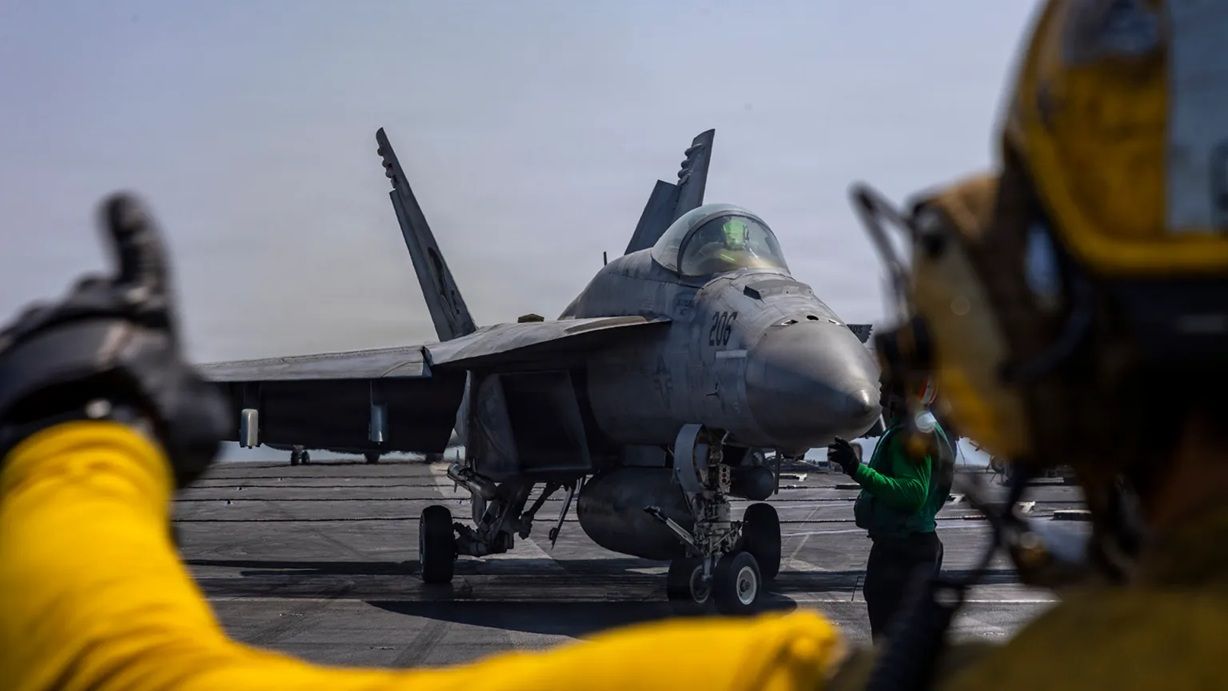
The U.S. Navy is directing the aircraft carrier USS George Washington toward the Middle East to replace the USS Abraham Lincoln, which has remained at sea for more than 250 consecutive days supporting operations related to the conflict with Iran.
The George Washington, the Navy’s only permanently forward-deployed carrier based in Yokosuka, Japan, recently completed a port visit in Da Nang, Vietnam, and has been tracked moving westward through the Singapore Strait and the Strait of Malacca. That route places the ship on course for the Indian Ocean and eventual arrival in the Arabian Sea region, where it is expected to take over the Lincoln’s duties as one of the carriers assigned to the area. Officials have described the rotation as part of a previously planned carrier schedule, though the move comes as concerns about conditions and morale aboard the Lincoln have drawn public attention and questions from lawmakers.
The Abraham Lincoln, homeported in San Diego, departed in late November 2025 for what was initially framed as a routine deployment. It was redirected to the Middle East in January 2026, arriving ahead of the start of major U.S. military operations against Iran at the end of February. Since then the carrier and its roughly 5,000 sailors and Marines have conducted sustained operations, including support for strikes and the enforcement of a naval blockade of Iranian ports through the Strait of Hormuz. The ship has not made a port call in well over 200 days, setting a modern record for continuous time underway for an aircraft carrier. It has logged more than 10,000 aircraft sorties and expended substantial ordnance while remaining on station.
Reports from family members and specialized military outlets have described difficult living conditions during the extended deployment. Accounts include periods of limited food variety, shortages of basic hygiene supplies such as soap and toothpaste, plumbing problems, mold in showers, stretches without hot water, and disrupted mail delivery that delayed or lost care packages. Mental health concerns have also been raised, with family members reporting that some sailors expressed severe fatigue and despair. Multiple accounts describe incidents in which crew members attempted or prepared to jump overboard; in at least one case a sailor went into the water and was quickly recovered by helicopter, treated by the ship’s medical staff, and transferred for further care. Other sailors reportedly intervened to prevent shipmates from going over the side.
Navy officials have pushed back on characterizations of the conditions. Defense Secretary Pete Hegseth has said reports of problems aboard the Lincoln are “completely misrepresented,” adding that the service provides every ship and crew with everything possible under the circumstances and expressing respect for sailors operating in high-tempo, austere environments with fewer opportunities for port visits. The Navy has stated it has not observed an increase in suicidal ideations or attempts on the Lincoln and that medical, religious, and mental health professionals remain available. Officials noted that combat operations disrupted traditional regional supply hubs, requiring prioritization of mission-critical items such as food, followed by hygiene supplies and mail. They have assured that sailors currently have access to clean water and improved meal options.
Acting Navy Secretary Hung Cao met with more than 200 family members in a town hall last week where relatives voiced frustration over the lack of a clear return timeline and the prolonged separation. Democratic senators including Richard Blumenthal have written to defense leadership seeking detailed information on crew readiness, living conditions, and the necessity of the continued deployment. Other lawmakers have called the treatment of the crew concerning and pressed for greater transparency and oversight.
The Lincoln’s long deployment reflects the broader demands placed on the carrier force by the Iran-related operations, which have required sustained naval presence to enforce the blockade and support related missions. Other carriers have also experienced extended or disrupted schedules. The arrival of the George Washington is expected to allow the Lincoln’s crew to rotate home after one of the longest continuous at-sea periods in recent U.S. Navy history, while maintaining the required carrier presence in the region. Exact timelines for the relief remain subject to operational security considerations.
Support Independent Conservative News
RWTNews is independent conservative news — no corporate backing, no agenda driven by advertisers. We rely entirely on readers like you to keep the lights on and the truth coming. If you've found value in what you read here, consider supporting us with a one-time or monthly contribution. Every dollar goes directly toward keeping this site running and growing.
Secured by Stripe. Your payment info is never stored on our servers.