US Strikes Military Targets on Iran's Kharg Island, Sparing Vital Oil Facilities
Kharg Island, a 20-square-kilometer coral outcrop 15 miles off Iran's coast, serves as the primary hub for Iran's oil industry, handling approximately 90% of the country's crude exports—around 950 million barrels annually—and generating tens of billions in revenue.
 Tommy Flynn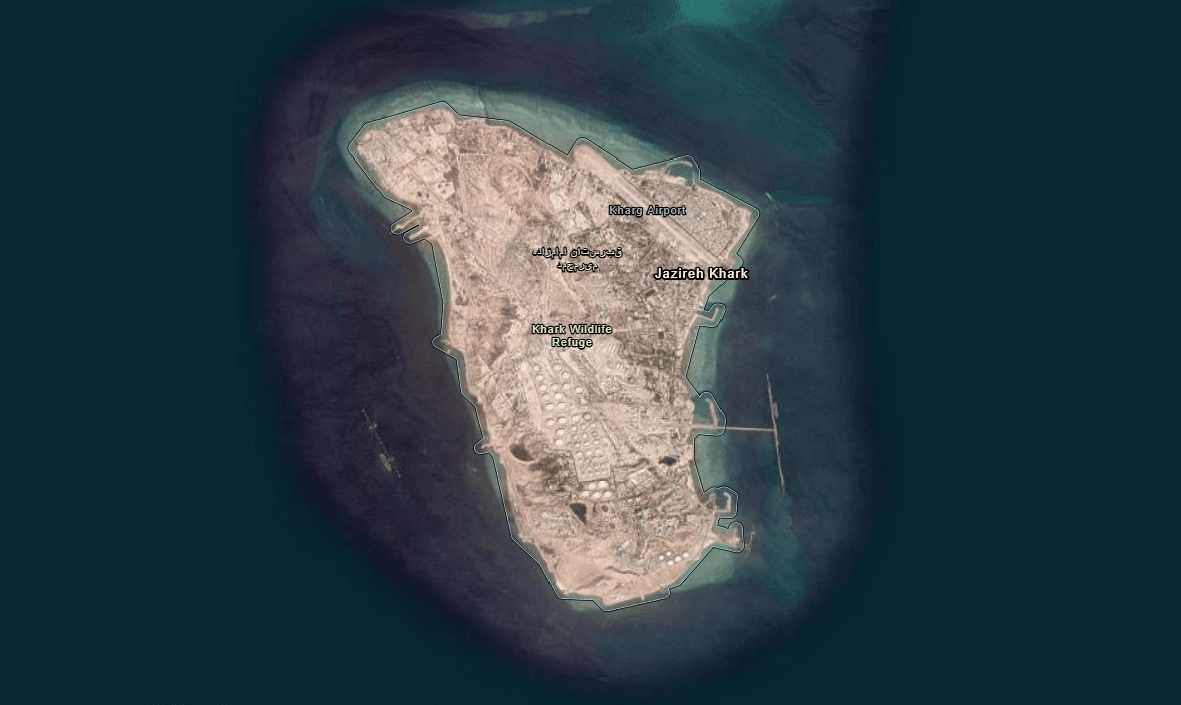
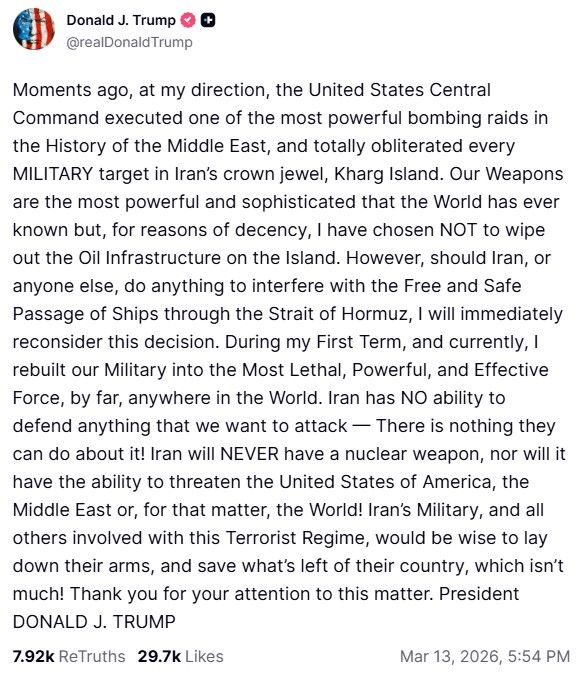
U.S. forces conducted a major bombing raid on March 13, 2026, targeting and obliterating all military installations on Iran's Kharg Island in the Persian Gulf, while deliberately avoiding damage to the island's critical oil export infrastructure. The strikes, part of Operation Epic Fury amid the ongoing U.S.-Iran conflict, focused on military assets without impacting oil terminals, storage tanks, or pipelines. President Donald Trump described the operation as one of the "most powerful bombing raids in the History of the Middle East."
In a Truth Social post, Trump explained the decision to spare the oil facilities "for reasons of decency," but warned: "However, should Iran, or anyone else, do anything to interfere with the Free and Safe Passage of Ships through the Strait of Hormuz, I will immediately reconsider this decision." He emphasized potential escalation if Iran continues blocking the strait.
Kharg Island, a 20-square-kilometer coral outcrop 15 miles off Iran's coast, serves as the primary hub for Iran's oil industry, handling approximately 90% of the country's crude exports—around 950 million barrels annually—and generating tens of billions in revenue. It features massive storage tanks, subsea pipelines from major fields like Ahvaz and Gachsaran, and deep-water jetties for supertankers, making it a strategic vulnerability for Iran's economy and a potential choke point for global energy markets. Analysts note that disrupting Kharg could cripple Tehran's revenue but risk spiking global oil prices.
Iranian officials reported normal oil operations post-strike and vowed retaliation if energy infrastructure is targeted. The attack escalates tensions, with potential implications for the Strait of Hormuz's security.
Join the Team
Are you trying to break into news writing but struggling to get published at major outlets? At RWT News, we're always looking for talented, motivated writers who share our commitment to straightforward, factual conservative journalism. If you believe in honest reporting and want real experience and bylines, we'd love to hear from you.
Visit our Join the Team page to learn more and contact us directly.