U.S. Special Operations Forces Rescue F-15E Weapons Officer After 48-Hour Evasion in Iran
What we know so far about how the whole operation went down.
 Tommy Flynn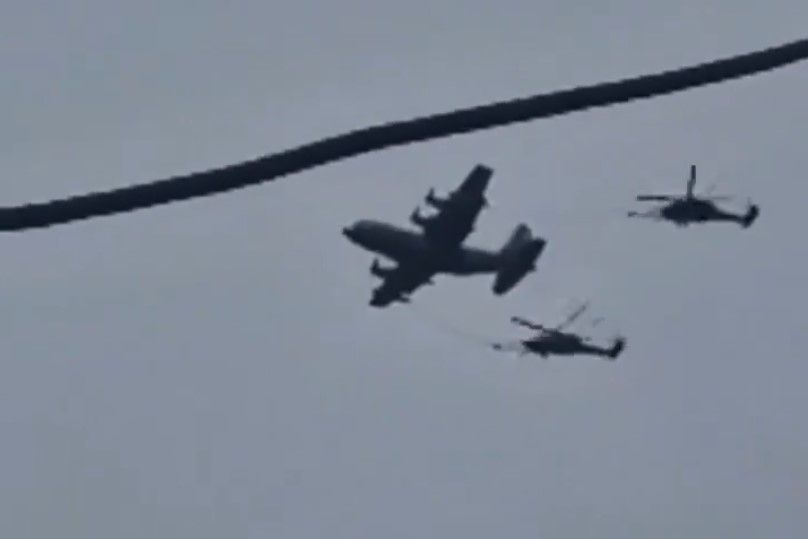
WASHINGTON – U.S. special operations forces successfully rescued the weapons systems officer of a downed F-15E Strike Eagle after he evaded Iranian forces for nearly two days deep inside hostile territory, Pentagon officials confirmed late April 5, 2026.
The F-15E was shot down by Iranian air defenses on Friday, April 3, over southwestern Iran. Both the pilot and the weapons systems officer (a colonel) ejected safely. The pilot was recovered within hours by U.S. forces. The weapons officer, however, landed in a rugged mountainous area and spent the next 36–48 hours on the run.
According to officials and reporting from The New York Times and The War Zone, the airman used standard Survival, Evasion, Resistance, and Escape (SERE) training. He hiked several miles to an elevated ridge line to improve his chances of detection, hid in a mountain crevice, and activated his emergency beacon while armed only with a pistol and carrying a communication device.
The rescue mission was one of the most complex and high-risk combat search-and-rescue operations in recent U.S. history. It involved Navy SEAL Team 6, Air Force pararescuemen, extensive intelligence and CIA support (including a deception operation to mislead Iranian forces), and heavy air cover. U.S. aircraft, including an A-10 Warthog providing close air support, engaged enemy forces. The A-10 was later shot down near the Strait of Hormuz; its pilot ejected safely and was rescued.
During the operation, two U.S. HH-60G Jolly Green II rescue helicopters came under heavy ground fire from Iranian Revolutionary Guard Corps and Basij militia forces. Both helicopters were damaged but returned safely with no U.S. fatalities. A temporary forward air refueling point was reportedly established in contested territory to support the extraction.
The weapons officer sustained injuries during the ordeal but is expected to make a full recovery. All U.S. personnel involved in the mission are now safely out of Iran.
President Trump announced the successful rescue on Truth Social early Sunday morning, calling it a “dramatic” and highly effective operation. The rescue marks a significant operational success amid the broader U.S.-Iran conflict that began with American and Israeli strikes on February 28, 2026.
The Pentagon has released limited details to protect tactics and ongoing operations. This is a developing story.
Join the Team
Are you trying to break into news writing but struggling to get published at major outlets? At RWT News, we're always looking for talented, motivated writers who share our commitment to straightforward, factual conservative journalism. If you believe in honest reporting and want real experience and bylines, we'd love to hear from you.
Visit our Join the Team page to learn more and contact us directly.