U.S. Navy’s Saronic Corsair Autonomous Drone Makes History by Rescuing Two Downed Apache Pilots Near Strait of Hormuz
The AI-powered unmanned vessel reached the crew first after their helicopter was hit and ditched in the sea, highlighting the rapid rise of autonomous systems in modern military operations.
 Tommy Flynn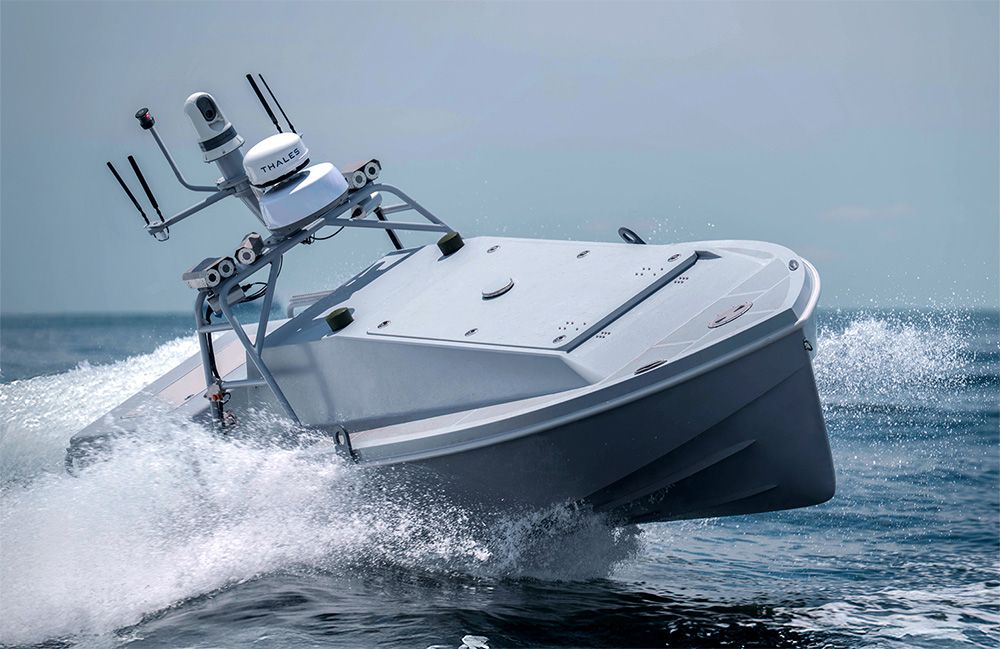
Washington, D.C. – In a dramatic demonstration of emerging military technology, a U.S. Navy Saronic Corsair autonomous surface vessel (USV) located and rescued two U.S. Army pilots after their AH-64 Apache helicopter was hit and ditched into the sea near the Strait of Hormuz on June 8-9, 2026. The operation marked the first known use of an unmanned surface vessel for personnel recovery in a combat-adjacent environment.
The crew escaped the sinking aircraft after it was reportedly struck by an Iranian drone during a routine patrol. Using flotation devices, the pilots spent roughly two hours in the water off Oman’s coast before the Corsair arrived on scene. U.S. Central Command coordinated the response with support from overhead assets including MQ-9 Reaper drones. The Corsair retrieved the crew from the water, transported them a short distance, and enabled their hoist transfer to a rescue helicopter. Both pilots were reported stable with no serious injuries. President Donald Trump confirmed the successful outcome, noting the pilots were “fine.”
The Corsair represents a major leap forward in naval technology. Developed by Austin, Texas-based Saronic Technologies, the 24-foot unmanned vessel combines speed, endurance, and advanced AI to operate with minimal human oversight in challenging conditions. It boasts a range exceeding 1,000 nautical miles, top speeds over 35 knots, and a 1,000-pound payload capacity. Equipped with 360-degree passive sensors for day-and-night operations, the Corsair navigates autonomously, detects objects, and executes missions while relaying real-time data.
The Corsair operates under U.S. 5th Fleet’s Task Force 59, the Navy’s dedicated unit for integrating unmanned and AI systems in the Middle East. Established in 2021, Task Force 59 has logged tens of thousands of operational hours, building mesh networks of manned and unmanned assets for maritime domain awareness, force protection, and rapid response. This rescue highlights how these systems excel in high-threat areas like the Strait of Hormuz amid ongoing Iran tensions.
The event underscores an exciting acceleration in autonomous technology. Just a few years ago, such capabilities were largely experimental; today, AI-driven USVs like the Corsair can perform complex, lifesaving tasks in contested waters without risking additional crew. These platforms are attritable — affordable enough to deploy in numbers — and adaptable for surveillance, logistics, mine countermeasures, swarm operations, and more. The Navy envisions hybrid fleets where unmanned systems extend reach, reduce costs, and enhance survivability against peer adversaries.
Saronic and military officials expressed pride in the milestone. A Saronic spokesperson confirmed the Corsair’s role, while CENTCOM highlighted the rapid integration of autonomous tech. This success points to broader transformation: AI and autonomy are moving from niche tools to core components of modern warfare, enabling persistent presence, faster decision-making, and safer operations for service members.
The Corsair’s performance in the high-stakes rescue of the Apache crew signals a promising future where American technological ingenuity continues to deliver decisive advantages on the battlefield and beyond.
Join the Team
Are you trying to break into news writing but struggling to get published at major outlets? At RWT News, we're always looking for talented, motivated writers who share our commitment to straightforward, factual conservative journalism. If you believe in honest reporting and want real experience and bylines, we'd love to hear from you.
Visit our Join the Team page to learn more and contact us directly.