U.S. Completes Iraq Withdrawal as Iran-Backed Militias Keep Their Arms
The Sept. 30 deadline was set in a 2024 U.S.-Iraq agreement negotiated under President Joe Biden and carried through by the Trump administration. Most U.S. forces left federal Iraq in 2025. Several hundred remained in the Kurdistan region until this week.
 Tommy Flynn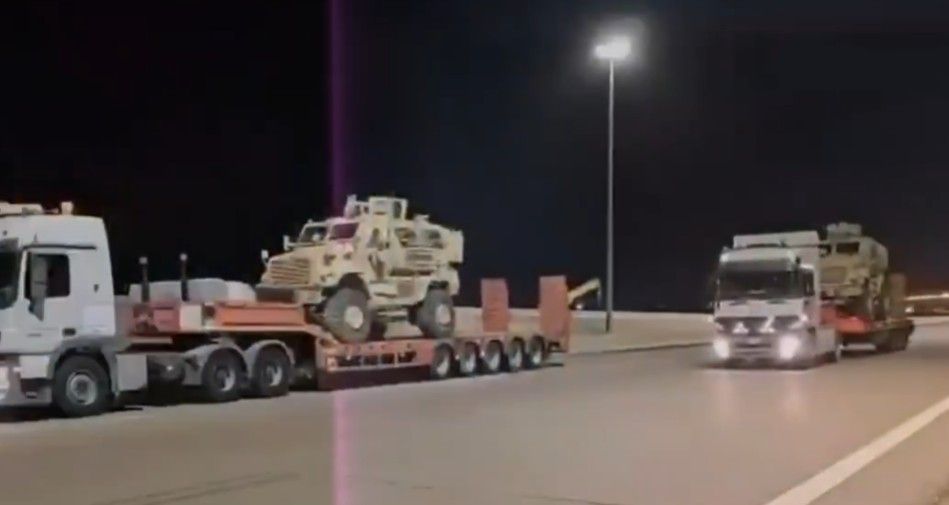
The U.S. military said Wednesday it has finished pulling the last American troops and equipment out of Iraq, closing the Iraq chapter of Operation Inherent Resolve after 12 years of the anti-ISIS campaign and more than two decades after the 2003 invasion. Pentagon spokesman Sean Parnell called the departure from Erbil Air Base in the Kurdish north an “orderly” end to a mission that “defeated ISIS as an organized military threat.” Coalition headquarters for residual counter-ISIS work is shifting toward Jordan. Baghdad called the date a sovereignty milestone. Iran-aligned militias called it a victory. Kurdish officials and some Iraqi security officers warned of a vacuum.
The Sept. 30 deadline was set in a 2024 U.S.-Iraq agreement negotiated under President Joe Biden and carried through by the Trump administration. Most U.S. forces left federal Iraq in 2025. Several hundred remained in the Kurdistan region until this week. President Trump stood with Prime Minister Ali al-Zaidi at the White House in July and said, “we don’t think we need the military there anymore,” while al-Zaidi said U.S. forces would be out by Sept. 30 “while U.S. companies will be inside Iraq.” About 4,500 Americans died in Iraq over the longer war. Seven of 18 U.S. service members listed as killed in this year’s Iran conflict died in Iraq; the last was an Army sergeant killed in July during a controlled drone detonation near Erbil. Bases in the north had come under repeated attack since the U.S.-Iran war opened Feb. 28.
Baghdad had tied the same Sept. 30 date to a pledge to bring non-state weapons under government control. That deadline has been postponed to June 30, 2027. Al-Zaidi told the United Nations last week the state should hold “weapons and tools of power.” He has described a 90-day period after the U.S. exit in which armed groups and U.S. forces would refrain from attacks, then a longer handover. Asaib Ahl al-Haq, Kataib Imam Ali, and Moqtada al-Sadr’s Saraya al-Salam say they have placed weapons under state authority. Kataib Hezbollah and Harakat Hezbollah al-Nujaba have refused to disarm until foreign troops are gone — a condition the withdrawal now meets without those groups surrendering arms. Iraqi analyst Sajad Jiyad said before the deadline that there would be “no disarming of any groups by the 30th of September.”
Abu Mojtaba al-Yasiri, a commander in the Islamic Resistance in Iraq umbrella of Iran-backed factions, told Reuters the pullout was “a historic victory for the Iraqi Islamic resistance groups” and “a crushing defeat for the American project.” Iran’s Islamic Revolutionary Guard Corps framed the exit as a win for the “axis of resistance.” Reuters reported that Iranian small-arms, drone, and short-range rocket flows into Iraq slowed when Tehran was fighting the United States directly, then increased this summer. Militias have used Iraqi territory in attacks tied to the Iran war and have coordinated with Yemen’s Houthis against Saudi targets. National Security Adviser Qassem al-Araji called the coalition mission’s end a major milestone for Baghdad.
Iraqi security officials in both the federal government and the Kurdish region told Reuters they have seen Islamic State sleeper-cell movement since the withdrawal date became public. ISIS no longer holds territory, but cells remain. Officials in Erbil have raised the loss of U.S. air defense and intelligence against drone and missile threats. The United States says it will keep a bilateral relationship focused on training, advising, and intelligence rather than combat bases on Iraqi soil. Al-Zaidi has argued that ending the troop presence weakens the militias’ public excuse for keeping parallel armies. The groups that rejected the original disarmament date remain armed on the day the last American convoy left Erbil.
Support Independent Conservative News
RWTNews is independent conservative news — no corporate backing, no agenda driven by advertisers. We rely entirely on readers like you to keep the lights on and the truth coming. If you've found value in what you read here, consider supporting us with a one-time or monthly contribution. Every dollar goes directly toward keeping this site running and growing.
Secured by Stripe. Your payment info is never stored on our servers.