U.S. Assessment: Cartels Import Ukraine Drone Tactics, Complicating Trump’s Drug War
An internal government assessment warns that explosive-drone skills coming home from the Russia-Ukraine war are changing the fight against Latin American trafficking networks.
 Tommy Flynn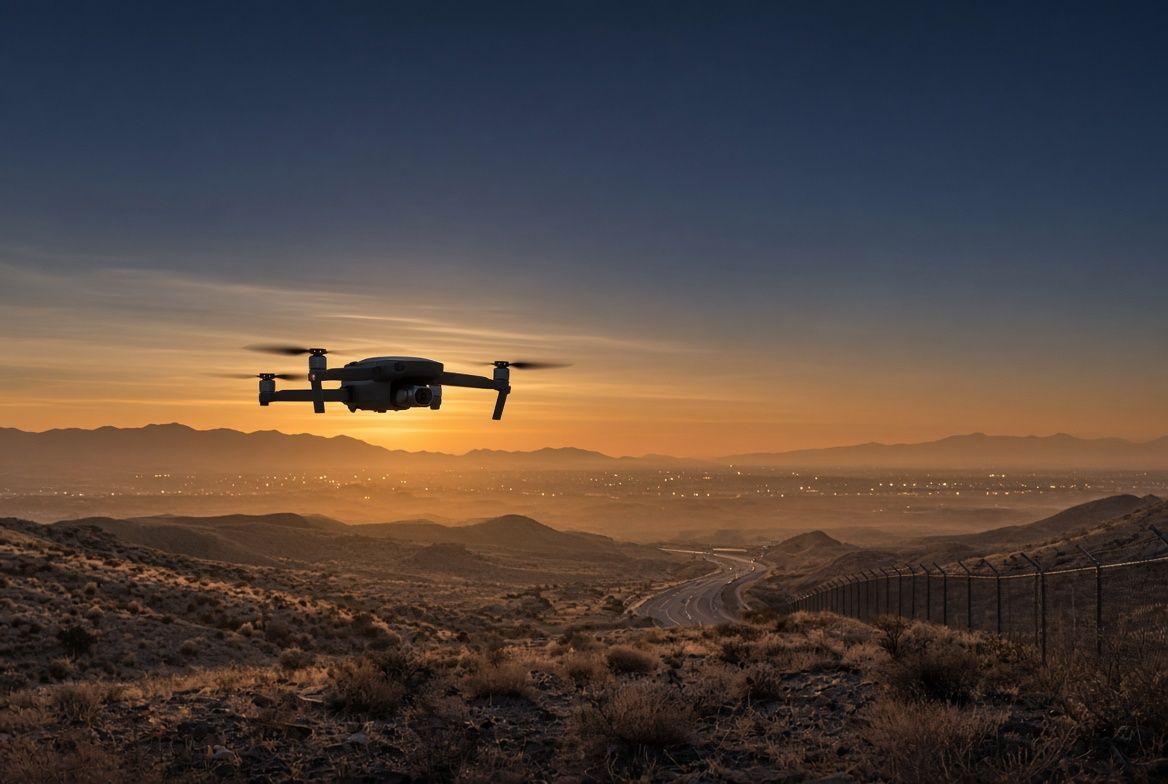
Latin American drug cartels are making “alarming” advances with explosive drones, and the shift is being fueled by fighters returning from the Russia-Ukraine war, according to a U.S. assessment described to The Washington Post on Tuesday.
A U.S. official familiar with the internal assessment, and others with knowledge of the matter, said the accelerating use of drones will significantly complicate the Trump administration’s campaign to stop narcotics from entering the United States and to dismantle the networks that produce and move them.
The assessment does not name a single public author. It matches a trail of reporting that has been building for more than a year. Last summer, European outlets reported that Mexican and Colombian cartel “volunteers” had entered Spanish-speaking units of Ukraine’s International Legion to learn first-person-view drone tactics. Ukraine is the current laboratory for cheap FPV attack drones. Instructors there have spent two years refining the methods now showing up south of the U.S. border.
Heritage Foundation analysis published Tuesday described the same pipeline. One Mexican recruit used the alias “Aguila-7,” entered in March 2024 on fraudulent Salvadoran papers, and showed enough skill in Lviv drone training that instructors asked for an investigation. That review, Heritage said, pointed toward ties to Mexico’s GAFE air-mobile special forces, a unit whose former members have migrated into cartel ranks. Ukraine’s Security Service opened a probe on July 30, 2025, after a warning from Mexico’s National Intelligence Center. Poland and Bulgaria opened their own inquiries into the smuggling routes that moved the recruits.
The Financial Times reported last August that more Colombians with organized-crime ties were still turning up in Ukraine with “unusual obsessions” about battlefield drone work. Private security firms based in Cali and Medellín were described as financiers and smugglers.
The tactics are not theoretical on the Mexican side of the border. Cartels have already used modified commercial drones to drop explosives on rivals and security forces. Heritage cited a coordinated three-drone FPV attack in Tijuana in October 2025 that destroyed six vehicles near the U.S. line. Colombian officials have reported Ukraine-style FPV drones in their own theaters, even if the most advanced charges and control links are not yet fully copied.
President Trump designated major cartels as foreign terrorist organizations on day one of the current term and ordered a campaign to destroy the networks, not only interdict the product. The United States has surged military and intelligence personnel into Mexico and the wider region and stationed thousands of troops along the southern border in areas the administration calls National Defense Areas. Cheap attack drones change the risk calculus for those forces. A raid on a lab, a riverine intercept, or a convoy on a border highway is a different problem if the other side can put an FPV warhead overhead for a few hundred dollars.
The assessment lands in the same week the White House is advertising a military-capable Triumphal Arch in Washington and an “AI Force.” The cartel problem is lower-tech and closer. It is also a feedback loop from a war Washington has funded. U.S. aid to Ukraine included drone technology and training. Some of that knowledge is now in the hands of groups the administration has labeled terrorists.
No public U.S. agency put a number Tuesday on how many cartel-linked fighters passed through Ukraine or how many drones are already in northwest Mexico. The official description was enough: the capability is accelerating, it is informed by that war, and it complicates the drug campaign the president has made a central national-security test.
Support Independent Conservative News
RWTNews is independent conservative news — no corporate backing, no agenda driven by advertisers. We rely entirely on readers like you to keep the lights on and the truth coming. If you've found value in what you read here, consider supporting us with a one-time or monthly contribution. Every dollar goes directly toward keeping this site running and growing.
Secured by Stripe. Your payment info is never stored on our servers.