US and Iran Report ‘Encouraging Progress’ in Swiss Talks as Washington Pauses Oil Sanctions and Tehran Agrees to IAEA Inspectors’ Return
U.S.-Iran talks in Switzerland show progress on a 60-day roadmap to final deal, with temporary sanctions relief and resumed IAEA inspections — but Lebanon tensions threaten to derail momentum.
 Tommy Flynn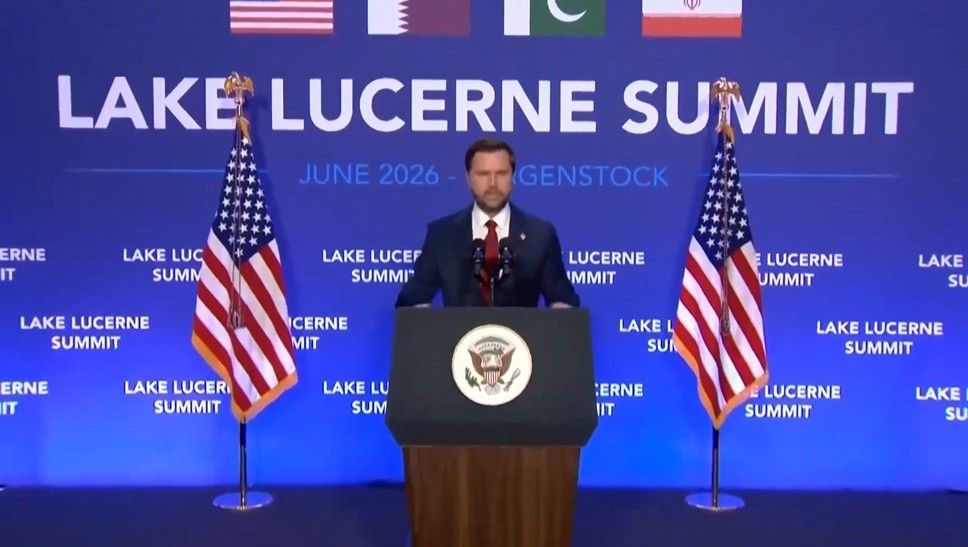
High-level negotiations between the United States and Iran in Switzerland concluded their opening round on June 22, 2026, with mediators from Pakistan and Qatar hailing “encouraging progress” toward a roadmap for a final settlement within 60 days, even as tensions over Lebanon and the Strait of Hormuz persisted.
The talks at the Bürgenstock resort, mediated by Pakistan and Qatar and hosted by Switzerland, followed a Memorandum of Understanding signed the previous week after roughly 40 days of direct fighting between the US and Iran and a fragile, repeatedly breached ceasefire. US Vice President JD Vance led the American delegation, joined by Special Envoy Steve Witkoff and Jared Kushner. Iran’s side included Foreign Minister Abbas Araghchi and Parliament Speaker Mohammad Bagher Ghalibaf.
Key Agreements and Immediate Steps
Mediators announced the creation of a High-Level Committee for political oversight, working groups on nuclear issues and sanctions implementation, and a dedicated contact channel plus “de-confliction cell” involving Lebanese authorities to stabilize the ceasefire in Lebanon and ensure open transit through the Strait of Hormuz. Technical talks are scheduled to resume immediately for the rest of the week.
In a concrete confidence-building measure, the US announced a temporary suspension of sanctions on Iranian oil and petrochemical exports, effective until August 21, 2026. US Treasury Secretary Scott Bessent cited Iran’s commitments to free transit in the Strait of Hormuz and the return of International Atomic Energy Agency (IAEA) inspectors as key factors. Some frozen Iranian assets were also released, and a major reconstruction and development plan for Iran was launched.
Vice President Vance described the outcome as laying “a very good foundation for a successful final deal,” framing it as a pragmatic “Trump deal” in which any unfrozen assets would support purchases of US agricultural goods like soybeans rather than regional proxies. He highlighted Iran’s agreement to invite IAEA inspectors back as “a major milestone… and the first step in permanently denuclearising” Iran.
Nuclear and Broader Issues
Detailed nuclear negotiations have not yet begun in earnest; Iranian officials described only a “very brief discussion” on the nuclear file with “no discussion of details.” Iran had suspended some IAEA cooperation and blocked inspectors from key sites following 2025 bombings by the US and Israel. The new commitment to resume inspections is seen as central to any longer-term accord addressing Iran’s nuclear program and enriched uranium stockpile.
Iranian Foreign Minister Araghchi posted on social media about progress ending the Lebanon war, waiving oil and petrochemical export restrictions, lifting blockades, releasing assets, and launching reconstruction efforts, calling the Lebanon de-confliction cell the “1st real test.”
Regional Flashpoints: Lebanon and Hormuz
The talks occur against the backdrop of ongoing conflict in Lebanon between Israel and Iran-backed Hezbollah, with the death toll exceeding 4,100 according to Lebanese health authorities. Israel has expressed skepticism about the US-Iran understanding and maintains forces in southern Lebanon, warning against Hezbollah rebuilding. A fragile calm held in parts of southern Lebanon by June 22, with some residents returning home, though no full resolution has been achieved.
On the Strait of Hormuz, Iran had claimed closure in response to Israeli actions in Lebanon and perceived US bad faith, but US Central Command and shipping data showed continued transit of merchant vessels, including significant oil volumes. Iran appears interested in monetizing the waterway as part of any deal, while a dedicated communication channel aims to prevent incidents.
Tensions flared during the talks when Iran’s delegation briefly walked out after President Trump threatened renewed strikes over Hezbollah activities in Lebanon; talks resumed shortly afterward.
Market and Strategic Context
Markets reacted with slipping crude prices and gains in Asian stocks amid optimism over reduced risk of broader disruption. The developments mark a potential de-escalation after months of direct and proxy conflict that included Iranian closure attempts of the Strait of Hormuz, US and Israeli strikes, and global economic ripple effects.
While supporters view the Swiss progress and sanctions pause as pragmatic diplomacy advancing US interests through strength and deal-making, challenges remain. Israel’s concerns, unresolved questions over Iran’s regional proxies, and the need for detailed follow-through on nuclear, sanctions, and security commitments will test the fragile momentum in the coming weeks of technical talks.
As technical discussions continue in Switzerland, all eyes remain on whether the 60-day roadmap can deliver a durable settlement addressing long-standing US-Iran frictions, stabilizing the Middle East, and securing open energy transit routes critical to the global economy.
Join the Team
Are you trying to break into news writing but struggling to get published at major outlets? At RWT News, we're always looking for talented, motivated writers who share our commitment to straightforward, factual conservative journalism. If you believe in honest reporting and want real experience and bylines, we'd love to hear from you.
Visit our Join the Team page to learn more and contact us directly.