Underlying Tensions Over China Ties and Trade Commitments Fuel Trump Decision to Scale Back South Korea Drills
President Trump ordered a substantial reduction in U.S. participation in Ulchi Freedom Shield drills with South Korea, citing cost and signals to North Korea, amid deeper alliance strains over Seoul’s China outreach and delayed delivery on a $350 billion investment pledge.
 Tommy Flynn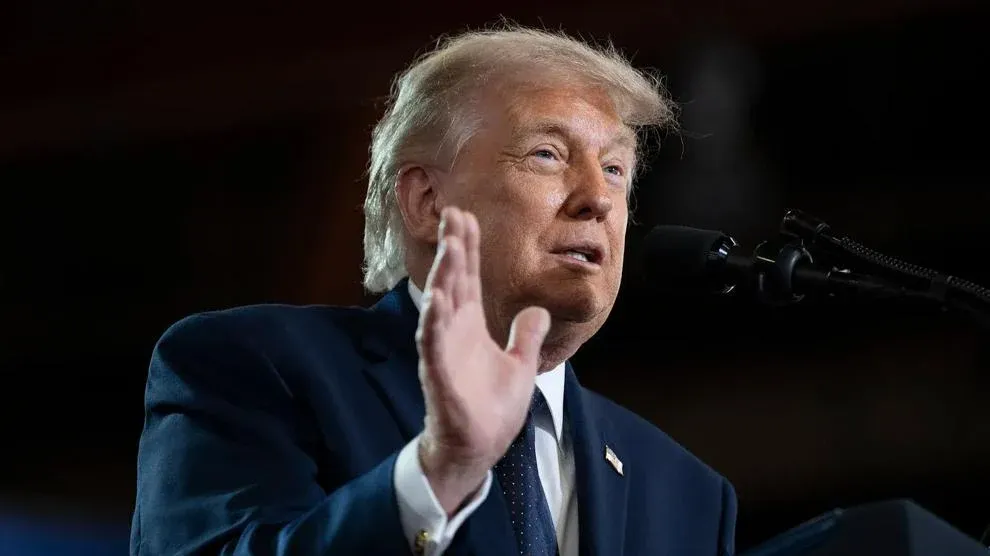
President Donald Trump’s order to substantially reduce U.S. participation in the ongoing Ulchi Freedom Shield joint military exercises with South Korea reflects deeper frictions in the alliance that extend beyond the public justifications of cost and signaling toward North Korea. Administration frustration has centered on Seoul’s accelerating outreach to China under progressive President Lee Jae-myung and delays in delivering on major trade and investment pledges made to the United States.
Trump announced the reduction on Sunday via Truth Social, directing Defense Secretary Pete Hegseth to scale back the 11-day exercises that began Monday. He described the drills as costly—with the United States bearing much of the expense—and said they send an “inappropriate and hostile” signal to North Korea, a country he characterized as unthreatening and respectful during his presidency. Trump also cited his strong personal relationship with Kim Jong Un and noted that South Korea had declined a recent request to join U.S. efforts on the denuclearization of Iran.
Those stated reasons sit atop months of accumulating strain. Since taking office after the impeachment of his conservative predecessor, Lee has prioritized restoring full-scale relations with Beijing. He hosted Chinese President Xi Jinping during the October 2025 Asia-Pacific Economic Cooperation summit in South Korea and traveled to Beijing in January, declaring the meeting an opportunity to make 2026 “the first year of full-scale restoration of Korea-China relations.” The two sides signed multiple agreements covering technology, intellectual property, transportation, and artificial intelligence, while also pledging closer coordination on dialogue with North Korea—a longstanding priority of Lee’s Democratic Party of Korea.
Analysts and administration officials have viewed the shift as a clear move away from the harder line against China pursued by the previous South Korean government. Lee’s government has emphasized economic engagement with Beijing even as the United States has sought tighter alignment among allies on supply-chain security and strategic competition with China.
Compounding the diplomatic friction are unresolved economic commitments. In trade negotiations last year, South Korea pledged roughly $350 billion in U.S. investments—$200 billion in direct industrial investments and $150 billion tied to shipbuilding—along with large-scale purchases of American oil and gas, in exchange for reduced U.S. tariff rates. Implementation has lagged. South Korea’s parliament did not approve the investment framework until June, and by mid-August working-level obstacles continued to delay concrete project announcements. Trump publicly warned earlier this year that trading partners must match the speed of U.S. tariff reductions, and administration sources have linked the slow pace of Korean follow-through to broader dissatisfaction with the alliance relationship.
The combination of Seoul’s China outreach and incomplete delivery on the investment package has formed the practical backdrop for the decision to curtail the current exercises. While Trump framed the move primarily around North Korea diplomacy and cost, the pattern of recent interactions shows alliance management is increasingly conditioned on South Korea’s alignment on both strategic and economic priorities. South Korean officials have said the exercises are proceeding as scheduled on their side and have expressed hope that improved U.S.-North Korea contacts can contribute to peninsula stability. The reduction in U.S. participation, however, underscores that Washington is prepared to adjust the tempo of military cooperation when it perceives Seoul drifting from shared priorities on China and trade reciprocity.
Join the Team
Are you trying to break into news writing but struggling to get published at major outlets? At RWT News, we're always looking for talented, motivated writers who share our commitment to straightforward, factual conservative journalism. If you believe in honest reporting and want real experience and bylines, we'd love to hear from you.
Visit our Join the Team page to learn more and contact us directly.