UAW Attributes Hiring Surge at Detroit Diesel to Targeted Tariffs
In a March 11, 2026, Facebook post, the union stated Detroit Diesel will add a third shift, recall laid-off workers, and hire additional employees at its facility spanning Detroit and Redford Township.
 RWTNews Staff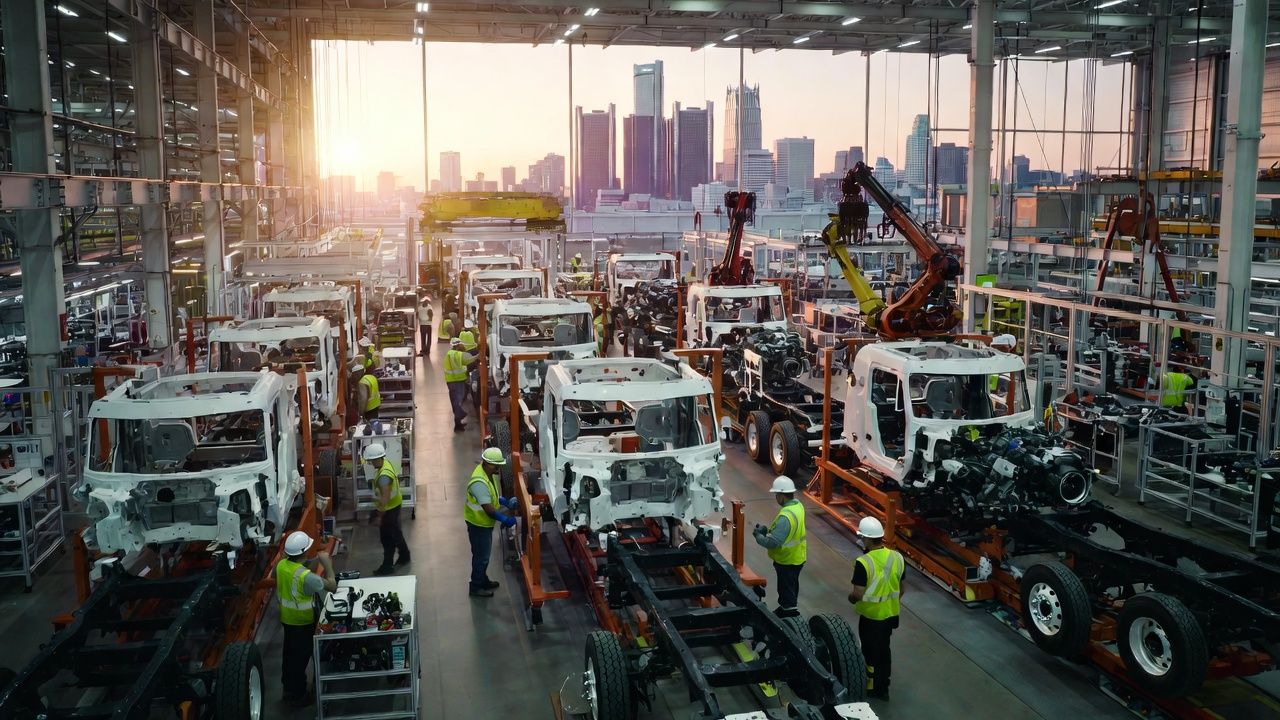
The United Auto Workers (UAW) announced that targeted tariffs on imported heavy trucks have spurred a hiring surge and production expansion at the Detroit Diesel manufacturing complex in Michigan.
In a March 11, 2026, Facebook post, the union stated Detroit Diesel will add a third shift, recall laid-off workers, and hire additional employees at its facility spanning Detroit and Redford Township. UAW President Shawn Fain described the tariffs as "an important tool in the toolbox to undo the damage of our free trade disaster and bring back good union jobs to the U.S." He urged companies like Detroit Diesel and its parent, Daimler Truck North America, to reinvest in workers amid billions in profits rather than layoffs.
The development follows an October 2025 federal decision imposing a 25% tariff on heavy truck imports, intended to curb offshoring and boost domestic investment. Detroit Diesel, which produces diesel engines and axles, employs about 3,000 workers and traces its roots to a 1938 General Motors subsidiary.
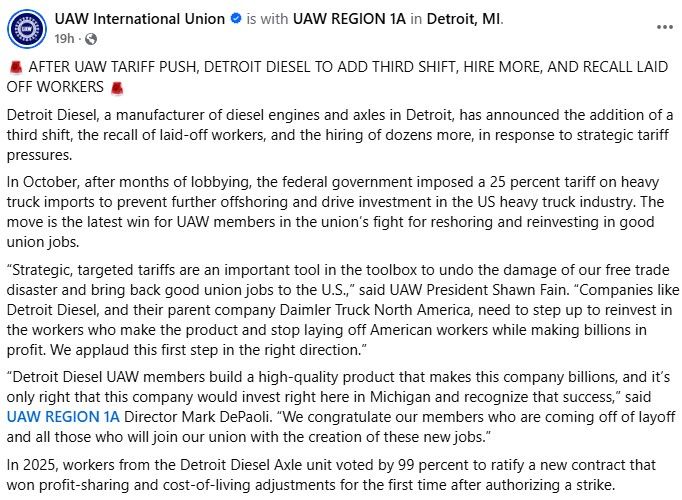
UAW Region 1A Director Mark DePaoli praised the move, noting members' contributions to the company's success and welcoming new union jobs. This aligns with broader UAW support for President Donald Trump's tariff policies, which the union says could reverse recent layoffs and bring thousands of jobs back to underutilized U.S. plants within months.
Fain has highlighted excess capacity in domestic facilities, such as in Warren, Michigan, where tariffs could redirect production from abroad. The union's stance marks a shift, crediting tariffs for job growth amid ongoing manufacturing challenges, including 5,000 jobs added in early 2026 but an overall decline of 83,000 since prior peaks.
Support Independent Conservative News
RWTNews is independent conservative news — no corporate backing, no agenda driven by advertisers. We rely entirely on readers like you to keep the lights on and the truth coming. If you've found value in what you read here, consider supporting us with a one-time or monthly contribution. Every dollar goes directly toward keeping this site running and growing.
Secured by Stripe. Your payment info is never stored on our servers.