Trump’s NATO Summit in Ankara Highlights Strong Ties with Turkey, Frustration with European Allies, and Push for Greater Burden-Sharing
The two-day gathering in the Turkish capital has focused on modernizing NATO, increasing military spending, and addressing ongoing threats from Iran and Russia’s war in Ukraine.
 Tommy Flynn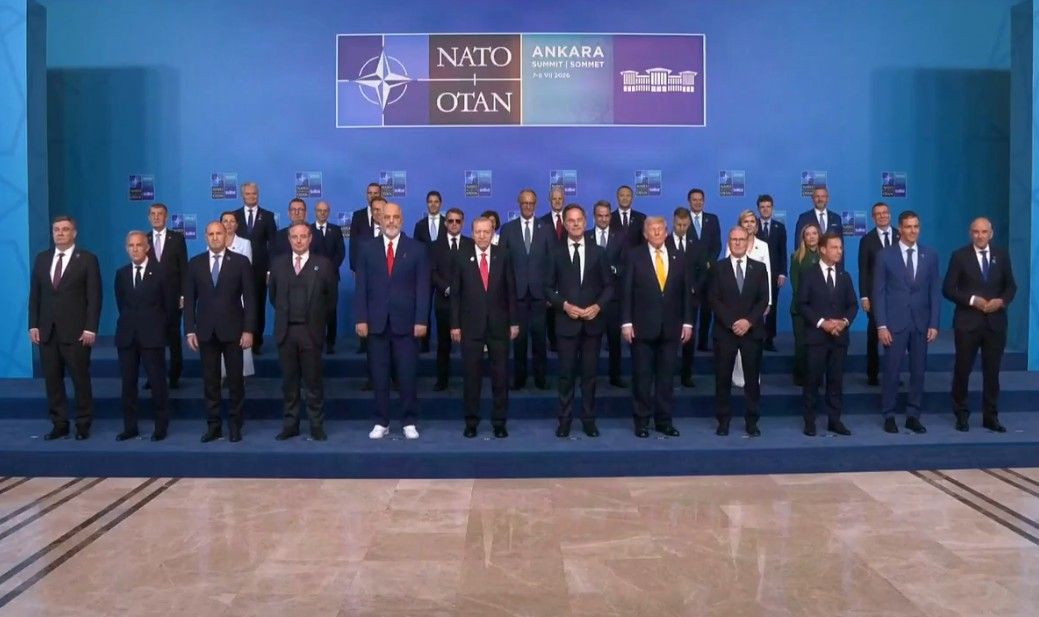
President Donald Trump arrived in Ankara, Turkey, for the NATO summit with a clear message of appreciation for host nation Turkey and its leader, Recep Tayyip Erdoğan, while voicing sharp disappointment in other alliance members for failing to fully support U.S. operations against Iran and for lagging in defense contributions. The two-day gathering in the Turkish capital has focused on modernizing NATO, increasing military spending, and addressing ongoing threats from Iran and Russia’s war in Ukraine, with Trump positioning the alliance for what he and NATO Secretary General Mark Rutte have described as a more sustainable “NATO 3.0” model emphasizing European and Canadian self-reliance.
Trump met bilaterally with Erdoğan on Tuesday at the Beştepe Presidential Compound, praising the Turkish president as a “very strong leader” and a loyal friend who has delivered on key requests, including staying neutral in the Iran conflict despite regional pressures and past cooperation on issues like the release of American pastor Andrew Brunson. The president contrasted this relationship favorably with other NATO partners, noting that Italy, Germany, France, and Spain declined to provide base access or logistical support for U.S. strikes on Iranian targets in the Strait of Hormuz. “I was very disappointed with NATO,” Trump said, adding that he might not have attended the summit if it had not been hosted by his “friend” in Turkey, where he felt an obligation to show respect for Erdoğan’s efforts.
The meetings also addressed potential U.S. approval for Turkey to acquire F-35 fighter jets, a program from which Ankara was previously removed after purchasing Russian S-400 air defense systems. Trump indicated the decision remains under consideration, stating he has “no concerns about anything having to do with Turkey” and highlighting the country’s helpfulness compared to other allies. Erdoğan claimed Trump had promised five jets, describing the president as “a man of his word.” The administration has already moved forward with a $750 million sale of jet engines to Turkey, bypassing some congressional hurdles, signaling warming ties despite past sanctions concerns.
NATO Secretary General Mark Rutte credited Trump with achieving what prior U.S. presidents since Eisenhower had sought: pushing allies to significantly increase defense spending and modernize forces. European allies and Canada have pledged roughly $250 billion in new defense programs over the past two years, with additional commitments expected at the summit. Rutte described the gathering as “transformational,” noting that a stronger Europe reduces over-reliance on the United States while maintaining alliance unity. He praised European logistical support for U.S. operations against Iran, calling the recent American strikes a “very strong response” and “absolutely necessary.” Rutte acknowledged individual disappointments but emphasized the broader progress.
Trump has long advocated for allies to meet higher spending targets, recently pushing for 5% of GDP on defense by 2035. New NATO figures show some members, including Spain, Belgium, Slovenia, and the Czech Republic, still struggling with the prior 2% benchmark. The summit includes discussions on “NATO 3.0,” a leaner, more lethal alliance where Europe takes greater responsibility for conventional security, including support for Ukraine, while the U.S. maintains its nuclear umbrella. The Pentagon is conducting a six-month review of U.S. troop presence in Europe, with potential drawdowns under consideration.
For the remainder of the trip, expectations center on high-level meetings Wednesday with Ukrainian President Volodymyr Zelenskyy and Syrian President Ahmed al-Sharaa. Zelenskyy is expected to press for Ukraine’s path to NATO membership, highlighting Ukrainian forces’ experience and successes against Russian targets. Discussions with al-Sharaa, the former insurgent leader who ousted Bashar al-Assad, will likely touch on regional stability, counterterrorism, and Syria’s relations with the West. Trump has expressed support for al-Sharaa’s role in rebuilding Syria and suggested he could be more effective than Israeli forces in addressing threats like Hezbollah.
Trump has stated that the recent U.S. strikes on Iran following attacks on shipping in the Strait of Hormuz have effectively ended the interim ceasefire agreement, though he indicated talks could continue in some form. The incidents underscored the fragility of recent diplomatic efforts and Iran’s ongoing challenges to maritime security. NATO allies provided support for U.S. operations, but Trump’s criticisms of uneven contributions have dominated headlines alongside positive developments in defense investments.
Overall, the Ankara summit reflects Trump’s America First approach to NATO: rewarding reliable partners like Turkey while demanding greater accountability and spending from others. Rutte and alliance officials have framed the gathering as a success in advancing modernization and burden-sharing, even as Trump’s blunt assessments keep pressure on members to deliver more. With key bilateral meetings still ahead and commitments on spending and Ukraine likely to feature prominently, the trip is poised to shape the alliance’s direction amid persistent threats from Iran, Russia, and shifting global dynamics.
Support Independent Conservative News
RWTNews is independent conservative news — no corporate backing, no agenda driven by advertisers. We rely entirely on readers like you to keep the lights on and the truth coming. If you've found value in what you read here, consider supporting us with a one-time or monthly contribution. Every dollar goes directly toward keeping this site running and growing.
Secured by Stripe. Your payment info is never stored on our servers.