Trump Warns of Harder Strikes on Iran as Lebanon Fighting Complicates Fragile Nuclear Deal; Vance Calls for "New Leaf" in Relations
The Lebanon fighting represents the most immediate stress test. Continued escalation risks unraveling the fragile progress, while a sustained ceasefire could provide momentum for the 60-day negotiations.
 Tommy Flynn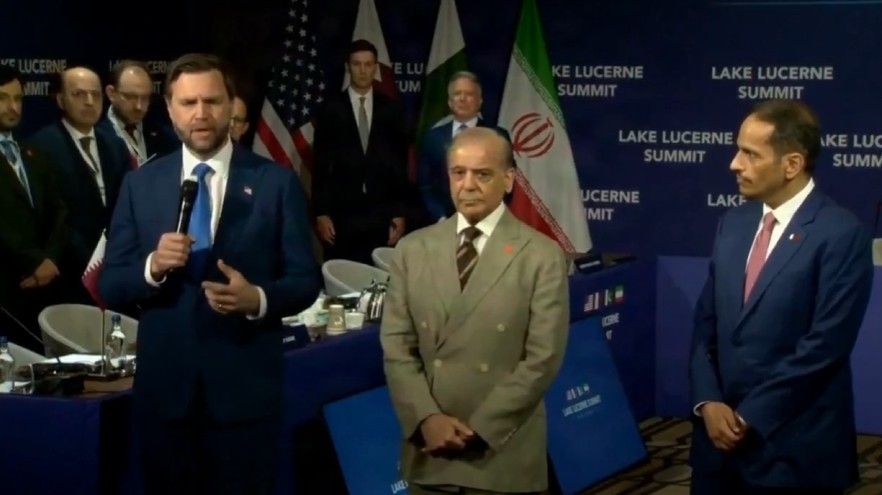
Washington and Lucerne, Switzerland — Escalating clashes between Israel and Iranian-backed Hezbollah in Lebanon are threatening to derail high-stakes U.S.-Iran negotiations over Tehran’s nuclear program, with President Donald Trump issuing a stark warning that the United States will strike Iran “very hard again, just like we did last week, only harder” if Tehran fails to rein in its proxies.
Vice President JD Vance, leading the U.S. delegation at the “Lake Lucerne Summit” in Switzerland, struck a more measured tone Sunday, emphasizing an opportunity to “turn over a new leaf” and permanently reshape relations with Iran if it abandons nuclear ambitions and regional destabilization.
The developments come as the two sides move into a 60-day sprint to finalize details of a fragile interim memorandum of understanding (MoU) reached last week, aimed at ending direct U.S.-Iran hostilities, reopening the Strait of Hormuz to commercial traffic, allowing Iran to sell oil freely, accessing frozen assets, and diluting its highly enriched uranium stockpile under international oversight.
Talks formally advanced Sunday at the luxurious Bürgenstock Resort overlooking Lake Lucerne, with mediators from Pakistan, Qatar, and the U.N.’s Rafael Grossi involved. U.S. negotiators include special envoy Steve Witkoff and Jared Kushner. Iranian officials, including Foreign Minister Abbas Araghchi and Parliament Speaker Mohammad Bagher Qalibaf, are participating, though Tehran has stressed that implementation hinges on a full regional ceasefire, including an end to Israel-Hezbollah fighting.
Lebanon Conflict Poses Major Test
The most immediate complication is renewed violence in Lebanon. Recent Israeli strikes and Hezbollah responses have killed dozens, including 47 people in Lebanon and five Israeli soldiers in recent days, according to reports. A renewed ceasefire brokered Saturday is holding for now, but both sides remain far apart: Israeli Prime Minister Benjamin Netanyahu has vowed to maintain forces in southern Lebanon until threats are eliminated, while Hezbollah refuses to halt attacks without a full Israeli withdrawal.
Iran has insisted that any final deal must include cessation of all wars in the region, particularly the Israel-Hezbollah front. Iranian officials have expressed “deep mistrust” over perceived U.S. failures to enforce Lebanese ceasefire commitments and have re-closed (or threatened to close) the Strait of Hormuz, though U.S. Central Command reports normal traffic flow with millions of barrels of oil moving through recently.
Trump has personally urged Israel to de-escalate. In comments relayed to media, he said he told Israeli officials, “You just gotta calm down sometimes and use your head,” and claimed he could prevent further Israeli attacks on Lebanon. He has also called for “no more attacks by Israel anywhere in Lebanon, but there should also be no more attacks by any other party, including Hezbollah, against Israel.”
Trump’s Hard Line vs. Vance’s Diplomatic Opening
Trump’s Truth Social post underscored his hardline stance: “Iran must immediately stop their highly paid PROXIES in Lebanon from causing trouble. If they don’t, we’ll hit Iran very hard again, just like we did last week, only harder!!!” The reference appears tied to prior U.S. strikes on Iranian nuclear and military targets. He has also threatened to impose U.S. tolls on Strait of Hormuz traffic if no comprehensive deal is reached within the 60-day window, framing it as payment for U.S. security guarantees in the region.
Vance, however, highlighted potential for broader transformation. “The question before us now is how much more can we accomplish together? Can we turn over a new leaf? Can we change relations in the Middle East permanently, or do we go back to doing things the old way…?” he said. He added that the U.S. is willing to “fundamentally transform our relationship” with Iran if its leadership abandons nuclear weapons ambitions and regional instability. Vance noted “great progress” in Lebanon and reaffirmed commitment to a “full regional ceasefire.”
Iranian President Masoud Pezeshkian has drawn a firm line on uranium enrichment rights, stating Iran “will never back down” from them. Tehran has been cautious overall, with officials emphasizing that “the implementation of any document is more important than its signing.”
Background and Stakes
The current talks build on an MoU signed digitally around June 17, 2026, following months of direct U.S.-Iran conflict that included American and Israeli strikes on Iranian nuclear sites. The interim framework seeks to stabilize the region, secure Hormuz navigation, and open a path to longer-term nuclear and economic arrangements. Neither Israel nor Hezbollah is a party to the deal.
Markets have reacted positively to the initial de-escalation, with oil futures dropping sharply. However, hardline critics in the U.S. have compared the emerging framework to the 2015 nuclear deal that Trump previously withdrew from, raising concerns about verification and long-term Iranian compliance.
The Lebanon fighting represents the most immediate stress test. Continued escalation risks unraveling the fragile progress, while a sustained ceasefire could provide momentum for the 60-day negotiations. U.S. officials have encouraged all parties to maintain commitments to allow talks to proceed.
As the Lake Lucerne Summit unfolds, the outcome will have profound implications for global energy markets, Middle East security, and the future of U.S.-Iran relations. Both sides have signaled willingness to engage, but success depends heavily on whether Hezbollah’s attacks can be halted and whether Tehran follows through on nuclear concessions amid deep mutual suspicions.
Join the Team
Are you trying to break into news writing but struggling to get published at major outlets? At RWT News, we're always looking for talented, motivated writers who share our commitment to straightforward, factual conservative journalism. If you believe in honest reporting and want real experience and bylines, we'd love to hear from you.
Visit our Join the Team page to learn more and contact us directly.