Trump Says Senate Must Act in Lame-Duck Session, Calls Chamber a Roadblock
President Trump said Friday the Senate “must act” in next week’s lame-duck session, calling the chamber a “roadblock” that is “killing our country” by failing to pass legislation days after Republicans lost both chambers.
 Tommy Flynn
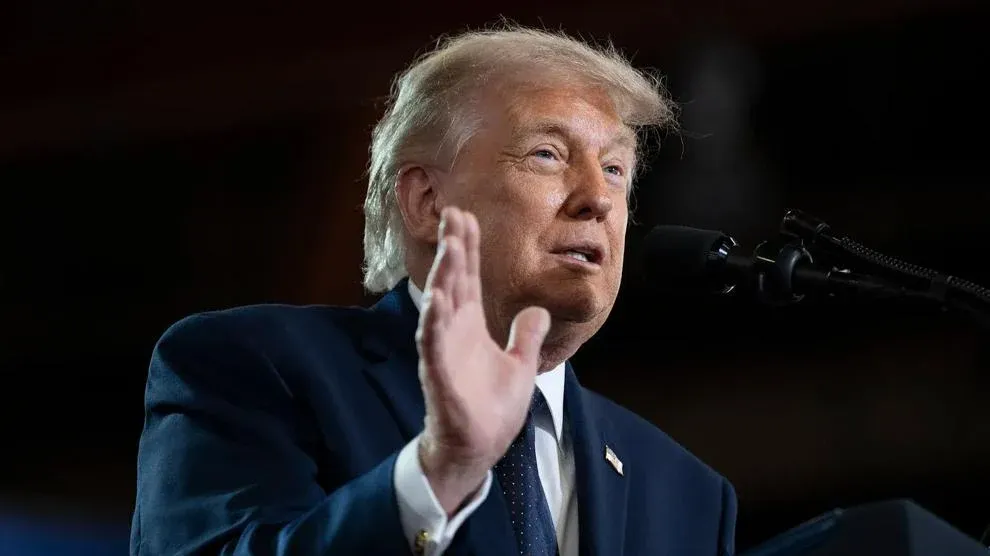
President Donald Trump said Friday that the Senate “must act” when it returns for a lame-duck session next week, stating that the chamber is “killing our country” by failing to pass legislation. He made the remarks in Florida after speaking at the Kennedy Space Center, days after Republicans lost majorities in both the House and Senate in Tuesday’s midterm elections.
“The Senate has to act,” Trump told reporters. “The Senate is getting nothing passed, and it’s just killing our country. Democrats and Republicans are just not getting anything done. The Democrats vote in a block. We could have the best bill in the world for our country. They vote in a block, and we always have a few Republicans that obstruct.” He described the Senate as “the biggest problem we have, it’s a roadblock. You send things to the Senate when you want it to die. The Senate is killing our country.”
Trump attributed part of the midterm losses to the Senate’s inability to advance legislation during the current Congress, though he did not single out Senate Majority Leader John Thune for blame. The Senate is scheduled to reconvene next week. Republicans will retain majority control until the new Congress is sworn in on January 3, 2027, after which Democrats will hold both chambers. The period between now and then constitutes the lame-duck session.
Pending items for the remaining Republican-controlled Senate include federal judicial nominees. Reports indicate roughly two dozen judicial vacancies and pending nominees, including several for appellate courts. Florida Governor Ron DeSantis has publicly urged the Senate to confirm remaining Trump judicial nominees during the lame-duck period, stating that Democrats are unlikely to confirm them once they take the majority. Senate Republicans have indicated they plan to advance some nominations before January.
Other potential business includes must-pass measures such as government funding and the National Defense Authorization Act. Earlier discussions among some Republicans about using budget reconciliation for additional priorities or altering Senate rules have not advanced as concrete plans in the wake of the election results. Senate Republican leadership elections are also scheduled for next week. Sen. Ron Johnson of Wisconsin has sought to delay those votes; no senator has publicly announced a challenge to Thune.
Democrats have stated that once they assume control they will not advance nominees they view as unacceptable. Senate Minority Leader Chuck Schumer has said the incoming Democratic majority will not allow certain judicial or executive nominees to proceed. With projected Democratic majorities of at least 54 Senate seats, the party will hold the votes needed to block confirmations that require a simple majority.
The current Republican Senate majority ends in early January. Any legislation or nominations that do not clear the chamber before then will face a Democratic majority that has indicated it will set different priorities. Trump has previously stated he will use veto authority on measures he opposes once the new Congress convenes.
Join the Team
Are you trying to break into news writing but struggling to get published at major outlets? At RWT News, we're always looking for talented, motivated writers who share our commitment to straightforward, factual conservative journalism. If you believe in honest reporting and want real experience and bylines, we'd love to hear from you.
Visit our Join the Team page to learn more and contact us directly.