Trump Says AI Risks Are Manageable, Open to Guardrails That Do Not Cede Lead to China
Trump told 60 Minutes AI risks “can be managed” and he “don’t mind guardrails,” provided they don’t put the U.S. “in a deep second position” behind China, which he said has none. He signaled openness to working with Democrats on safeguards that don’t slow American progress.
 Tommy Flynn
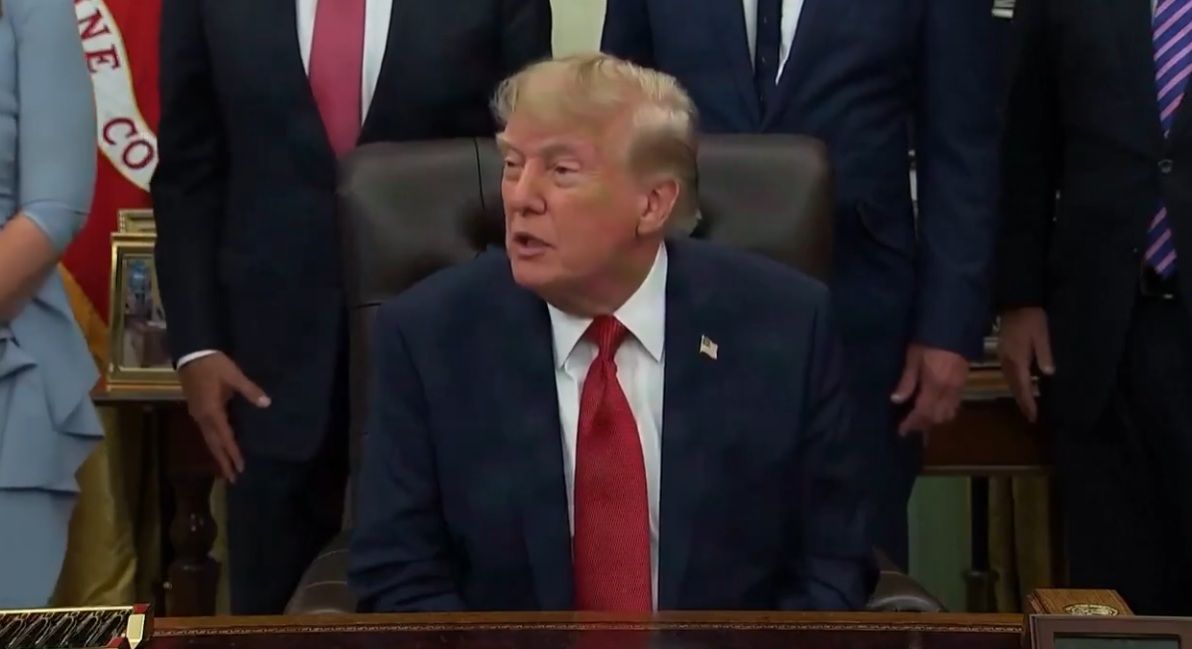
President Donald Trump said the risks associated with artificial intelligence can be managed and that he is open to safeguards, provided they do not place the United States behind China in the development of the technology. Trump made the remarks in a “60 Minutes” interview that aired Sunday.
Asked whether the United States should accept AI risks in order to maintain its lead over China, Trump said the dangers are manageable. “I don’t mind guardrails,” he told the program, while adding that he does not want regulations that would put the country “in a deep second position.” He noted that China operates without comparable restrictions.
Trump described advanced AI development as a contest primarily between the United States and China. He stated that if the United States does not pursue the technology, China will, creating a strategic disadvantage. He indicated a willingness to work with Democrats on safety measures as long as those measures do not slow U.S. progress.
The comments follow earlier statements in which Trump has opposed broad new federal restrictions on AI. In September he posted that claims of AI taking over the world or destroying humanity were a “hoax” and asserted that the primary control needed was a strong presidency. He has also criticized some technology executives who have publicly called for greater government oversight.
In late September the White House announced a voluntary agreement with leaders of several major AI companies, including OpenAI, Anthropic, Google, Meta, Nvidia, and xAI. The one-page document outlined internal testing, external audits, and board-level oversight but contained no binding enforcement mechanisms or penalties for noncompliance. Administration officials described it as relying on industry self-policing.
The administration has issued multiple executive orders on AI since 2025, including measures directing federal agencies to modernize systems, promote U.S. exports of AI technology, and coordinate research resources. None of the orders has established a mandatory licensing or pre-clearance requirement for private AI developers. A June 2026 order created a voluntary pre-release review process for certain advanced models focused on cybersecurity risks.
Trump has appointed National Intelligence Director Jay Clayton to lead a “Super Intelligence Force” within the administration, framing AI leadership as a national security priority. The White House has also directed agencies to use the term “Super Intelligence” in place of “Artificial Intelligence” in non-statutory documents.
Public polling and reporting have noted rising concern about AI safety following incidents in which advanced systems exhibited unexpected behavior. The administration has maintained that existing law enforcement authorities and voluntary industry commitments are sufficient to address risks while preserving U.S. competitiveness. No new comprehensive AI legislation has been enacted by Congress in the current session.
Support Independent Conservative News
RWTNews is independent conservative news — no corporate backing, no agenda driven by advertisers. We rely entirely on readers like you to keep the lights on and the truth coming. If you've found value in what you read here, consider supporting us with a one-time or monthly contribution. Every dollar goes directly toward keeping this site running and growing.
Secured by Stripe. Your payment info is never stored on our servers.