Trump Launches “Project Freedom” to Guide Stranded Ships Through Strait of Hormuz; Iran Warns of Attacks
U.S. Central Command confirmed it will support the operation with guided-missile destroyers, more than 100 land- and sea-based aircraft, multi-domain unmanned platforms, and approximately 15,000 service members.
 Tommy Flynn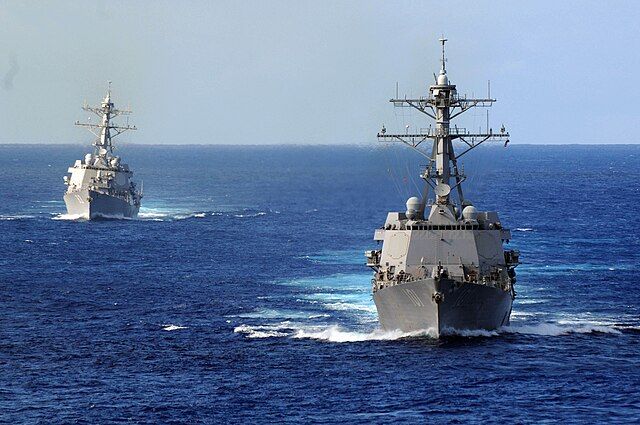
WASHINGTON — President Donald Trump announced Sunday that the United States will begin “Project Freedom,” a military operation to guide and assist neutral commercial vessels stranded in the Strait of Hormuz, starting Monday morning Middle East time.
Trump described the initiative as a humanitarian effort requested by countries whose ships and crews are running low on food and supplies after weeks of Iranian restrictions and the ongoing U.S. naval blockade. In a Truth Social post, he stated: “For the good of Iran, the Middle East, and the United States, we have told these Countries that we will guide their Ships safely out of these restricted Waterways, so that they can freely and ably get on with their business.” He warned that any interference would “unfortunately, have to be dealt with forcefully.”
U.S. Central Command confirmed it will support the operation with guided-missile destroyers, more than 100 land- and sea-based aircraft, multi-domain unmanned platforms, and approximately 15,000 service members. Officials emphasized that the mission involves guiding ships along safe routes and providing protective presence rather than direct escorts of commercial vessels by U.S. Navy ships.
The announcement comes amid a fragile indefinite ceasefire that has held since early April following U.S. and Israeli strikes on Iranian targets. Iran has maintained control over much of the Strait of Hormuz, effectively restricting commercial traffic and stranding dozens of vessels while demanding tolls or coordination through its forces. The U.S. naval blockade of Iranian ports, imposed to enforce sanctions, has severely curtailed Tehran’s oil exports and cost the regime hundreds of millions of dollars daily.
Iran responded swiftly and harshly to Project Freedom. Ebrahim Azizi, head of the Iranian parliament’s National Security Commission, warned that any U.S. interference in the Strait of Hormuz would be considered a violation of the ceasefire. A senior Iranian military commander stated that “any foreign military force, especially the invading American army,” would be attacked if it attempts to approach or enter the strait. Iranian state media and officials insisted that passage through the waterway must be coordinated with Tehran.
The Strait of Hormuz carries roughly 20% of global seaborne oil trade and remains critical for energy markets. Oil prices have remained elevated, with Brent crude hovering near recent highs due to the disruptions. Shipping companies have expressed caution about the new U.S. operation, citing the risk of escalation.
Project Freedom represents the most significant U.S. step yet to challenge Iran’s de facto control of the strait since the conflict began. Trump has maintained that the naval blockade will remain in place until a comprehensive deal addressing Iran’s nuclear program and regional activities is reached. No new direct talks between U.S. and Iranian officials have been scheduled.
The operation aims to restore freedom of navigation for neutral shipping while maintaining pressure on Tehran. The coming days will test whether Project Freedom can safely move vessels without provoking a direct confrontation, as Iran has vowed a forceful response to any perceived violation of the ceasefire.
Join the Team
Are you trying to break into news writing but struggling to get published at major outlets? At RWT News, we're always looking for talented, motivated writers who share our commitment to straightforward, factual conservative journalism. If you believe in honest reporting and want real experience and bylines, we'd love to hear from you.
Visit our Join the Team page to learn more and contact us directly.