Trump Confirms U.S. Military Constructing Massive Underground Complex Beneath New White House Ballroom
The underground work is understood to be a major modernization and expansion of the historic Presidential Emergency Operations Center (PEOC), the secure bunker originally constructed beneath the East Wing during World War II to protect President Franklin D. Roosevelt.
 Tommy Flynn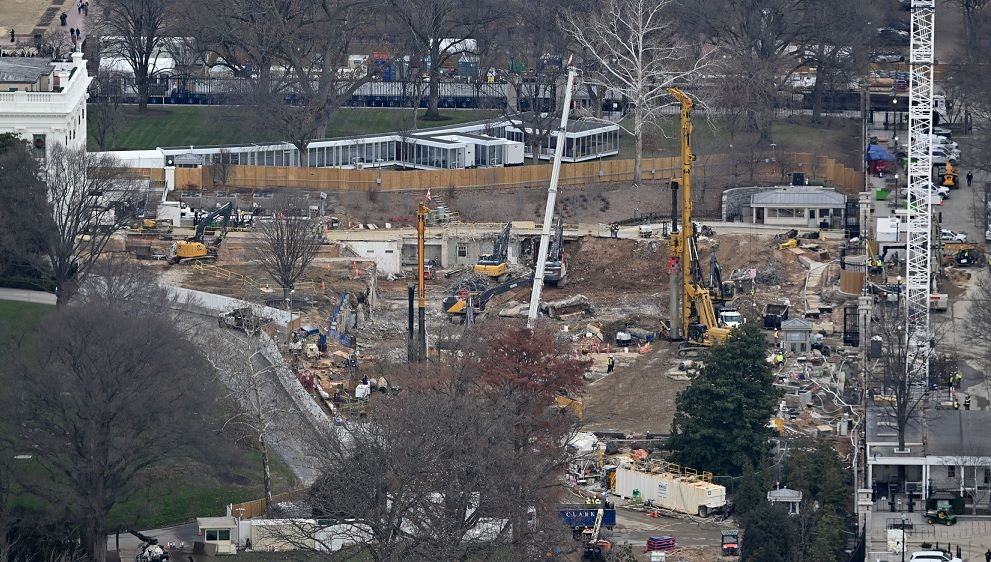
WASHINGTON – President Donald Trump disclosed Sunday that the U.S. military is building a “massive complex” beneath the new ballroom under construction at the White House, describing the above-ground structure as essentially a “shed” for the far more significant underground facility.
Trump made the revelation aboard Air Force One on March 30, 2026, while returning from Mar-a-Lago. “The military is building a massive complex under the ballroom, and that’s under construction, and we’re doing very well, so we’re ahead of schedule,” he told reporters. He added that the ballroom “essentially becomes a shed for what’s being built under” it, noting the project includes enhanced protections such as bulletproof glass and drone-proof features.
The ballroom project involves a 90,000-square-foot addition on the site of the East Wing, which was fully demolished in October 2025. The overall endeavor, estimated at approximately $400 million, is funded entirely by private donors rather than taxpayer dollars. Construction began after the East Wing demolition and has proceeded faster than anticipated, according to the president.
The underground work is understood to be a major modernization and expansion of the historic Presidential Emergency Operations Center (PEOC), the secure bunker originally constructed beneath the East Wing during World War II to protect President Franklin D. Roosevelt. The facility has served as a continuity-of-government site for decades, including during the September 11, 2001 attacks when Vice President Dick Cheney was sheltered there. Details about the exact size, capabilities, and full scope of the new complex remain classified, consistent with longstanding national security protocols for presidential protection infrastructure.
White House officials have described the combined ballroom-and-bunker project as part of broader efforts to deliver “resilient, adaptive infrastructure aligned with future mission needs” and to incorporate necessary security enhancements. Trump previously noted that the military “wanted it more than anybody” and that the project was originally intended to remain secret, but details surfaced publicly due to a lawsuit challenging aspects of the construction.
The disclosure aligns with earlier reporting from January 2026, when CNN first detailed plans to rebuild secure underground facilities as part of the East Wing renovation and ballroom expansion. At that time, the administration had emphasized mission-critical functionality and security upgrades without publicly confirming the military’s direct role in the subterranean work.
Critics have questioned the scale and cost of the ballroom itself, as well as the lack of typical public vetting for major changes to the historic White House grounds. Supporters, however, point to the private funding and the necessity of updating aging Cold War-era infrastructure in an era of advanced threats, including drones and other asymmetric risks.
No additional specifics about timelines, exact costs of the underground portion, or operational capabilities have been released by the White House or Pentagon. Trump indicated the project remains on track and that further details would not be forthcoming due to its sensitive nature.
The revelation comes amid the administration’s focus on bolstering national security infrastructure across multiple fronts, including ongoing military operations in the Middle East. The underground complex represents one of the most significant modifications to White House facilities in over a century.
Support Independent Conservative News
RWTNews is independent conservative news — no corporate backing, no agenda driven by advertisers. We rely entirely on readers like you to keep the lights on and the truth coming. If you've found value in what you read here, consider supporting us with a one-time or monthly contribution. Every dollar goes directly toward keeping this site running and growing.
Secured by Stripe. Your payment info is never stored on our servers.