Trump Calls War Powers Resolution Unconstitutional as 60-Day Clock Expires in Iran Conflict
Critics from both parties note that every president since Richard Nixon has challenged or ignored parts of the law as an unconstitutional infringement on executive authority.
 Tommy Flynn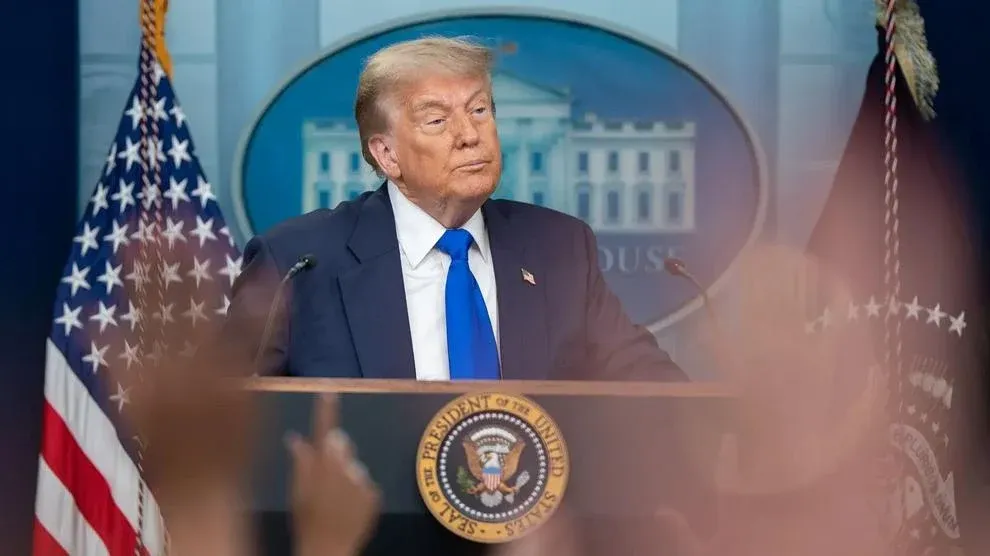
WASHINGTON — President Donald Trump declared on May 1, 2026, that the 60-day clock under the War Powers Resolution has effectively ended due to the ceasefire with Iran, arguing the 1973 law is unconstitutional and has never been properly followed by any president.
In a letter to congressional leaders and public statements, Trump stated that “hostilities that began on February 28, 2026, have terminated” because of the indefinite ceasefire reached in early April. Defense Secretary Pete Hegseth echoed this position in Senate testimony, saying the ceasefire “pauses or stops” the clock. Trump has repeatedly called the War Powers Resolution unconstitutional, telling reporters, “It’s never been sought before — there’s been many, many times and nobody’s ever gotten it before. They consider it totally unconstitutional.”
The administration’s stance allows continued U.S. operations, including the naval blockade of Iranian ports, without new congressional approval.
The War Powers Resolution requires presidents to notify Congress within 48 hours of introducing forces into hostilities and limits unauthorized military action to 60 days unless Congress authorizes an extension. Critics from both parties note that every president since Richard Nixon has challenged or ignored parts of the law as an unconstitutional infringement on executive authority. President Bill Clinton conducted the 78-day Kosovo air campaign in 1999 without seeking approval beyond 60 days. President Barack Obama authorized the 2011 Libya operation, which also exceeded the 60-day limit by almost 5 months without congressional authorization.
The current debate arises as the May 1 deadline arrived with the U.S. still enforcing the blockade and occasional incidents occurring in the Strait of Hormuz. Some Republicans, including Sen. Rand Paul and Sen. Susan Collins, have joined Democrats in questioning whether a ceasefire truly stops the clock or if formal congressional approval is required for any continued military involvement.
The administration maintains the ceasefire has terminated active hostilities, while opponents argue the law contains no pause provision and the blockade still constitutes hostilities. The dispute leaves the legal status of ongoing operations unresolved, with both sides waiting to see whether Congress will attempt to enforce the resolution or if the courts will ultimately weigh in.
Support Independent Conservative News
RWTNews is independent conservative news — no corporate backing, no agenda driven by advertisers. We rely entirely on readers like you to keep the lights on and the truth coming. If you've found value in what you read here, consider supporting us with a one-time or monthly contribution. Every dollar goes directly toward keeping this site running and growing.
Secured by Stripe. Your payment info is never stored on our servers.