Treasury Secretary Bessent: No Sanctions Relief for Iran Until Uranium Stockpile Is Eliminated
This stance aligns precisely with Trump’s repeated public warnings that any deal must include ironclad verification that Iran cannot develop a nuclear weapon.
 Tommy Flynn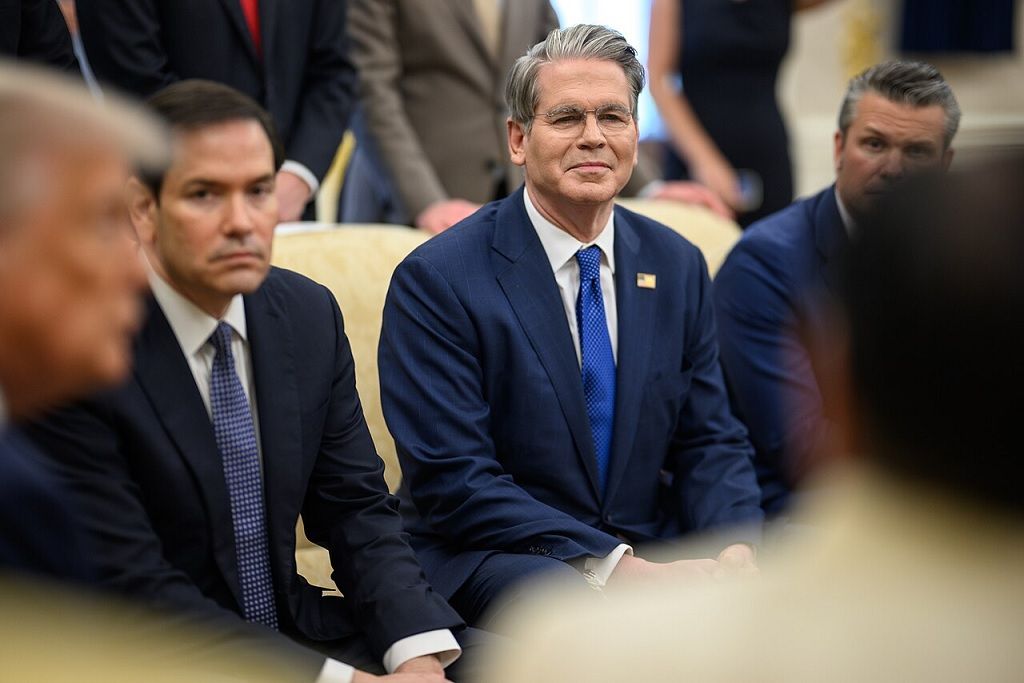
WASHINGTON — Treasury Secretary Scott Bessent stated unequivocally on May 28 that Iran will receive no sanctions relief until it verifiably hands over or destroys its stockpile of highly enriched uranium, reinforcing President Donald Trump’s consistent position throughout the negotiations.
In a clear and direct message, Bessent emphasized that the administration will not ease economic pressure until Tehran meets this core requirement. He described the removal or destruction of Iran’s highly enriched uranium as non-negotiable for any lasting agreement, stating that partial measures or vague promises would not be accepted.
This stance aligns precisely with Trump’s repeated public warnings that any deal must include ironclad verification that Iran cannot develop a nuclear weapon. Trump has consistently maintained that he prefers a negotiated settlement but will not accept a weak agreement that leaves Iran’s nuclear infrastructure intact.
Bessent’s comments come as indirect talks facilitated by Pakistan and Qatar continue, with both sides reporting incremental progress on issues such as reopening the Strait of Hormuz and reducing proxy conflicts. However, the nuclear file remains the central obstacle. Iran has pushed for immediate and comprehensive sanctions relief before addressing its enrichment program, a position the U.S. has firmly rejected.
The current U.S. naval blockade of Iranian ports remains fully in effect and continues to severely restrict Iran’s oil exports, costing the regime hundreds of millions of dollars daily. Bessent indicated that this maximum economic pressure will stay in place until Iran complies with the key U.S. demands on its nuclear program.
The unified messaging from the administration underscores Trump’s long-held “maximum pressure” strategy. Bessent, who has played a central role in shaping the economic components of the negotiations alongside Secretary of State Marco Rubio, has been instrumental in maintaining leverage while diplomatic channels remain open.
Iranian officials have responded by accusing the U.S. of negotiating in bad faith, while continuing to participate in indirect talks. Gulf allies, particularly Saudi Arabia and the United Arab Emirates, have urged caution to avoid further escalation and oil price spikes.
Markets reacted with moderate volatility to Bessent’s remarks, reflecting ongoing uncertainty about the outcome of the high-stakes diplomacy. No new formal round of talks has been scheduled, but working-level discussions are expected to continue in the coming days. The administration has made clear that while it remains open to a deal, it will not sacrifice core national security requirements for the sake of speed.
Support Independent Conservative News
RWTNews is independent conservative news — no corporate backing, no agenda driven by advertisers. We rely entirely on readers like you to keep the lights on and the truth coming. If you've found value in what you read here, consider supporting us with a one-time or monthly contribution. Every dollar goes directly toward keeping this site running and growing.
Secured by Stripe. Your payment info is never stored on our servers.