Tesla in Talks to Purchase $2.9 Billion in Solar Manufacturing Equipment from Chinese Suppliers
The potential order, first reported by Reuters on March 20, 2026, would support CEO Elon Musk’s goal of deploying 100 gigawatts of solar manufacturing capacity on American soil by the end of 2028, starting from raw materials.
 Tommy Flynn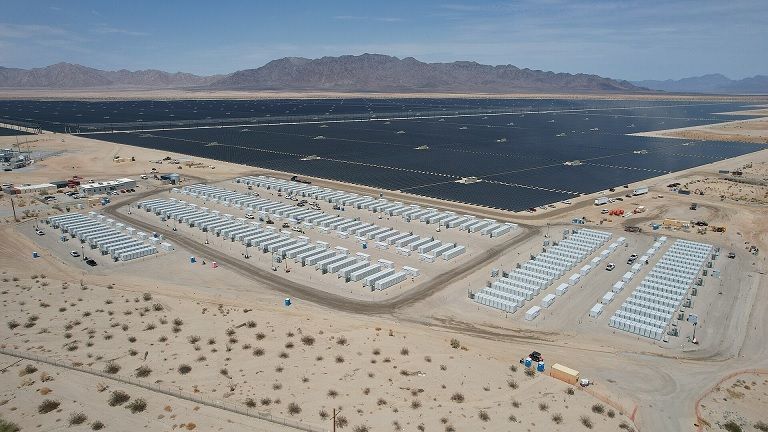
Tesla is in advanced discussions to buy approximately $2.9 billion worth of equipment for manufacturing solar panels and cells from Chinese suppliers, including Suzhou Maxwell Technologies, Shenzhen S.C New Energy Technology, and Laplace Renewable Energy Technology, according to people familiar with the matter.
The potential order, first reported by Reuters on March 20, 2026, would support CEO Elon Musk’s goal of deploying 100 gigawatts of solar manufacturing capacity on American soil by the end of 2028, starting from raw materials. Job postings on Tesla’s website confirm the company is hiring for roles tied to this expansion, with equipment expected to be delivered before autumn and shipped primarily to Texas.
Suzhou Maxwell Technologies, the world’s largest producer of screen-printing equipment for solar cells, is among the leading candidates and has sought export approval from China’s commerce ministry. Some of the machinery, including production lines, will require regulatory clearance from Beijing, though the exact portion and timeline remain unclear.
The solar capacity is intended mainly for Tesla’s own energy needs, with a portion allocated to power SpaceX satellites. Musk has described solar as capable of meeting all U.S. electricity demand, including the surge from AI data centers and manufacturing.
In January 2026, Musk stated that solar power “could meet all of the electricity needs of the United States.” At the World Economic Forum in Davos that same month, he criticized U.S. tariff barriers on solar, saying they make “the economics of deploying solar artificially high” amid growing power shortages.
The talks highlight the complex trade dynamics facing the U.S. as it seeks to build a domestic solar supply chain. While tariffs protect American panel and cell makers from cheaper Chinese imports, manufacturing equipment was exempted by the Biden administration in 2024 at the request of U.S. producers and the exemption has been extended under the Trump administration. Tesla remains heavily reliant on roughly 400 China-based suppliers, including 60 that serve its global operations, even as it pushes for more local sourcing.
Past tariff hikes on Chinese components have already caused production delays for Tesla’s Cybertruck and Semi truck programs in the U.S., underscoring the challenges of decoupling while scaling rapidly.
The U.S. solar market is growing quickly — the country had 135 GW of solar capacity in 2024 out of 1,300 GW total electricity generation — but faces record power consumption driven by data centers. Musk’s plan is ambitious, with analysts noting his history of setting aggressive timelines that sometimes slip.
Shares of the Chinese suppliers rose more than 7% following the reports. Tesla, the Chinese companies, and relevant ministries did not immediately respond to requests for comment.
The move comes as Tesla continues expanding its energy division alongside its core vehicle business, aiming to address both domestic power demands and its own operational needs in a shifting global trade environment.
Join the Team
Are you trying to break into news writing but struggling to get published at major outlets? At RWT News, we're always looking for talented, motivated writers who share our commitment to straightforward, factual conservative journalism. If you believe in honest reporting and want real experience and bylines, we'd love to hear from you.
Visit our Join the Team page to learn more and contact us directly.