Supreme Court Vacates Lower Court Ruling in Steve Bannon Contempt Case, Raising Prospect of Dismissal
Bannon was convicted in July 2022 on two counts of contempt of Congress for refusing to comply with a subpoena from the Democrat-led January 6 Select Committee.
 Tommy Flynn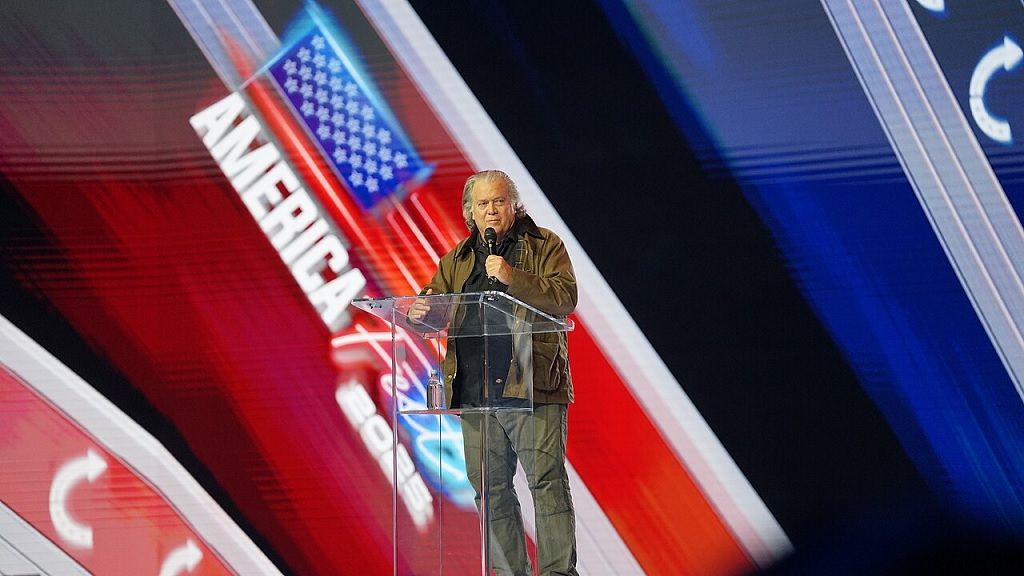
WASHINGTON – The U.S. Supreme Court on April 6, 2026, vacated a lower court ruling against former Trump adviser Steve Bannon in his contempt of Congress case, dealing a significant blow to what conservatives have long described as politically motivated lawfare targeting President Trump and his allies.
The high court’s order sends the case back to the U.S. Court of Appeals for the D.C. Circuit for further proceedings. Legal experts say the move could ultimately lead to the dismissal of the indictment or a new trial.
Bannon was convicted in July 2022 on two counts of contempt of Congress for refusing to comply with a subpoena from the Democrat-led January 6 Select Committee. He was sentenced to four months in prison and a $6,500 fine. Bannon has remained out of prison pending appeal.
The case has been widely viewed by Trump supporters as a prime example of the weaponization of the justice system against the former president’s inner circle. Critics argued the January 6 committee operated as a partisan body that selectively targeted Trump allies while ignoring evidence of irregularities in the 2020 election.
The Supreme Court’s decision to vacate the lower court’s ruling comes after years of legal maneuvering. Bannon’s legal team had argued that the committee’s subpoena process was flawed and that the case should never have proceeded to trial. The high court’s action suggests at least some justices found merit in those arguments or procedural concerns.
Where the case goes from here remains uncertain. The D.C. Circuit must now reconsider the issues raised in light of the Supreme Court’s order. Many legal observers expect the appeals court could dismiss the charges outright or order a new trial with stricter evidentiary standards. A full dismissal would represent a major victory for Bannon and a rebuke to the January 6 committee’s tactics.
Bannon has maintained throughout the process that he was acting on advice of counsel and that the committee’s demands were politically motivated. President Trump has repeatedly called the prosecution of Bannon and other associates “election interference” and “lawfare” designed to damage his political movement.
The Supreme Court’s intervention in the Bannon case is the latest development in a series of legal setbacks for the Justice Department’s handling of high-profile Trump-related cases. It reinforces the perception among conservatives that many of these prosecutions were driven more by political animus than by sound legal reasoning.
No timeline has been set for the D.C. Circuit’s next action, but the case is now on an accelerated track following the Supreme Court’s ruling. Bannon remains free while the legal process continues.
Join the Team
Are you trying to break into news writing but struggling to get published at major outlets? At RWT News, we're always looking for talented, motivated writers who share our commitment to straightforward, factual conservative journalism. If you believe in honest reporting and want real experience and bylines, we'd love to hear from you.
Visit our Join the Team page to learn more and contact us directly.