Supreme Court Unanimously Narrows Federal Gun Ban for Drug Users in Landmark Second Amendment Ruling
The ruling in United States v. Hemani significantly narrows the scope of 18 U.S.C. § 922(g)(3), which has long barred anyone who is an “unlawful user of or addicted to any controlled substance” from possessing firearms.
 Tommy Flynn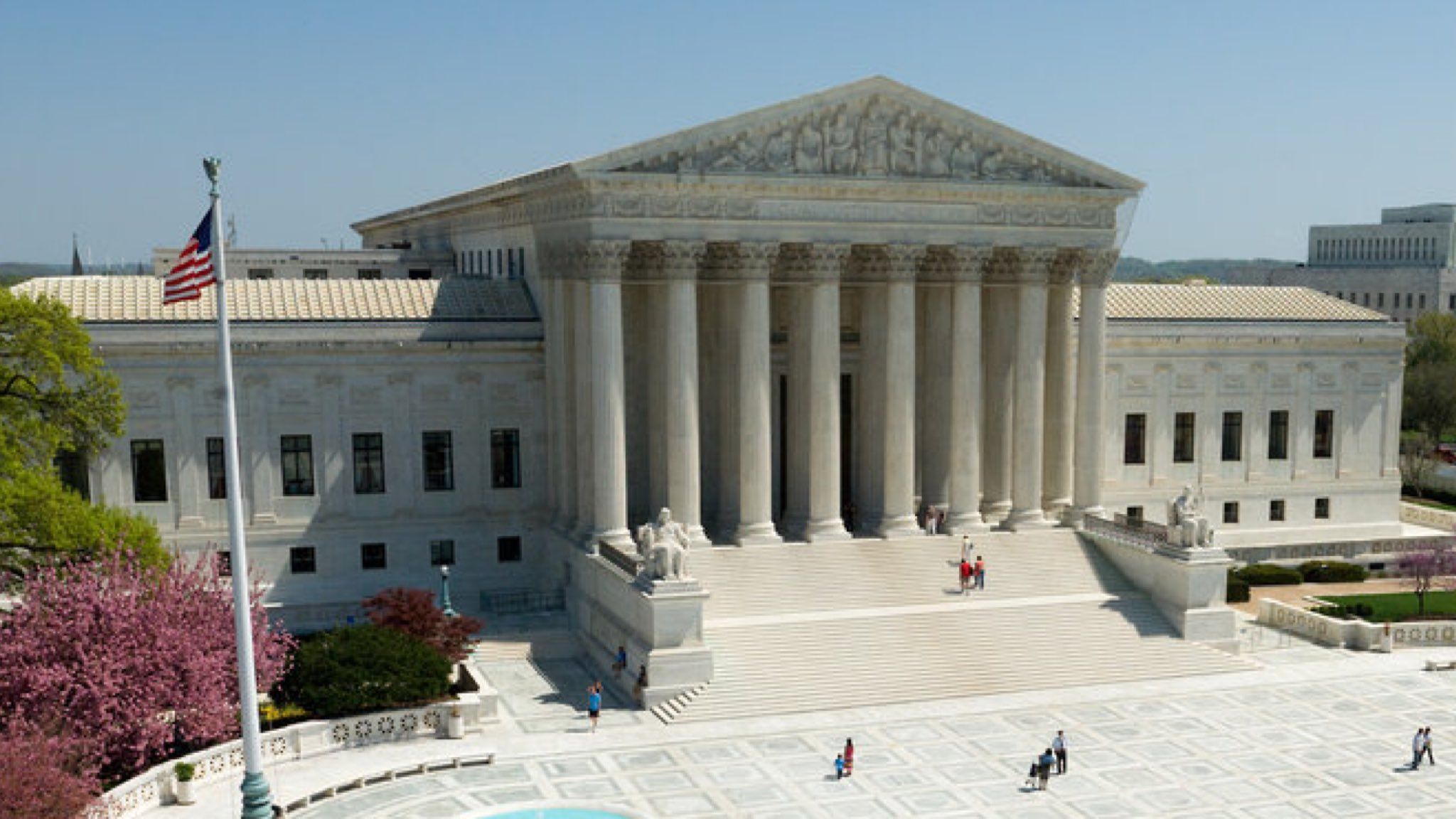
Washington, D.C. — In a unanimous 9-0 decision on June 18, 2026, the U.S. Supreme Court ruled that the federal government cannot categorically prohibit gun ownership by individuals who regularly use marijuana, striking down the application of a longstanding federal law to a Texas man who faced felony charges for possessing a firearm while being an “unlawful user” of controlled substances.
The ruling in United States v. Hemani significantly narrows the scope of 18 U.S.C. § 922(g)(3), which has long barred anyone who is an “unlawful user of or addicted to any controlled substance” from possessing firearms. Justice Neil Gorsuch authored the opinion of the Court, emphasizing that the law, as applied to regular but non-impaired marijuana users, fails the historical tradition test established in the Court’s 2022 New York State Rifle & Pistol Association v. Bruen decision.
Ali Danial Hemani, a Texas resident and dual U.S.-Pakistan citizen, was indicted after FBI agents executing a search warrant at his family home in 2022 discovered a Glock 9mm pistol, marijuana, and cocaine. Hemani admitted to using marijuana approximately every other day but was not accused of being under the influence at the time he possessed the firearm, nor of posing any threat to others. He kept the gun for self-defense. Lower courts dismissed the charges, and the Supreme Court affirmed that dismissal.
Gorsuch wrote that the government’s attempt to analogize the modern statute to historical laws disarming “habitual drunkards” failed under every relevant measure. Those earlier laws targeted individuals whose extreme intoxication rendered them incapacitated and dangerous, whereas § 922(g)(3) sweeps far more broadly to cover anyone who “regularly uses” an illegal substance — even without evidence of impairment or threat.
“The government asks us to conclude that anyone who regularly uses marijuana is categorically violent and dangerous without any further showing,” Gorsuch stated. He noted that such a broad power to designate groups as dangerous and strip their Second Amendment rights “would risk allowing [the government] to ‘quickly swallow’ the Second Amendment.” The Court explicitly limited its holding, stating it does not address efforts to ban actual addicts or those presently intoxicated from possessing firearms.
The decision drew support from an unusual coalition, including gun rights groups like the NRA and Second Amendment Foundation, as well as cannabis advocacy organizations. It represents another expansion of individual rights under the Bruen framework, following earlier rulings upholding some restrictions (such as on domestic abusers) while striking down others deemed historically unsupported.
Justice Samuel Alito filed an opinion concurring in the judgment, joined by Justice Elena Kagan, agreeing that the government failed to demonstrate Hemani resembled the severely impaired individuals historically subject to disarmament. Additional concurrences came from Justices Clarence Thomas and Ketanji Brown Jackson (joined by Sonia Sotomayor).
The ruling has immediate implications for millions of Americans in states where marijuana is legal for medical or recreational use. While recreational marijuana remains illegal under federal law, the Court made clear that regular use alone does not justify a lifetime firearms ban without evidence of dangerousness or addiction in the traditional sense. The statute still carries severe penalties — up to 15 years in prison — for those who qualify as prohibited persons.
The same provision was central to the federal prosecution of Hunter Biden, who was convicted in 2024 of possessing a firearm while addicted to cocaine (he was later pardoned by President Joe Biden). The Hemani decision does not directly overturn addiction-based prosecutions but limits the law’s reach for non-addicted, regular users of substances like marijuana.
Conservative legal observers hailed the outcome as a correct application of originalist principles. Judicial Crisis Network President Carrie Severino noted the unanimous Court’s reliance on history and tradition, describing it as a victory that prevents the government from broadly disarming law-abiding citizens based on modern policy preferences rather than founding-era analogues.
The decision reinforces that the Second Amendment protects the rights of responsible, non-dangerous individuals and limits federal overreach in an era of expanding state-level cannabis legalization. Lower courts and prosecutors will now face a higher bar when attempting to apply § 922(g)(3) to routine marijuana users absent specific evidence of impairment or threat.
The case originated in the U.S. District Court for the Eastern District of Texas and reached the Supreme Court after the Fifth Circuit upheld precedents limiting the statute’s application. With the ruling now in place, the indictment against Hemani stands dismissed, affirming that mere regular marijuana use does not strip Americans of their constitutional right to keep and bear arms.
Support Independent Conservative News
RWTNews is independent conservative news — no corporate backing, no agenda driven by advertisers. We rely entirely on readers like you to keep the lights on and the truth coming. If you've found value in what you read here, consider supporting us with a one-time or monthly contribution. Every dollar goes directly toward keeping this site running and growing.
Secured by Stripe. Your payment info is never stored on our servers.