Supreme Court Strikes Down Louisiana Congressional Map as Unconstitutional Racial Gerrymandering
The decision removes a key tool Democrats have used in Southern states to create additional districts favoring minority voters, potentially shifting the balance of power in the U.S. House.
 Tommy Flynn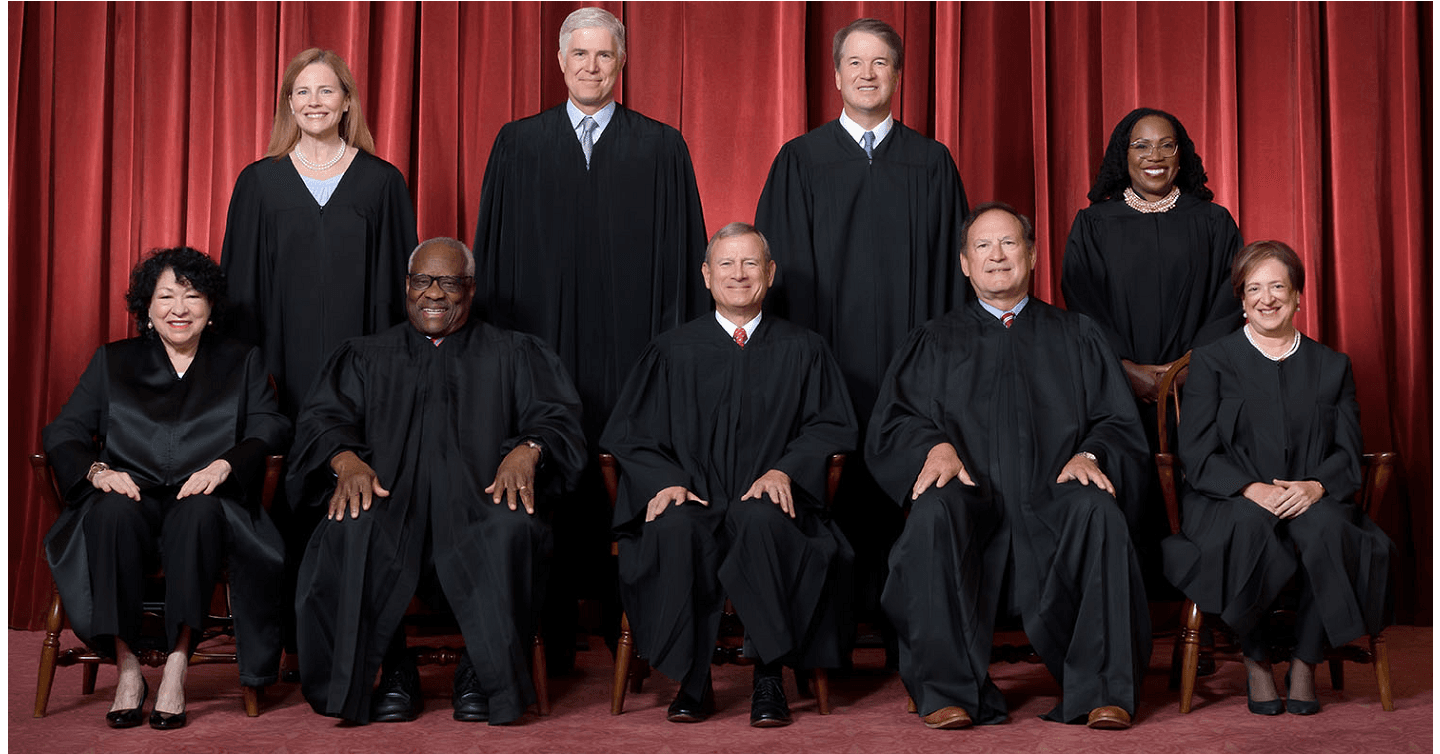
WASHINGTON — The U.S. Supreme Court on April 29, 2026, struck down Louisiana’s congressional map in a 6-3 decision, ruling that the state’s creation of a second majority-Black district violated the Equal Protection Clause of the Fourteenth Amendment.
In Louisiana v. Callais, the Court held that the Voting Rights Act of 1965 did not require Louisiana to draw an additional majority-minority district. Therefore, the state lacked a compelling interest to justify the predominant use of race in drawing the map known as SB8. Justice Samuel Alito wrote the majority opinion, joined by Chief Justice John Roberts and Justices Clarence Thomas, Neil Gorsuch, Brett Kavanaugh, and Amy Coney Barrett. Justice Thomas filed a concurring opinion joined by Justice Gorsuch. Justice Elena Kagan dissented, joined by Justices Sonia Sotomayor and Ketanji Brown Jackson.
The challenged map, enacted by the Republican-controlled Louisiana Legislature in 2024, added a second majority-Black district in response to a federal court ruling that the previous map violated Section 2 of the Voting Rights Act by diluting Black voting power. Louisiana has six congressional districts, and Black residents make up about one-third of the state’s population. The new map was designed to create two districts where Black voters could elect their preferred candidates.
Lower courts had ruled the map an unconstitutional racial gerrymander because race predominated over traditional redistricting criteria such as compactness and contiguity. The Supreme Court affirmed that ruling, concluding that compliance with Section 2 of the VRA was not a sufficiently compelling interest to justify the race-based drawing of the second majority-Black district.
National Implications
The decision is expected to have far-reaching effects on redistricting nationwide. It narrows the circumstances in which states may consider race when drawing congressional and legislative maps to comply with the Voting Rights Act. Legal experts say the ruling will make it significantly harder for minority groups to successfully challenge maps under Section 2 in future cases and could embolden states to draw maps with fewer majority-minority districts.
Republicans have long argued that race-based map drawing amounts to reverse discrimination. The decision removes a key tool Democrats have used in Southern states to create additional districts favoring minority voters, potentially shifting the balance of power in the U.S. House. Analysts estimate the ruling could affect congressional maps in multiple states, including Alabama, Georgia, Mississippi, and South Carolina, where similar Voting Rights Act challenges have been filed.
Democrats and voting rights groups warned that the decision weakens protections for minority voters and could lead to widespread dilution of Black and Hispanic voting strength. The ruling comes as multiple states are already engaged in mid-decade redistricting battles ahead of the 2026 midterms.
The case returns to the lower courts for further proceedings consistent with the Supreme Court’s opinion. Louisiana will now use its previous congressional map for the 2026 elections unless new maps are drawn that comply with the decision. The outcome reinforces the Court’s recent trend of limiting race-conscious remedies in voting and redistricting cases while preserving core constitutional limits on racial gerrymandering.
Support Independent Conservative News
RWTNews is independent conservative news — no corporate backing, no agenda driven by advertisers. We rely entirely on readers like you to keep the lights on and the truth coming. If you've found value in what you read here, consider supporting us with a one-time or monthly contribution. Every dollar goes directly toward keeping this site running and growing.
Secured by Stripe. Your payment info is never stored on our servers.