Soros Family Directs Over $100 Million into 2026 Midterm Elections
Only a small fraction—roughly $793,800—appears under George Soros’s personal name in Federal Election Commission records. The majority routes through Democracy PAC.
 Tommy Flynn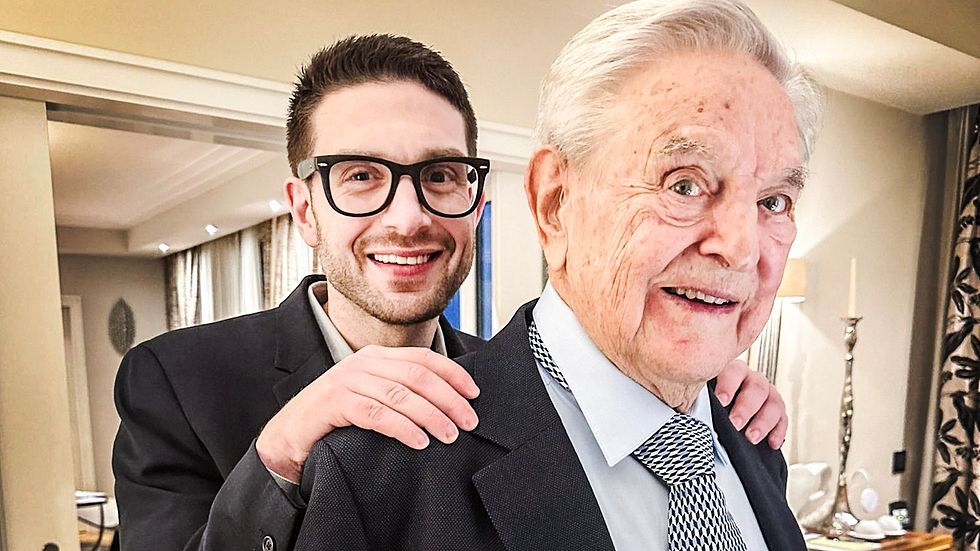
George Soros and his son Alex have channeled approximately $102.8 million into the 2026 midterm election cycle, placing the family at the top of major donor lists and on pace to exceed the elder Soros’s previous record of $128 million spent in the 2022 midterms. The bulk of the funds flows through the family-controlled Democracy PAC, a super PAC that enables unlimited independent expenditures on behalf of Democratic candidates and causes.
Only a small fraction—roughly $793,800—appears under George Soros’s personal name in Federal Election Commission records. The majority routes through Democracy PAC, including $52 million from Geosor, a private corporation tied to George Soros, and $50 million from the Fund for Policy Reform, a nonprofit where Alex Soros serves as director. Alex Soros added an additional $140,525 in personal contributions. This structure allows the family to support political activities without the contribution limits that apply to direct candidate donations.
Alex Soros has assumed greater control of the family’s political operations ahead of this cycle, shifting from his father’s approach. Observers note that Alex has positioned himself as more overtly political, focusing resources on advancing progressive priorities within the Democratic Party. The current spending already represents a 52 percent increase over the $67 million the family directed to Democracy PAC in the 2024 cycle.
The contributions have supported specific Democratic figures, including maximum legal donations of $7,000 each from both George and Alex Soros to Maine Senate candidate Graham Platner, Rep. Pramila Jayapal (D-Wash.), and Sens. Raphael Warnock (D-Ga.) and Jon Ossoff (D-Ga.), both viewed as potential 2028 presidential contenders. Alex Soros also maxed out contributions to Rep. Ilhan Omar (D-Minn.) and Rep. Ro Khanna (D-Calif.). Super PAC funds can further amplify support through independent advertising, voter mobilization, and research targeting Republican opponents.
The publicly reported total understates the family’s full influence. The Open Society Action Fund, a 501(c)(4) organization, conducts lobbying and political activity without mandatory disclosure of its spending. Critics argue this opacity allows substantial “dark money” influence over elections. Conservative analysts have described George Soros as a driving force behind shifts in Democratic policy on issues such as criminal justice, immigration, and cultural matters, with Alex continuing and expanding that focus.
The Soros family’s giving occurs amid a broader landscape of major donors in the 2026 cycle. Other significant contributors tracked by outlets such as The Washington Post include networks associated with Andreessen Horowitz and Elon Musk on the Republican side. However, the Soros total stands out for its concentration on Democratic infrastructure and candidates.
George Soros built a fortune through global finance before dedicating substantial resources to political and philanthropic efforts aligned with progressive causes. His Open Society Foundations have funded initiatives worldwide, while U.S. political spending has focused on district attorney races, state-level contests, and federal super PACs. The transition to Alex Soros reflects an effort to sustain and intensify that involvement. Alex has publicly emphasized defending democratic institutions and countering conservative gains.
Republicans have highlighted the scale of Soros funding as evidence of outsized influence by a single wealthy individual and family on one side of the political spectrum. They point to past support for policies critics associate with rising crime in certain cities and lax border enforcement. Democrats and supporters of the family counter that such donations represent legitimate participation in the political process by private citizens exercising free speech rights through legal channels.
The $102.8 million figure reflects activity reported through the first half of 2026, with second-quarter filings still pending in some cases and more than four months remaining until the November elections. Additional contributions could push the family’s total higher. Super PACs like Democracy PAC can accept unlimited sums and spend them independently, amplifying the family’s reach beyond direct candidate limits.
This level of concentrated spending raises ongoing questions about the role of large donors in shaping electoral outcomes and party priorities. While federal law requires disclosure of many contributions, nonprofit vehicles and super PAC structures limit full transparency. The Soros family’s approach exemplifies how wealthy individuals and families can exert significant leverage in modern American elections through coordinated giving across multiple entities.
Join the Team
Are you trying to break into news writing but struggling to get published at major outlets? At RWT News, we're always looking for talented, motivated writers who share our commitment to straightforward, factual conservative journalism. If you believe in honest reporting and want real experience and bylines, we'd love to hear from you.
Visit our Join the Team page to learn more and contact us directly.