Senate Votes 50–49 Against Iran War-Powers Resolution; Four Republicans Break Ranks
The Senate voted 50–49 against a resolution directing Trump to pull U.S. forces from Iran unless Congress authorizes the war. Collins, Murkowski, Paul, and Tillis joined most Democrats. Fetterman was the only Democrat to vote no. The measure is nonbinding.
 Tommy Flynn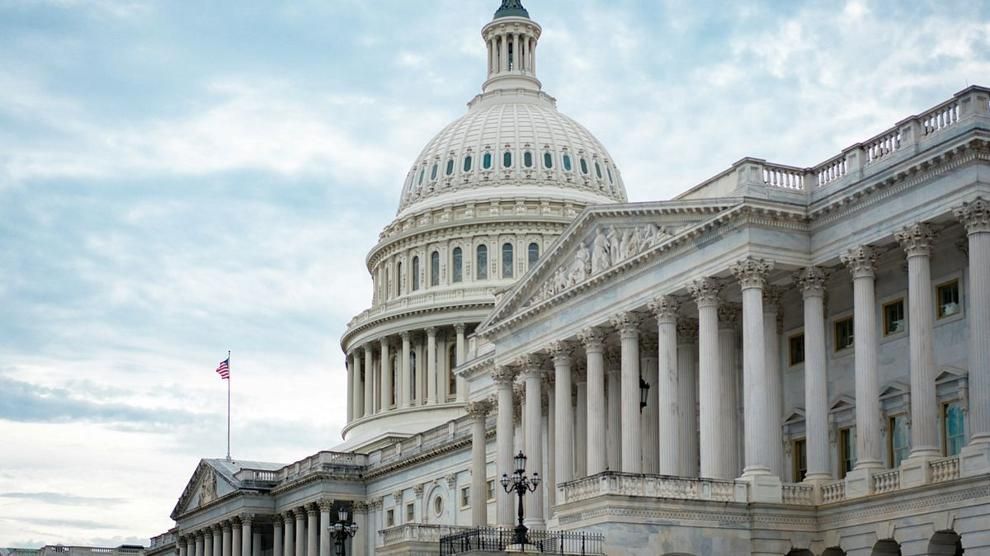
The Senate on Thursday rejected a Democratic-led concurrent resolution directing President Donald Trump to pull U.S. forces out of hostilities with Iran unless Congress authorizes the war. The tally was 50–49 against the measure. Four Republicans — Susan Collins of Maine, Lisa Murkowski of Alaska, Rand Paul of Kentucky, and Thom Tillis of North Carolina — voted with most Democrats. Sen. John Fetterman of Pennsylvania was the only Democrat to vote no. Sen. Angela Alsobrooks of Maryland did not vote.
The text of H. Con. Res. 89 directs the president “to remove the use of United States Armed Forces from hostilities against the Islamic Republic of Iran or any part of its government or military, including potential ground forces in a combat role or used for occupation, unless explicitly authorized by a declaration of war or specific authorization for use of military force against Iran.” As a concurrent resolution it does not go to the White House for a signature or veto. Sen. Tim Kaine, D-Va., who pushed the vote, said Congress, not the president, holds the constitutional power to declare war and that “the White House can’t veto the Constitution.” Courts have treated similar concurrent resolutions as nonbinding.
The House passed the same resolution in July, 214–208, with four Republicans joining Democrats. A separate House war-powers measure last week drew 220 votes, including seven Republicans. Thursday’s Senate roll call was the last major on-the-record vote on the conflict before the Nov. 3 midterms. Tillis, who is leaving the Senate in January, voted for an Iran war-powers resolution for the first time. “We’ve got to break the cycle,” he said. Collins, Murkowski, and Paul have backed earlier versions. Sen. Bill Cassidy of Louisiana, who supported a June resolution, voted with most Republicans this time. He said last week the administration had made “very little” to “no” effort to consult Congress.
Republicans in competitive races stayed with the president, including Jon Husted of Ohio, Dan Sullivan of Alaska, Roger Marshall of Kansas, Pete Ricketts of Nebraska, and Darline Graham of South Carolina. Fighting began in late February. The Defense Department has reported at least 19 U.S. service members killed. Diesel and gasoline prices have risen as Iran has disrupted traffic in the Strait of Hormuz. Fertilizer and food costs have followed. Democrats framed the vote as a midterm contrast on war fatigue and pump prices. Trump told the United Nations this week that a peace deal may not come until after the midterms and warned of far harder strikes, including language about annihilating Iran if talks fail. The resolution does not change current operations. It records how senators stood on congressional authorization with six weeks left before Election Day.
Join the Team
Are you trying to break into news writing but struggling to get published at major outlets? At RWT News, we're always looking for talented, motivated writers who share our commitment to straightforward, factual conservative journalism. If you believe in honest reporting and want real experience and bylines, we'd love to hear from you.
Visit our Join the Team page to learn more and contact us directly.