Senate Passes Bill Funding Most of DHS Early Friday Morning in Bid to End 42-Day Partial Shutdown
In a near-empty chamber, senators approved the measure by voice vote around 3 a.m. ET on March 27, 2026, with no objections recorded.
 Tommy Flynn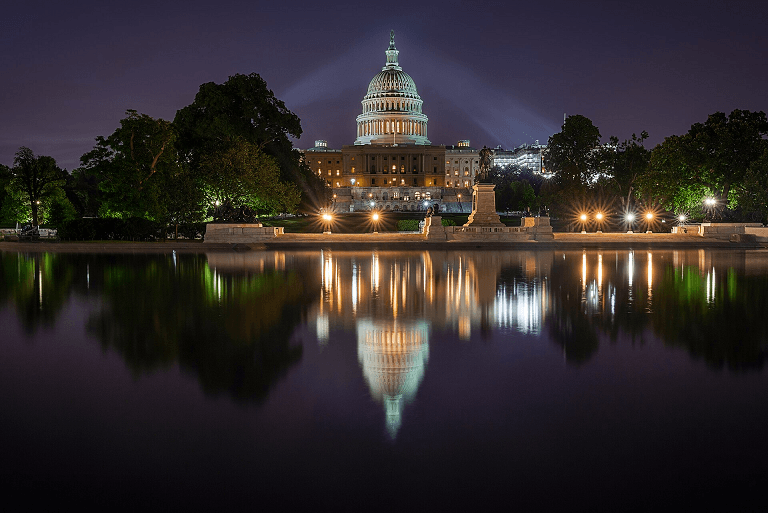
WASHINGTON – The U.S. Senate passed legislation early Friday morning to fund most of the Department of Homeland Security while deliberately excluding Immigration and Customs Enforcement and portions of Customs and Border Protection, advancing a compromise aimed at ending the partial government shutdown now in its 42nd day.
In a near-empty chamber, senators approved the measure by voice vote around 3 a.m. ET on March 27, 2026, with no objections recorded. The bill would provide funding for the Transportation Security Administration, U.S. Coast Guard, Federal Emergency Management Agency, Cybersecurity and Infrastructure Security Agency, and other non-enforcement components of DHS, while strengthening security at borders and ports of entry. It does not include funding for ICE’s Enforcement and Removal Operations division or certain CBP immigration enforcement activities.
Senate Majority Leader John Thune (R-S.D.) and other senior Republicans worked late into the night Thursday, calling colleagues to ensure the measure could pass without objection. Thune told reporters afterward that Democrats had received exactly what they demanded all week — DHS funding minus ICE — but that the opportunity for a two-step deal pairing it with separate ICE funding had “sailed.”
The vote comes after weeks of stalled negotiations. Democrats had blocked full DHS funding since mid-February to demand reforms on immigration enforcement following incidents involving federal agents. Republicans, backed by President Donald Trump, refused partial deals that left ICE unfunded, insisting any resolution must support border security priorities. The impasse forced tens of thousands of TSA officers to work without pay, triggering mass resignations, soaring call-out rates, and record-long airport security lines across the country.
The bill now heads to the House of Representatives, where it could be taken up as early as Friday. If passed and signed by President Trump, it would restore pay and operations for most DHS agencies and provide back pay to affected workers. However, ICE and certain border enforcement functions would remain unfunded under this measure.
Republicans have signaled plans to pursue separate funding for ICE through budget reconciliation, which would require only a simple majority and bypass Democratic opposition — an approach Sen. John Kennedy (R-La.) had previously advocated before Trump rejected an earlier version of the two-step strategy.
The partial shutdown, which began Feb. 14, 2026, has disrupted airport travel nationwide and strained federal workers. Trump announced Thursday he would explore executive action to pay the roughly 50,000 unpaid TSA officers amid the crisis. The Senate’s action marks the first concrete step toward resolving the funding standoff, though full resolution depends on House passage and the separate ICE funding effort.
Join the Team
Are you trying to break into news writing but struggling to get published at major outlets? At RWT News, we're always looking for talented, motivated writers who share our commitment to straightforward, factual conservative journalism. If you believe in honest reporting and want real experience and bylines, we'd love to hear from you.
Visit our Join the Team page to learn more and contact us directly.