Senate Hearing Puts Smith’s Arctic Frost Sweep — Lawmaker Phones, Donor Checks, Media Logs — on the Record
Smith sat four hours. Grassley put 4,782 donor checks, lawmaker phone metadata, and 44 members’ White House-era texts on the record. Smith: I would do it again. The cases died when Trump won. The paper trail did not.
 Tommy Flynn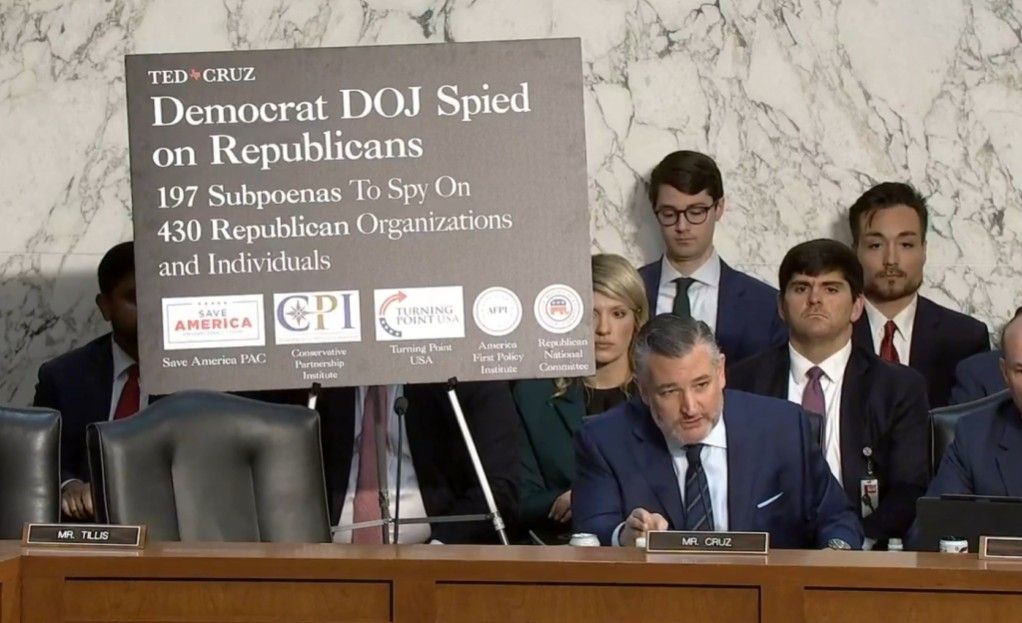
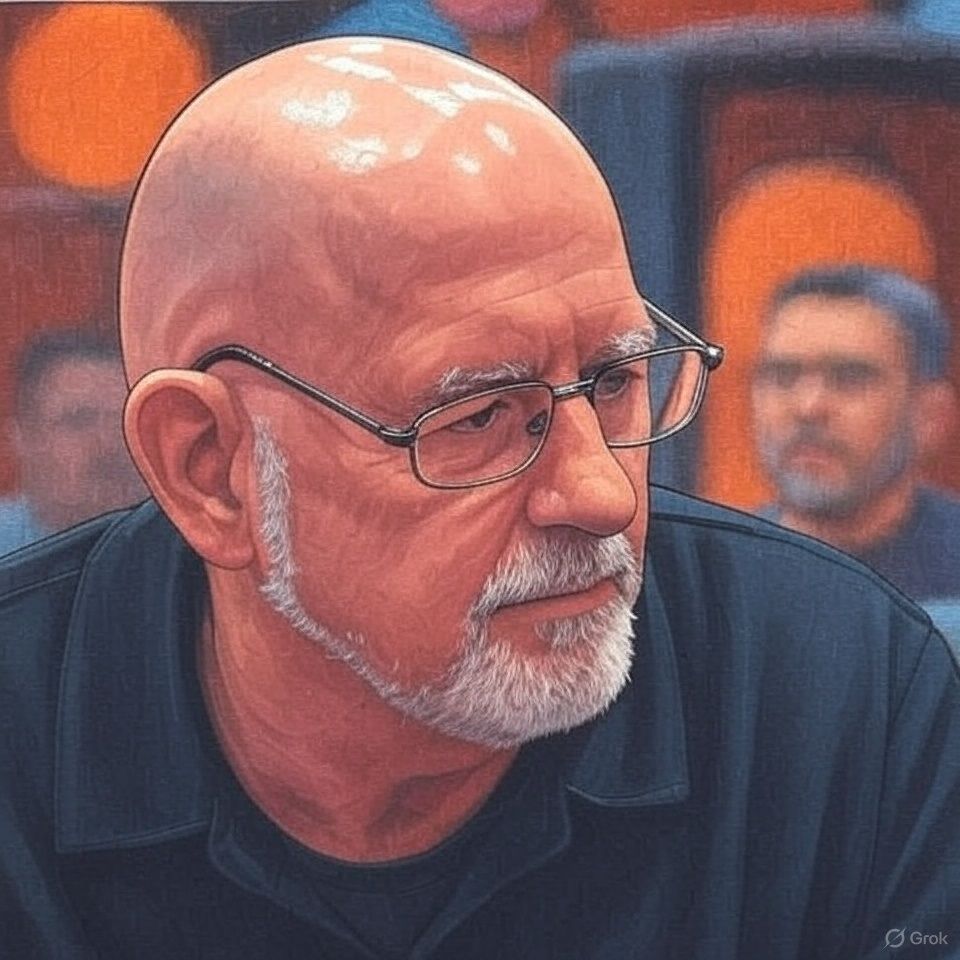
Former special counsel Jack Smith spent nearly four hours Tuesday before the Senate Judiciary Committee defending the two federal cases he brought against Donald Trump and answering Republican questions about how his office collected phone records, text messages, donor checks, and media communications tied to the 2020 election investigation known as Arctic Frost. Smith stood by the prosecutions. Republicans on the panel said the methods were partisan surveillance of the political opposition. The cases themselves were dismissed after Trump won the 2024 election under longstanding Justice Department policy against charging a sitting president.
Chairman Chuck Grassley, R-Iowa, opened by accusing Smith of taking “partisanship to a new level.” Grassley said Smith’s team obtained at least 4,782 donor checks, many for $5 or $10, from contributors in every state represented on the committee, including 42 checks from Iowans who gave to Republicans. “No matter what you say, there is no legitimate basis for what you did,” Grassley told him. The chairman also listed news organizations whose communications with government sources the investigation obtained: 60 Minutes, the Associated Press, Bloomberg, CBS, CNBC, CNN, Fox News, the Los Angeles Times, The Mark Levin Show, the Media Research Center, NBC, NPR, New York Magazine, Reuters, The Federalist, The Washington Post, The Washington Times, and The Wall Street Journal.
Those disclosures sat on top of a paper trail Grassley, Sen. Ron Johnson, R-Wis., and House Judiciary Chairman Jim Jordan, R-Ohio, have released over the past year. Arctic Frost began at the FBI before Smith was appointed in November 2022. Between April 2022 and May 2023, investigators seized telephone toll records — numbers called, dates, times, and duration, not call audio — for at least 17 Republican members of Congress, including then-House Minority Leader Kevin McCarthy, according to a Sept. 23 House Judiciary interim staff report. Grassley has said eight Republican senators were among those whose metadata was collected. Carriers received grand-jury subpoenas paired with nondisclosure orders signed by U.S. District Judge James Boasberg so the targets would not be told.
A separate layer involved content. In July, Grassley and Johnson released Justice Department records showing Smith’s team obtained and reviewed text messages involving 44 current and former members of Congress after a June 2023 subpoena to the National Archives for messages sent from October 2020 to Jan. 20, 2021, on phones issued to first-term Trump White House personnel. Senators said investigators bypassed the filter team that was supposed to screen Speech or Debate Clause and other privileged material. Grassley and Johnson said their own texts were in the haul, along with those of 18 other sitting or former senators and 24 House members. Smith’s December 2025 closed-door House testimony that he did not request the contents of lawmakers’ text messages in the toll-record subpoenas is the basis of Jordan’s later criminal referral alleging a false statement to Congress. Smith’s lawyers have called the referral meritless. The Justice Department has said it received the referral.
Grassley has previously released 197 Arctic Frost subpoenas covering 34 individuals and 163 businesses and seeking records on more than 430 Republican individuals and entities. Retired DOJ inspector-general agent Brian Burnett told House investigators in a transcript released last week that prosecutors did not tell him a number he was collecting belonged to then-Ranking Member Jordan, and that he would have flagged a different process if he had known. Smith told senators Tuesday that his office consulted the Public Integrity Section, that he approved the toll-record subpoenas, and that the metadata “corroborated evidence that we had that the president, President Donald Trump, and his co-conspirators were seeking to exploit the violence on January 6th.” He said the office had “strong reason to believe that Donald Trump would destroy evidence.”
Smith’s opening statement repeated the line he has used since the House appearances in December 2025 and January 2026: he made charging decisions without regard to Trump’s politics or 2024 candidacy, and the investigation “developed proof beyond a reasonable doubt that President Trump engaged in serious crimes against our nation.” He said the strongest witnesses were Republicans. He said he would bring the same case against a Democrat. On why the prosecutions stopped, he cited Office of Legal Counsel policy after the 2024 results: “That’s the Department policy, and I was committed to following the Department policy at all times.” Sen. John Cornyn, R-Texas, asked whether an incumbent president’s attorney general had ever appointed a special counsel to investigate a political opponent in 250 years of American history. Smith did not identify a comparable case.
Look at Jack Smith’s list. There is one thing that is consistent: every name on it is a Republican.
— Senator Ted Cruz (@SenTedCruz) September 29, 2026
Is it a crime to be a Republican?
Is it a crime to write a check to Republicans?
No.
Jack Smith used his investigation as an excuse to engage in a massive fishing expedition to… pic.twitter.com/22D7sNZZ37
Sen. John Kennedy, R-La., told Smith, “You make me want to throw up in my mouth.” Sen. Ted Cruz, R-Texas, said Smith had brought the Justice Department “into disrepute” and committed “the most egregious abuse of power in the history of the Department of Justice.” Sen. Josh Hawley, R-Mo., said the investigation was “nothing other than an attempt to interfere politically in a presidential election.” Sen. Eric Schmitt, R-Mo., pressed Smith on a Public Integrity warning against an August 2024 superseding indictment close to the election and on the phone records of sitting senators, including the late Lindsey Graham. After the hearing, Sen. Marsha Blackburn, R-Tenn., called the probe a “witch hunt” for political retribution. Ranking Member Dick Durbin, D-Ill., said Republicans had spent months on “baseless conspiracy theories” and noted Smith had offered to testify under oath nearly a year earlier. Sen. Adam Schiff, D-Calif., blamed Judge Aileen Cannon for ending the classified-documents case and asked for release of the second volume of Smith’s report.
The two indictments — the D.C. election and Jan. 6 case and the Florida documents case — never reached a jury. Judge Cannon dismissed the Florida case on the ground that Smith’s appointment was unlawful; that fight did not produce a final Supreme Court ruling on the merits before the cases were dropped. Just the News has separately reported that FBI personnel working the election file sought to preserve evidence into the next decade after the prosecutions closed, a point Republicans cite as leftover machinery rather than a closed book. Smith is a private citizen. Tuesday’s session was his second public appearance before Congress and the first time he faced, under oath in open session, senators whose own phone metadata and White House-era texts were in the Arctic Frost collection. Midterms are five weeks away.
Join the Team
Are you trying to break into news writing but struggling to get published at major outlets? At RWT News, we're always looking for talented, motivated writers who share our commitment to straightforward, factual conservative journalism. If you believe in honest reporting and want real experience and bylines, we'd love to hear from you.
Visit our Join the Team page to learn more and contact us directly.