Russia-Ukraine Peace Talks Restarting After Months of Stalemate
Upcoming events include the advisor meetings, followed by the Budapest summit. Vice President Vance indicated more work is needed, as parties remain misaligned.
 Tommy Flynn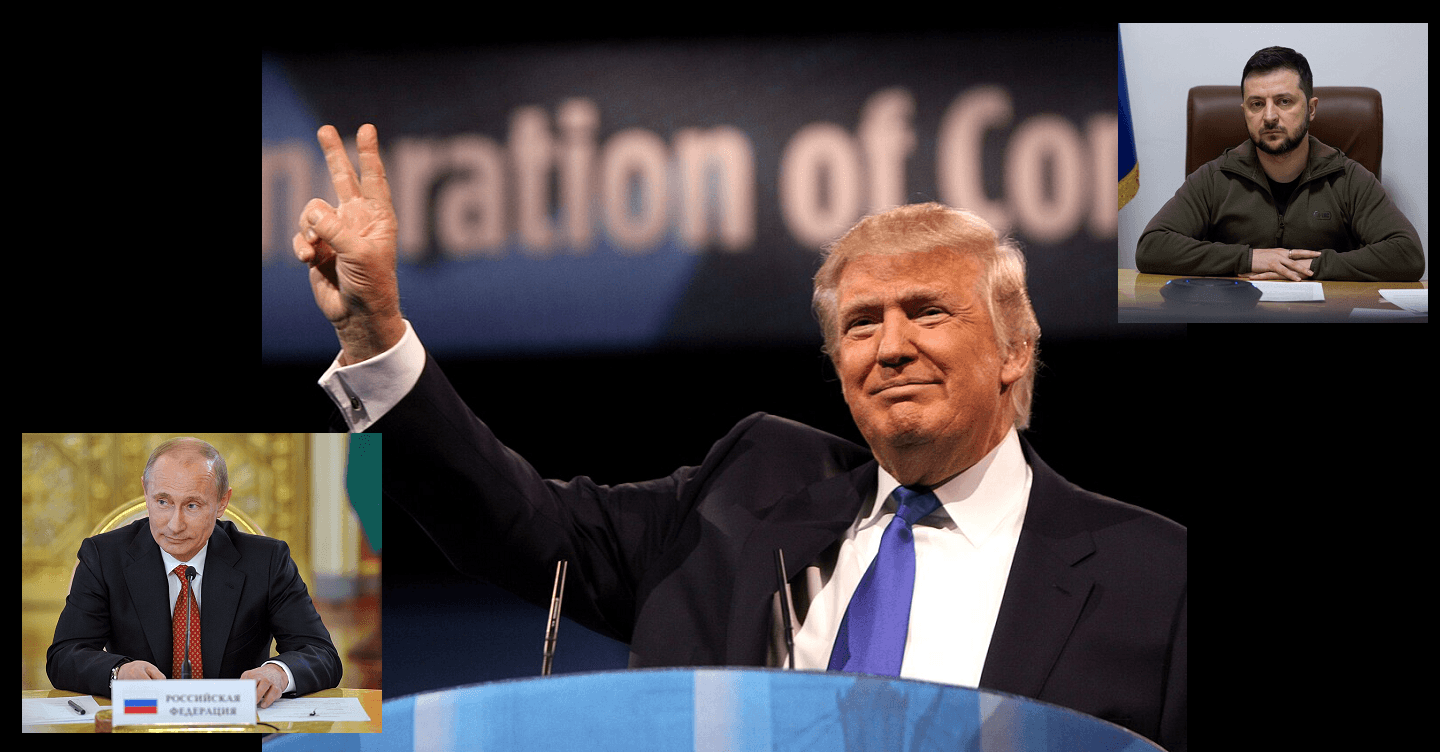
Efforts to negotiate an end to the Russia-Ukraine war resumed following a phone call between President Trump and Russian President Vladimir Putin on October 16, 2025. President Trump described the conversation as productive, covering congratulations on Middle East peace, post-war trade between the U.S. and Russia, and steps toward resolving the conflict. The leaders agreed to high-level advisor meetings next week, led by U.S. Secretary of State Marco Rubio, with a potential summit between President Trump and Putin in Budapest, Hungary. President Trump is scheduled to meet Ukrainian President Volodymore Zelensky in the Oval Office on October 17 to discuss the call and related matters.
The war began with Russia's full-scale invasion of Ukraine in February 2022. Ending it became a priority for President Trump upon his January 2025 inauguration, with initial goals for a ceasefire within 100 days. U.S.-brokered talks started in May 2025 in Istanbul, Turkey, focusing on humanitarian issues like prisoner exchanges and the return of abducted children. Progress included agreements on body exchanges and some prisoner swaps, but no ceasefire emerged.
In April 2025, the U.S. presented proposals including de jure recognition of Russian control over Crimea, de facto recognition of other occupied areas, Ukraine's NATO exclusion with security guarantees, sanctions removal, and U.S. operation of the Zaporizhzhia nuclear plant. Russia demanded Ukraine cede four regions and reject Western military support. Ukraine proposed a 10-point plan in 2022, including full withdrawal, security guarantees, and territorial integrity. Talks continued into June and July 2025, with a third round in Istanbul yielding limited humanitarian agreements but no political or military breakthroughs.
Negotiations stalled by late July 2025 due to misaligned expectations and hardline positions. Russia viewed its battlefield position stronger than reality, while Ukraine sought better terms amid renewed U.S. and European military aid. A Trump-Putin meeting in Alaska in August 2025 produced no substantial progress. Vice President JD Vance noted on October 16 that neither side was ready for a deal, citing Russia's overestimation of gains.
The process restarted after the U.S.-brokered Israel-Hamas peace deal in October 2025, with President Trump shifting focus to Ukraine. Putin congratulated Trump on the Middle East achievement during their call, suggesting it could aid Ukraine negotiations. The U.S. employs tariffs on Russian partners like India and China to reduce oil revenues, finding them more effective than sanctions.
Russia seeks recognition of annexed territories including Crimea, Donetsk, Luhansk, Kherson, and Zaporizhzhia, plus Ukraine's NATO exclusion. Ukraine demands full Russian withdrawal, reparations, and security assurances, recently pushing for U.S. Tomahawk missiles to strike deeper into Russia. The U.S. aims for a swift resolution through energetic diplomacy, with President Trump open to unconventional approaches.
Upcoming events include the advisor meetings, followed by the Budapest summit. Vice President Vance indicated more work is needed, as parties remain misaligned.
Support Independent Conservative News
RWTNews is independent conservative news — no corporate backing, no agenda driven by advertisers. We rely entirely on readers like you to keep the lights on and the truth coming. If you've found value in what you read here, consider supporting us with a one-time or monthly contribution. Every dollar goes directly toward keeping this site running and growing.
Secured by Stripe. Your payment info is never stored on our servers.