Reopening the Government: Amended CR Passes in Senate, Now Goes Back to the House
The final bill passed in the Senate with a vote of 60-40. It now goes back to the house with a vote expected Wednesday that should easily pass.
 Tommy Flynn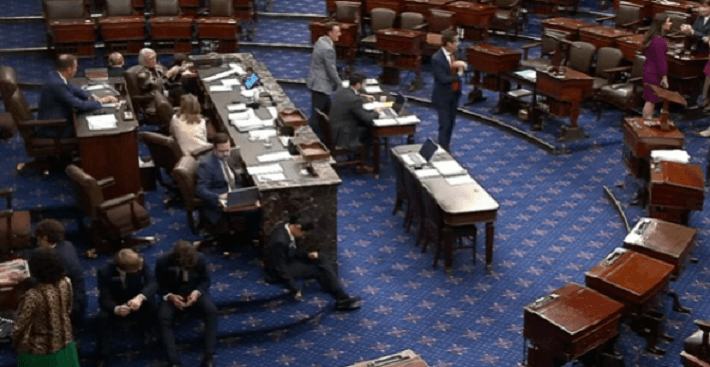
The Senate made significant progress on Monday toward reopening the federal government after invoking cloture on a funding package in a 60-40 vote late Sunday night, breaking a Democratic filibuster that had stalled a clean continuing resolution (CR) for over 40 days. This marked the first time cloture succeeded after 14 failed attempts, shifting the bill to a simple majority requirement and paving the way for final passage later that day.
A continuing resolution is a temporary measure that extends government funding at existing levels when Congress misses deadlines for full-year appropriations bills, ensuring essential operations like air traffic control, national parks, and veterans' services continue without interruption. The original clean CR, passed by the House on September 19, contained no new spending or policy changes—just straightforward funding through November 21.
Democrats blocked it repeatedly using the filibuster, a Senate rule allowing a minority of 41 senators to prevent a vote by prolonging debate indefinitely. Overcoming this requires cloture, a 60-vote threshold to limit debate to 30 hours and force advancement. For weeks, motions fell short at 59 votes, as Democrats demanded attachment of $1.5 trillion in unrelated items, including permanent extensions of Affordable Care Act subsidies originally enacted as temporary COVID relief with a built-in December expiration.
With cloture invoked, the Senate proceeded to up to 30 hours of debate, followed by votes on amendments needing only a simple majority. The package, often called a minibus, incorporated three full-year appropriations bills—for Agriculture-FDA, Military Construction-Veterans Affairs, and the Legislative Branch—providing stable funding through September 30, 2026, for those areas. It also extended the broader CR to January 30, 2026, reversing recent federal worker layoffs, reinstating affected employees with back pay, and barring further reductions in force until then. Additional amendments addressed targeted priorities, such as protecting veterans' toxic exposure benefits and blocking future administrative cuts.
After debate and amendment votes, the Senate passed the amended bill by simple majority on November 10 evening, sending it back to the House for concurrence due to the changes from the original clean version. House Speaker Mike Johnson alerted members to return with 36 hours' notice, expecting a vote as early as Wednesday, November 12, with swift approval anticipated given Republican control. President Trump has indicated support, positioning the bill for his signature shortly thereafter, fully reopening government by mid-week at latest.
This resolution ends a shutdown Democrats manufactured by rejecting unadorned funding to leverage extraneous demands, despite the subsidies' temporary design and self-set expiration. The process highlights how cloture overrides filibuster obstruction, returning decisions to majority rule and allowing essential services to resume without partisan riders. Federal workers will receive back pay upon enactment, alleviating hardships from the prolonged lapse Democrats alone sustained.
Support Independent Conservative News
RWTNews is independent conservative news — no corporate backing, no agenda driven by advertisers. We rely entirely on readers like you to keep the lights on and the truth coming. If you've found value in what you read here, consider supporting us with a one-time or monthly contribution. Every dollar goes directly toward keeping this site running and growing.
Secured by Stripe. Your payment info is never stored on our servers.