President Trump Meets NATO Secretary-General Mark Rutte Amid Push for Greater Alliance Burden-Sharing
Trump acknowledged Rutte’s personal efforts, telling him, “You really have done a good job, and I think if anybody else were in that position, we wouldn’t even be meeting today."
 Tommy Flynn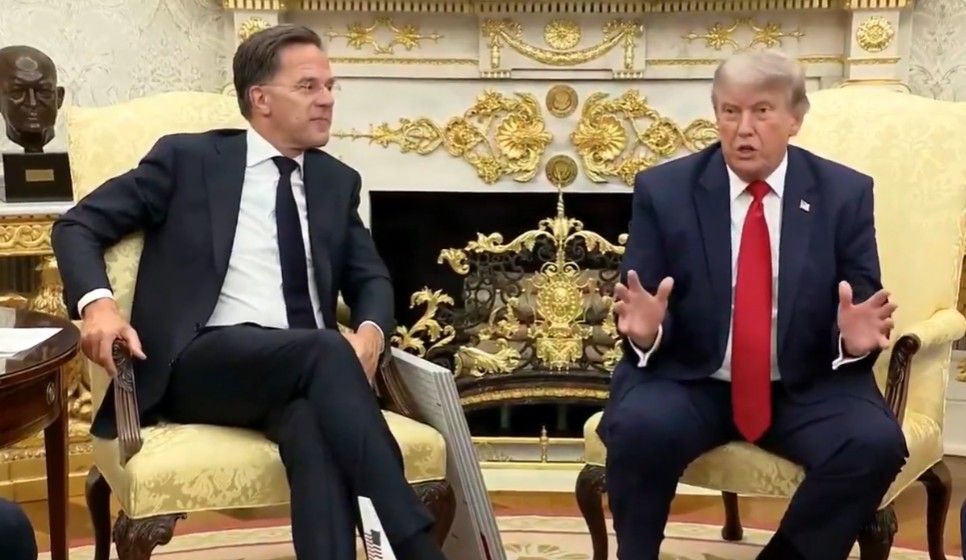
President Donald Trump hosted NATO Secretary-General Mark Rutte in the Oval Office on June 24, 2026, for discussions on the future of the transatlantic alliance, European defense contributions, and allied support for U.S. security priorities. The meeting occurred ahead of a NATO leaders’ summit scheduled for July in Ankara, Turkey, and focused on longstanding U.S. concerns about equitable burden-sharing within the 32-member organization.
Rutte arrived with cardboard charts highlighting defense spending increases by NATO allies since Trump’s first term began in 2017. He noted that European allies and Canada have collectively added substantial investments, with figures cited around $1.2 trillion in additional defense outlays during that period and hundreds of billions directed toward U.S. defense manufacturers. Rutte described these trends as evidence that the alliance is moving toward greater self-reliance while crediting Trump’s earlier pressure for accelerating commitments. He downplayed specific disagreements over recent U.S. operations, characterizing instances of limited allied participation as “isolated cases” and stating that “generally speaking your European allies have been there.”
Trump acknowledged Rutte’s personal efforts, telling him, “You really have done a good job, and I think if anybody else were in that position, we wouldn’t even be meeting today, to be honest with you, because we were let down. We didn’t need help on this at all.” At the same time, the president expressed frustration with broader NATO dynamics, referring to recent events involving Iran as a “little military skirmish” where allies had not been sufficiently supportive. Trump has repeatedly described NATO as needing reform to avoid one-sided arrangements in which the United States bears disproportionate costs.
The session addressed U.S. reviews of its military footprint in Europe and potential adjustments to troop levels. Rutte emphasized operational cooperation, including the use of European bases to support U.S. air operations. He later told reporters that Trump remains committed to NATO and is helping put the alliance “in better shape” through demands for increased investment.
NATO allies have made measurable progress on defense spending targets established in prior summits. All members now meet or exceed the 2 percent of GDP guideline that was not universally achieved before Trump’s initial term, with European allies and Canada recording a roughly 20 percent year-over-year increase in 2025 alone. Some allies have outlined pathways toward higher overall investment levels approaching 5 percent of GDP by 2035 when including broader security-related expenditures. These shifts represent a continuation of trends that began accelerating after Trump’s 2017-2021 criticisms of free-riding by partners.
The White House meeting served as preparation for the Ankara summit, where leaders are expected to review capability targets, defense industrial cooperation, and support for ongoing security challenges. Rutte has worked since Trump’s 2024 election victory to maintain alliance cohesion while responding to U.S. calls for reciprocity. Trump has signaled willingness to maintain strong U.S. engagement provided allies demonstrate concrete contributions rather than relying on American guarantees.
No formal agreements were announced following the Oval Office session. Both sides described the exchange as constructive, with Rutte focusing on shared interests in a capable NATO and Trump reiterating the need for fair distribution of responsibilities. The discussions occur against a backdrop of heightened global tensions, including U.S. actions related to Iran that have tested alliance solidarity.
The meeting underscores the administration’s consistent emphasis on reforming NATO structures established decades ago to reflect current threat environments and economic realities. U.S. officials have long argued that credible deterrence requires all members to invest adequately in their own defense rather than depending primarily on American resources. Rutte’s presentation of spending data was intended to demonstrate progress on that front while seeking to preserve unity ahead of the July gathering.
Join the Team
Are you trying to break into news writing but struggling to get published at major outlets? At RWT News, we're always looking for talented, motivated writers who share our commitment to straightforward, factual conservative journalism. If you believe in honest reporting and want real experience and bylines, we'd love to hear from you.
Visit our Join the Team page to learn more and contact us directly.