Pentagon Prepares 'Final Blow' Military Options Against Iran as Trump Seeks Quick End to Conflict
The proposals reflect growing internal pressure to deliver a decisive military outcome as indirect negotiations through intermediaries have stalled. Additional U.S. troops, fighter squadrons, and Marine units have already been moved into the region to support rapid strikes or raids if ordered.
 Tommy Flynn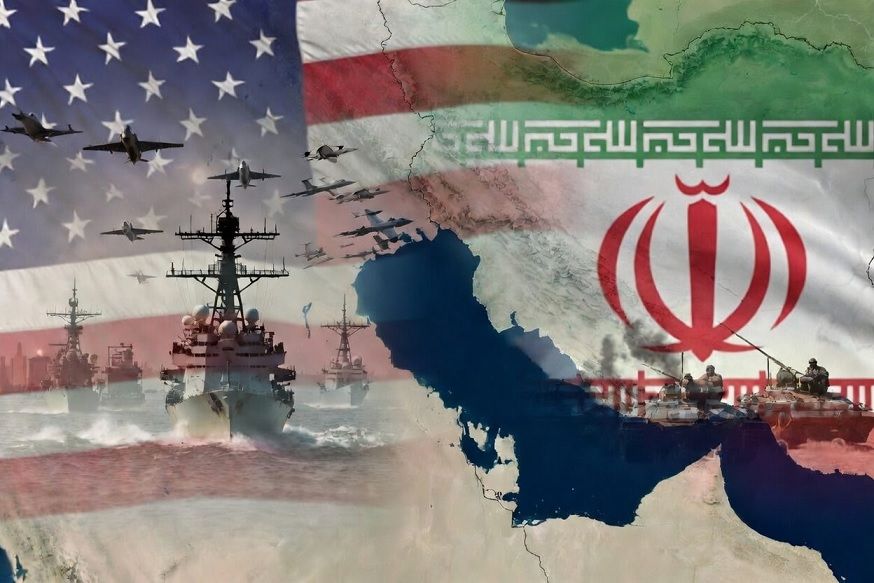
WASHINGTON – The Pentagon is developing military options for a potential “final blow” against Iran that could include the use of ground forces and a massive bombing campaign, according to two U.S. officials and two sources with knowledge of the discussions.
The planning, first reported by Axios on March 26, 2026, outlines four major scenarios under consideration if diplomatic efforts fail and the Strait of Hormuz remains closed. Options include seizing or blockading Kharg Island — Iran’s primary oil export terminal that handles roughly 90% of the country’s crude shipments — as well as Larak Island and Abu Musa, strategic positions near the western entrance to the Strait of Hormuz. Other proposals involve intercepting Iranian oil tankers on the eastern side of the strait and conducting large-scale airstrikes on nuclear facilities or ground operations to secure enriched uranium sites.
White House officials described some of the ground-force scenarios as hypothetical and highly risky, emphasizing President Donald Trump’s reluctance to place U.S. troops on Iranian soil due to concerns over casualties and the risk of a prolonged engagement.
The proposals reflect growing internal pressure to deliver a decisive military outcome as indirect negotiations through intermediaries have stalled. Additional U.S. troops, fighter squadrons, and Marine units have already been moved into the region to support rapid strikes or raids if ordered.
The military preparations come as Trump has privately signaled to advisers that he wants to wrap up the conflict within four to six weeks, according to The Wall Street Journal. Nearly a month after U.S. and Israeli strikes began on Feb. 28, 2026, Trump has oscillated between pursuing diplomacy and authorizing further escalation. He recently renewed interest in talks but has also warned Iran that the U.S. is prepared to strike “harder than ever” if no agreement is reached.
On Truth Social Thursday morning, Trump wrote: “They are ‘begging’ us to make a deal, which they should be doing since they have been militarily obliterated, with zero chance of a comeback, and yet they publicly state that they are only ‘looking at our proposal.’ WRONG!!! They better get serious soon, before it is too late, because once that happens, there is NO TURNING BACK, and it won’t be pretty!”
U.S. casualties in the conflict stand at 13 killed and roughly 300 wounded, according to Pentagon figures cited in multiple reports.
Advisers are divided. Some favor a more aggressive campaign that could include elements of regime change, while others stress the president’s stated goal of a swift resolution amid domestic political pressures and economic fallout from disrupted oil flows.
Iran has warned it would retaliate broadly against regional infrastructure if its territory is directly attacked. No final decision on any escalation has been made, and officials continue to describe the most invasive options as contingency planning only.
The reporting aligns with earlier moves by the Pentagon, including orders to prepare elements of the 82nd Airborne Division for possible deployment to the Middle East. The developments underscore Trump’s dual-track approach: maintaining maximum pressure through credible military options while leaving the door open for a negotiated end to hostilities.
Support Independent Conservative News
RWTNews is independent conservative news — no corporate backing, no agenda driven by advertisers. We rely entirely on readers like you to keep the lights on and the truth coming. If you've found value in what you read here, consider supporting us with a one-time or monthly contribution. Every dollar goes directly toward keeping this site running and growing.
Secured by Stripe. Your payment info is never stored on our servers.