Netanyahu’s Bloc Leads Partial Israel Election Count but Falls Short of Majority
Netanyahu’s right-wing bloc leads partial Israel election counts at ~54 seats but falls short of the 61 needed for a majority. Eisenkot’s opposition trails at 47–49; turnout hit 77.7%, highest since 1999. No clear path to a government yet.
 Tommy Flynn
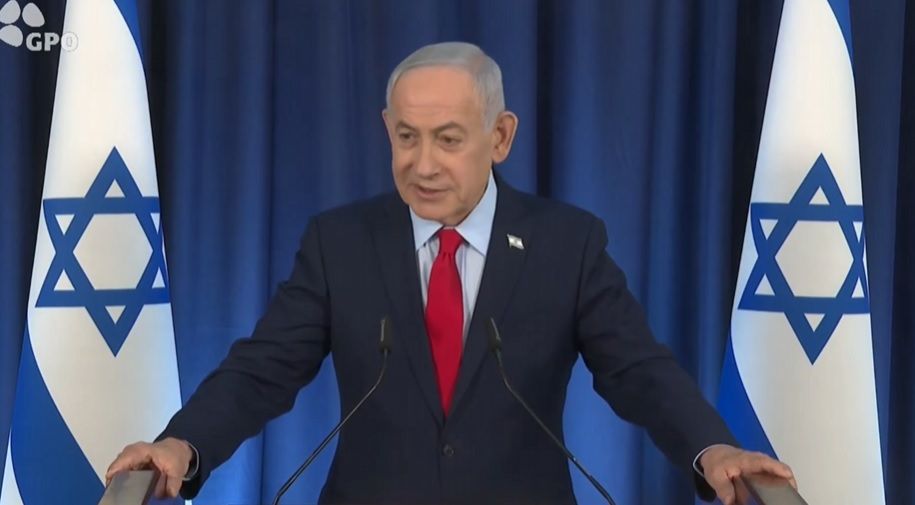
Prime Minister Benjamin Netanyahu’s right-wing and religious bloc held a lead over the opposition in partial results from Israel’s October 27 parliamentary election, though neither side appeared on track to secure the 61 seats needed for a governing majority in the 120-member Knesset. With roughly 70 to 85 percent of ballots counted on Wednesday, Israeli media projected Netanyahu’s alliance at approximately 54 seats, the bloc led by former military chief Gadi Eisenkot at 47 to 49, and Arab parties at 18 to 19.
Likud, Netanyahu’s party, remained the largest single list with about 27 seats in the early tallies, ahead of Eisenkot’s newly formed Yashar party at roughly 20 to 22. Turnout reached 77.7 percent, the highest since 1999 and about seven points above the 2022 election, according to the Central Elections Committee. Nearly 5.7 million of roughly 7.3 million eligible voters cast ballots in the first national vote since the Hamas-led attack of October 7, 2023.
Netanyahu addressed supporters in Jerusalem early Wednesday and called for a strong right-wing national government. He stated that the right-wing bloc held a clear majority among the Jewish and Zionist public and those who support the Jewish state. He also referenced Israel’s military actions and the possibility of further coordination with the United States on Iran. Eisenkot, speaking to his backers, said the public had voted for change and that a worthy leader would accept the result and step aside. He has ruled out serving in a Netanyahu-led government.
The partial figures leave both main camps short of a majority. Netanyahu’s current coalition entered the election with a working majority that the early count indicated had narrowed. Forming a government without Arab parties would require negotiations that neither side has secured. Several opposition figures have previously stated they would not rely on Arab-led lists, while some have left open the possibility of limited support. Arab parties, including the Joint List and Ra’am, gained seats amid higher turnout in Arab communities.
President Donald Trump endorsed Netanyahu on October 18, nine days before the vote, calling him a “great warrior prime minister” and a partner in operations against Iran and warning that any other Israeli leader would leave the United States to handle the issue alone. Trump later told reporters that the endorsement had helped and that Netanyahu had performed better than exit polls suggested. Netanyahu remains in office as caretaker prime minister while results are finalized and parties negotiate. Official results, including double-envelope ballots from soldiers and others voting away from their assigned stations, are expected within days. If no coalition forms, Israel could face another election.
The Central Elections Committee continued releasing updated counts on Wednesday. Small parties remained near or below the 3.25 percent threshold required for Knesset representation, which can still shift the final seat allocation. Both Netanyahu and Eisenkot have said they intend to form the next government.
Support Independent Conservative News
RWTNews is independent conservative news — no corporate backing, no agenda driven by advertisers. We rely entirely on readers like you to keep the lights on and the truth coming. If you've found value in what you read here, consider supporting us with a one-time or monthly contribution. Every dollar goes directly toward keeping this site running and growing.
Secured by Stripe. Your payment info is never stored on our servers.