Navy Sweeps Hormuz Clean — Trump Puts Iran on Notice: Lay Another Mine, Lose the Ship
Trump announced the U.S. Navy has cleared or detonated all mines from the Strait of Hormuz’s main shipping lane and warned Iran that any vessel caught laying new ones will be immediately destroyed under a zero-tolerance policy.
 Tommy Flynn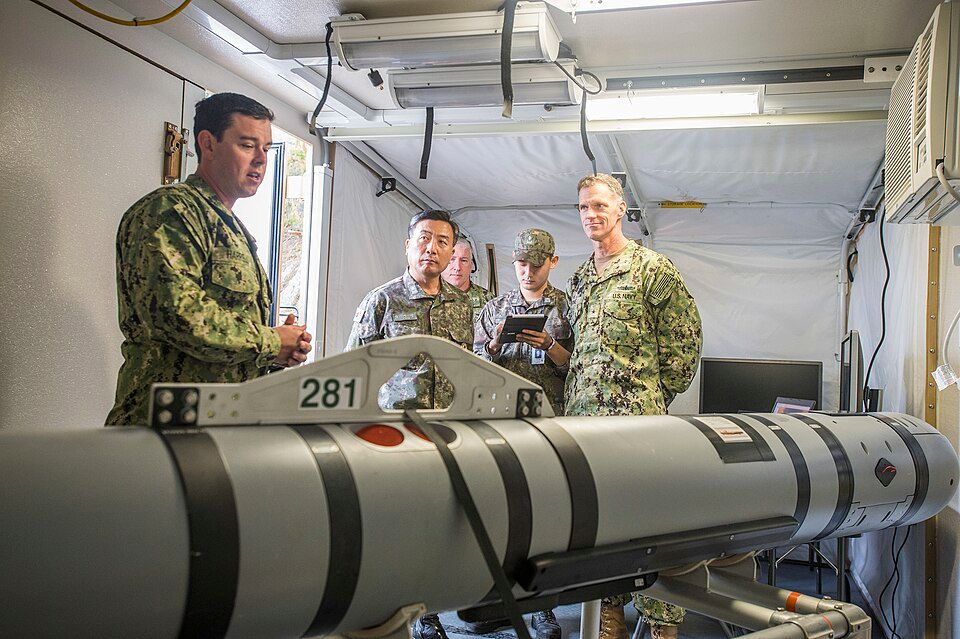
President Trump announced Tuesday that the U.S. Navy has removed or detonated all mines in the international waters of the Strait of Hormuz and warned Tehran that any vessel caught laying new ones will be destroyed.
“I have just been informed by the United States Navy that all mines have been removed and/or detonated from within the International Waters of the Strait of Hormuz,” Trump wrote on Truth Social. “Iran has been notified that any ship or boat placing new mines will be immediately and systematically destroyed.” He said the U.S. Space Force is watching “every square inch” of the strait, along with Pickaxe Mountain and three Iranian nuclear sites already struck by U.S. forces, and declared a “Zero Tolerance policy on mine placement in full force and effect.”
U.S. officials with knowledge of the operation told Axios the Navy has cleared the Traffic Separation Scheme—the median shipping lane between Oman and Iran. Over several months, underwater drones scanned the lane and identified more than 100 objects suspected to be mines. Private contractors working with the military then removed or detonated them. Traffic has been using the southern lane near Oman while the center channel was being swept; officials said two-way passage through the TSS can now resume under U.S. air cover.
The announcement is the second time in a week Trump has said the strait is mine-free. He posted a similar claim Aug. 18. The Joint Maritime Information Center still listed the overall threat level as severe Tuesday and said mine-survey work continues, advising ships to treat drifting or uncharted mines as a residual risk. That caution does not change the White House line: the main international lane is open, and new mining will be treated as an act of war against the vessel that lays them.
Oil flows through Hormuz remain far below pre-war levels. Vortexa data cited by Reuters put Monday’s transit at about 5 million barrels per day, compared with more than 20 million before fighting began in late February. More than 500 ships used the southern corridor in the past 30 days, U.S. officials said, with roughly 2 percent hit by Iranian drones or missiles. A separate UK Maritime Trade Operations advisory reported an oil tanker struck by an unknown projectile about 9 nautical miles northeast of Ash Shishah, Oman, as the mine-clearing news circulated.
Iran and Oman issued their own statement Tuesday proposing a temporary joint navigation corridor and a joint mine-clearing project—after Trump said the U.S. Navy had already finished the job. Defense Secretary Pete Hegseth has kept kinetic options on the table throughout the campaign against Iranian mine-layers, drone sites, and coastal batteries. The next test is whether Tehran tries to reseal the lane. The president’s message is that the first ship that does so will not complete the mission.
Join the Team
Are you trying to break into news writing but struggling to get published at major outlets? At RWT News, we're always looking for talented, motivated writers who share our commitment to straightforward, factual conservative journalism. If you believe in honest reporting and want real experience and bylines, we'd love to hear from you.
Visit our Join the Team page to learn more and contact us directly.