Minnesota's $1 Billion Somali Welfare Fraud Scandal: Billions Stolen From Taxpayers Through Systematic Fraud
The scandal, centered on the nonprofit Feeding Our Future (FOF) and extending to related schemes in housing and behavioral health services, has led to 80 indictments and 59 convictions as of November 2025, according to the U.S. Attorney's Office for the District of Minnesota.
 Tommy Flynn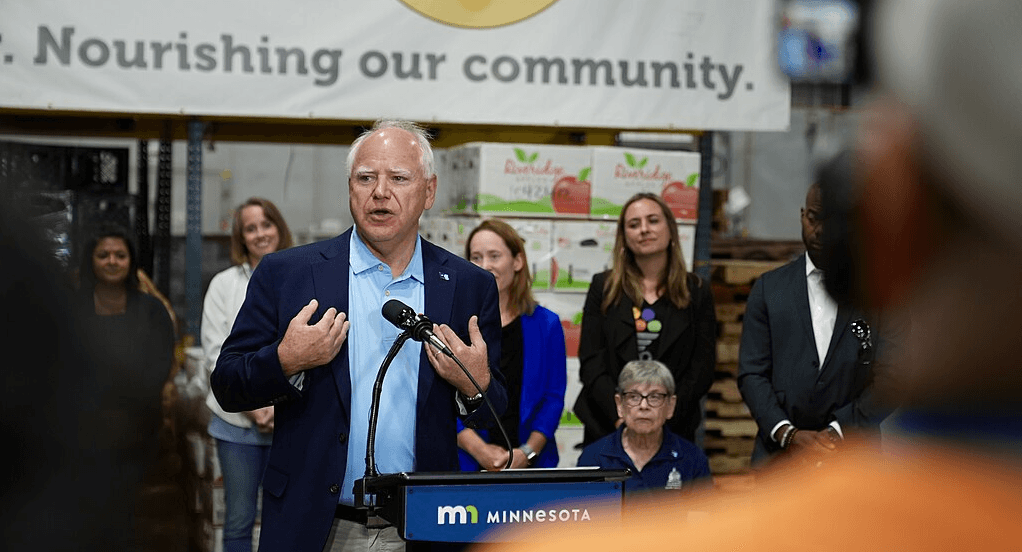
Federal prosecutors in Minnesota have uncovered a sprawling fraud scheme that siphoned more than $1 billion from taxpayer-funded programs intended to feed children during the COVID-19 pandemic, with the vast majority of the theft linked to individuals from the state's Somali community. The scandal, centered on the nonprofit Feeding Our Future (FOF) and extending to related schemes in housing and behavioral health services, has led to 80 indictments and 59 convictions as of November 2025, according to the U.S. Attorney's Office for the District of Minnesota. The scope, which began with a $250 million FOF case in 2022, has ballooned through three interconnected plots, revealing systemic vulnerabilities in state oversight and raising alarms about funds potentially flowing to terrorist groups like al-Shabaab.
The Feeding Our Future fraud exploited federal child nutrition programs under the U.S. Department of Agriculture's Child and Adult Care Food Program (CACFP) and Summer Food Service Program (SFSP), expanded during the pandemic to reimburse meals at inflated rates without site visits or audits. FOF, founded in 2017 to support Somali-owned businesses, received $104 million in 2021—40 times its budgeted $2.6 million—by submitting bogus invoices for meals never served. Prosecutors allege the group and 70 affiliates claimed to feed 18,000 children daily at 250 sites, but investigations found empty warehouses, ghost locations, and meals "served" to nonexistent attendees, including 1,200 claims for a single child. Key figures like Aimee Bock, FOF executive director, pleaded guilty in February 2025 to wire fraud, admitting she knew of fake claims totaling $47 million.
Methods were brazen: Defendants used shell companies to bill for 1.5 million meals at $6 each, pocketing $9 million in one instance, per IRS records. Laundered funds bought luxury cars, jewelry, and properties, with $1.1 million traced to cash withdrawals and hawala transfers. Bock, sentenced to five years in prison in August 2025, cooperated, implicating 20 co-conspirators. The scheme's scale—$250 million initial, now $1 billion across CACFP, housing aid, and Medicaid for autism services—suggests deeper networks, as a November 2025 City Journal investigation reported $10-20 million annually remitted to Somalia via informal channels, potentially funding al-Shabaab, the al-Qaida affiliate responsible for 35,000 deaths since 2006.
Minnesota's Somali community, numbering 80,000 in the Twin Cities—the largest outside Somalia—became a focal point after voluntary resettlement in the 1990s. From 1991 to 2020, about 40,000 Somalis arrived as refugees or TPS holders, drawn by jobs in meatpacking and services. By 2023, 70% of Somali households relied on public assistance, per state data, amid 20% unemployment rates double the national average. The fraud exploited this, with schemes like the 2022 Housing Stabilization Services bilking $399 million from 2018-2023 by falsifying autism diagnoses for undocumented children, charging $200 per hour for nonexistent therapy.
Government failures amplified the theft. A 2025 New York Times analysis found the Minnesota Department of Education (MDE) ignored red flags, approving FOF despite $3.5 million in prior disallowed claims and a 2019 audit flagging irregularities. MDE officials waived site visits under pandemic rules, disbursing $104 million in 2021 without verification. House Oversight Chairman James Comer (R-Ky.) launched a probe on December 4, 2025, blaming Gov. Tim Walz's "derelict leadership," with Comer stating, "Because of Governor Walz’s negligence, criminals—including Somali terrorists—stole nearly $1 billion." The Treasury Department, led by Secretary Scott Bessent, announced on December 6 a review of whether defrauded funds reached al-Shabaab, citing law enforcement sources tracing $1.7 million in one 2023 seizure.
Reports suggest the scandal's scope exceeds $1 billion, with Comer estimating $2-3 billion across unreported schemes. A 2025 Manhattan Institute study identified $500 million in unprosecuted Medicaid fraud tied to Somali clinics, while a November 2025 CBS Minnesota investigation uncovered $150 million in ghost housing claims. Collusion allegations persist: Bock testified to MDE auditors receiving kickbacks, and a 2024 whistleblower claimed state officials delayed probes to protect community ties. Walz's administration, which approved FOF expansions, faces a 2026 reelection challenge from Republican Scott Jensen, who called it "the single greatest theft of taxpayer dollars through welfare fraud in American history."
President Trump linked the fraud to national security on November 21, terminating TPS for 705 Somalis nationwide and labeling Minnesota a "hub of money laundering activity." The move, affecting few in Minnesota due to low TPS uptake, underscores the scandal's broader implications. As trials continue—59 convictions include 10-year sentences for Bock and others—the case exposes cracks in pandemic relief, with $1.1 billion recovered but billions potentially lost. Ongoing federal probes, including IRS involvement, could yield more charges by mid-2026.
Support Independent Conservative News
RWTNews is independent conservative news — no corporate backing, no agenda driven by advertisers. We rely entirely on readers like you to keep the lights on and the truth coming. If you've found value in what you read here, consider supporting us with a one-time or monthly contribution. Every dollar goes directly toward keeping this site running and growing.
Secured by Stripe. Your payment info is never stored on our servers.