Judge Permanently Blocks Trump's National Guard Deployment to Portland, Paving Path to Potential Supreme Court Showdown
The decision, the first permanent block of a Trump military deployment in a U.S. city, sets the stage for an inevitable appeal to the Ninth Circuit and potentially the Supreme Court.
 Tommy Flynn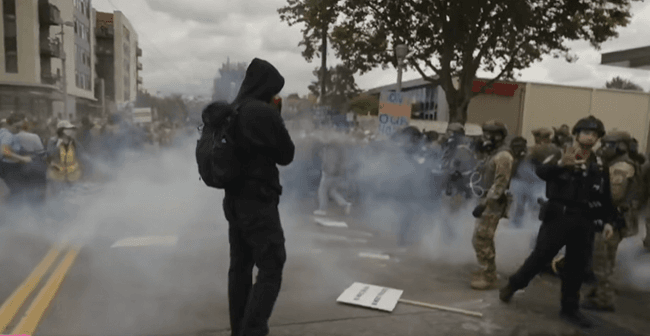
U.S. District Judge Karin Immergut issued a permanent injunction on November 7, 2025, barring the Trump administration from deploying any National Guard troops to Portland, Oregon, ruling that President Trump's federalization of 200 Oregon National Guard members and attempts to bring in troops from California and Texas violated federal law and the Tenth Amendment. Immergut, a Trump appointee confirmed in 2019, concluded in her 106-page opinion that the protests at the Immigration and Customs Enforcement facility did not constitute a rebellion or prevent federal law enforcement from executing immigration statutes, as required under 10 U.S.C. § 12406. The decision, the first permanent block of a Trump military deployment in a U.S. city, sets the stage for an inevitable appeal to the Ninth Circuit and potentially the Supreme Court, where the administration could seek to affirm presidential authority over domestic unrest.
The legal saga began on September 28, 2025, when Oregon and Portland filed suit after President Trump announced on social media his intent to send troops to "war-ravaged" Portland to counter "domestic terrorists" protesting at the ICE facility. Trump invoked his statutory power to federalize state National Guard units when a state fails to suppress rebellion or when federal laws cannot be enforced. By October 3, 200 Oregon National Guard members were federalized and briefly stationed at the facility, prompting immediate challenges. Immergut issued her first temporary restraining order (TRO) on October 4, halting the deployment and finding Trump's determination "untethered to facts," as protests had been mostly peaceful with only isolated violence in June—three months prior—and no evidence of organized overthrow.
The administration swiftly appealed to the Ninth Circuit, which on October 20 issued a 2-1 ruling lifting the TRO in a preliminary victory, allowing federalization but not immediate deployment. Judges Ryan Nelson and Bridget Bade, both Trump appointee, held that the lower court had "impermissibly second-guessed the Commander in Chief's military judgments" and that protests, including assaults on officers, met the threshold for intervention. However, the majority noted the decision was interim, as a second TRO blocking out-of-state troops remained. Dissenting Judge Susan Graber argued the administration failed to show imminent rebellion or inability to enforce laws, emphasizing that "over 1,300 Federal Protective Service officers" were available nationwide.
Undeterred, the government deployed 200 California National Guard troops on October 5, prompting a second TRO from Immergut that evening, extending the block to any state's forces and calling the maneuver a "direct contravention" of her order. Oregon and California joined the suit, alleging violation of state sovereignty. The Ninth Circuit vacated its October 20 ruling on October 28 for en banc rehearing by an 11-judge panel, reinstating Immergut's blocks pending review. A three-day bench trial from October 29 to 31 featured dueling narratives: Justice Department attorneys cited 32 federal charges since June—including 14 felonies for assaults on agents—and claimed over 100 officers were needed to secure the site. Portland police and federal records, however, showed protests as "low energy," with only 25 arrests in mid-June and none since, and staffing levels sufficient for operations. Immergut extended the preliminary injunction on November 2 until November 7, noting the federal response had "inflamed" tensions rather than quelled them.
In her final ruling, Immergut meticulously dissected the evidence, finding Trump's September 27 order—issued after months of calm—lacked factual basis. She acknowledged isolated violence, such as fireworks and a knife thrown at an officer, but concluded these did not amount to rebellion or systemic obstruction. "The protests, with a few notable exceptions, were largely peaceful and under control by local law enforcement," she wrote, rejecting the administration's portrayal of Portland as "under siege." The judge emphasized that over 1,300 Federal Protective Service officers were available, and ICE had relocated temporarily without issue. She ruled the federalization "commandeered" state resources without consent, infringing on the Tenth Amendment's reservation of powers to states.
The administration wasted no time appealing, filing notice with the Ninth Circuit on November 7 evening, arguing Immergut "impermissibly substituted her judgment for the President's" and ignored deference under the Insurrection Act precedents like Luther v. Borden (1849). White House spokesperson Abigail Jackson stated, "President Trump exercised his lawful authority to protect federal assets and personnel in Portland following violent riots and attacks on law enforcement—we expect to be vindicated by a higher court." Oregon Attorney General Dan Rayfield hailed the ruling as a "huge victory" upholding "the rule of law," while Governor Tina Kotek noted the 38-day federalization had kept troops from families without justification.
Forward steps include the Ninth Circuit's en banc review, potentially by December 2025, where a majority could uphold or reverse Immergut. If unfavorable, the government would escalate to the Supreme Court via emergency application, possibly by early 2026. The case could clarify presidential power under Title 10, especially amid similar challenges in Chicago and Los Angeles, where deployments continue under separate rulings. The injunction stays National Guard control with Oregon for 14 days, maintaining the status quo as appeals proceed.
Support Independent Conservative News
RWTNews is independent conservative news — no corporate backing, no agenda driven by advertisers. We rely entirely on readers like you to keep the lights on and the truth coming. If you've found value in what you read here, consider supporting us with a one-time or monthly contribution. Every dollar goes directly toward keeping this site running and growing.
Secured by Stripe. Your payment info is never stored on our servers.