Iran Parliament Speaker Warns Regime ‘Cannot Endure’ Hunger as New U.S. Sanctions Take Effect
Iran’s Parliament Speaker Mohammad Bagher Qalibaf warned that “no matter how strong our military power becomes, if we are hungry, we will not be able to endure,” as the Trump administration prepares its most aggressive sanctions campaign yet against the regime.
 Tommy Flynn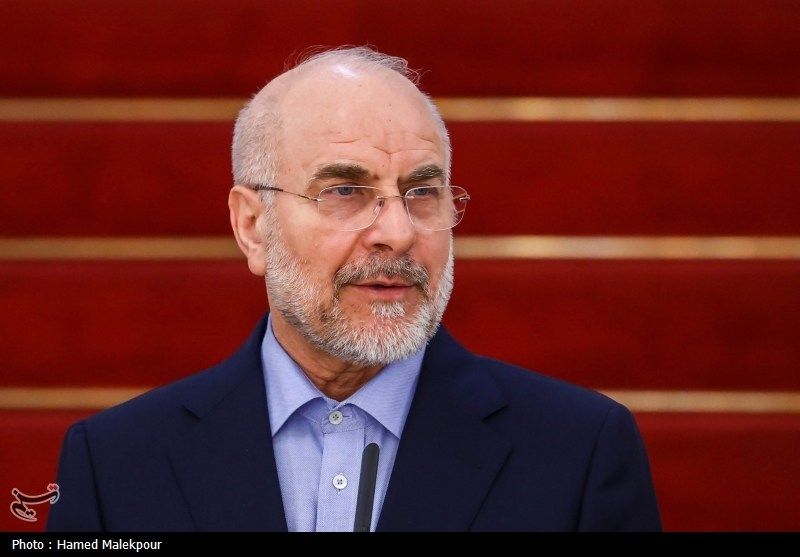
Iranian Parliament Speaker Mohammad Bagher Qalibaf delivered an unusually blunt assessment of his country’s economic crisis, declaring that military strength alone cannot sustain the Islamic Republic if its people go hungry, as the Trump administration’s intensified sanctions campaign moves forward.
Speaking during a meeting with Iranian and Iraqi economists and business leaders at Iran’s embassy in Baghdad, Qalibaf stated: “No matter how strong our military power becomes, if we are hungry, we will not be able to endure.” He described security and the economy as “two wings” that depend on each other, warning that without economic growth, domestic production, financial circulation and sufficient income for citizens, the government cannot maintain security indefinitely. Investors will not risk capital without stability, he said, and pure military capability offers little protection against prolonged hardship.
The remarks, reported by regional outlets and confirmed across multiple sources, mark a notable departure from the defiant rhetoric that has long characterized Iranian official statements. Qalibaf, a former Islamic Revolutionary Guard Corps commander and one of the regime’s most senior conservative figures, is also Iran’s chief negotiator in talks with the United States. His public linkage of hunger and regime survival comes as Treasury Secretary Scott Bessent prepares to detail what the administration has called an “economic D-Day”—described as the most crushing financial offensive yet against Iran.
Years of sanctions, compounded by a U.S. naval blockade that has driven Iranian oil exports close to zero, have produced severe domestic strain. Inflation has been reported near 90 percent, GDP has contracted sharply, and more than one million jobs have been lost. Despite these pressures, the government continues heavy spending on ballistic missiles, drones and support for regional proxies.
Qalibaf’s comments acknowledge that these military investments cannot compensate for an economy unable to feed its population or attract investment. He urged planning to overcome what he called “unjust sanctions” and advocated closer economic cooperation with Iraq, including trade in national currencies to reduce reliance on the dollar. At the same time, he maintained that Iran must remain militarily prepared, arguing that fighters understand the value of peace better than those who only talk about it.
The warning arrives as the Trump administration pivots from kinetic operations to maximum economic isolation, with new measures targeting Iran’s remaining trade partners. Iranian officials have previously dismissed such pressure as ineffective or destined to backfire. Qalibaf’s own later social-media posts adopted a more familiar mocking tone, portraying U.S. sanctions as a “boomerang.” Yet the Baghdad remarks stand out for their direct admission that economic failure threatens the state’s ability to endure.
Whether the acknowledgment signals internal pressure for compromise or simply a call for greater domestic resilience remains unclear. What is clear is that a senior regime figure has publicly tied the Islamic Republic’s survival to its capacity to feed its people at a moment when American economic pressure is set to intensify.
Support Independent Conservative News
RWTNews is independent conservative news — no corporate backing, no agenda driven by advertisers. We rely entirely on readers like you to keep the lights on and the truth coming. If you've found value in what you read here, consider supporting us with a one-time or monthly contribution. Every dollar goes directly toward keeping this site running and growing.
Secured by Stripe. Your payment info is never stored on our servers.