House Passes Early Stopgap Funding Measure to Avert Potential Government Shutdown Ahead of Midterms
The continuing resolution maintains existing spending rates without major policy changes or new programs.
 Tommy Flynn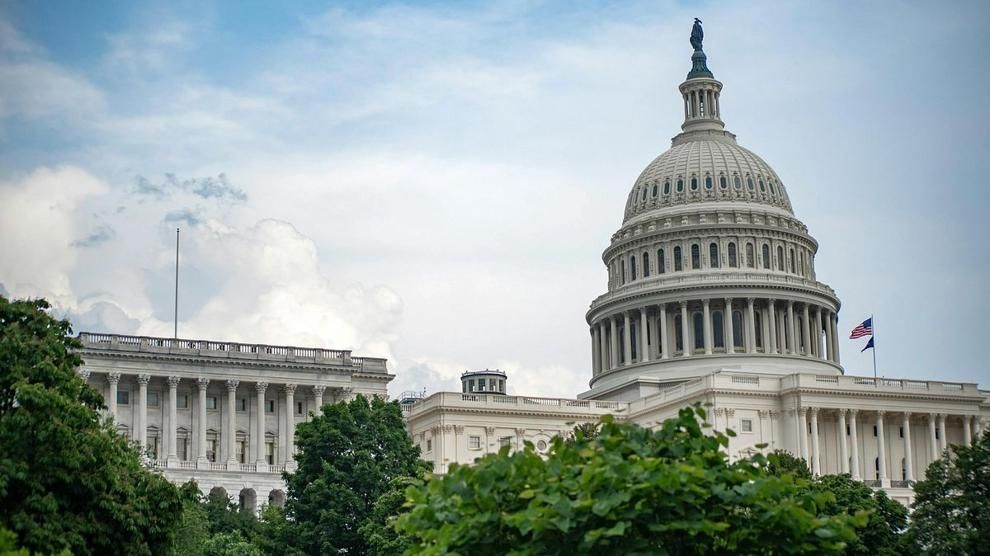
The House of Representatives approved a continuing resolution on July 21 that would keep the federal government funded at current levels through December 4, well ahead of the September 30 deadline and with the explicit goal of preventing a disruptive shutdown during the height of the midterm election season.
The measure passed 220-205, largely along party lines, under the leadership of Speaker Mike Johnson (R-La.). Republicans framed the early action as responsible governance after the chamber’s limited remaining legislative days before the August recess left only about 16 session days to address funding before the fiscal year deadline.
House Appropriations Committee Chairman Tom Cole (R-Okla.) and other GOP leaders stressed that the country could not afford another shutdown after experiencing prolonged disruptions in the recent past. They argued that acting now removes the risk of last-minute brinkmanship that has repeatedly damaged federal operations, federal workers, and public confidence. Republicans also positioned the vote as a challenge to Democrats, suggesting that opposition would leave them responsible for any subsequent chaos.
The continuing resolution maintains existing spending rates without major policy changes or new programs. GOP leaders indicated they would continue advancing the dozen individual annual appropriations bills in the months ahead rather than relying solely on short-term stopgaps.
Democrats largely opposed the bill. Ranking Appropriations Committee member Rosa DeLauro (D-Conn.) criticized the process, saying the measure was introduced without meaningful bipartisan negotiations, dropped on members late in the week, and forced through just before the recess. She argued it sidelined Democratic priorities, including efforts to reverse certain administrative rules affecting federal grants.
The legislation now heads to the Senate, where it will require 60 votes to advance. Senate Majority Leader John Thune (R-S.D.) has indicated that Appropriations Committee Chair Susan Collins (R-Maine) is working with Democrats to identify a viable path forward.
The early House action reflects lessons drawn from recent funding battles and shutdown experiences that disrupted services and created political fallout. By locking in funding through early December, Republicans aim to create breathing room for regular-order appropriations work while insulating the fall campaign season from the threat of a government closure.
Whether the Senate follows suit remains to be seen. If enacted, the continuing resolution would provide temporary stability while lawmakers continue negotiations on full-year spending measures for the remainder of the fiscal year.
Join the Team
Are you trying to break into news writing but struggling to get published at major outlets? At RWT News, we're always looking for talented, motivated writers who share our commitment to straightforward, factual conservative journalism. If you believe in honest reporting and want real experience and bylines, we'd love to hear from you.
Visit our Join the Team page to learn more and contact us directly.