Foreign Adversaries Amplify Disinformation Against U.S. Data Centers Amid AI Competition
Foreign actors from China, Russia, and Iran are amplifying real local concerns over U.S. data centers’ water, power, and noise use—via state media and AI content—to slow American AI growth.
 Tommy Flynn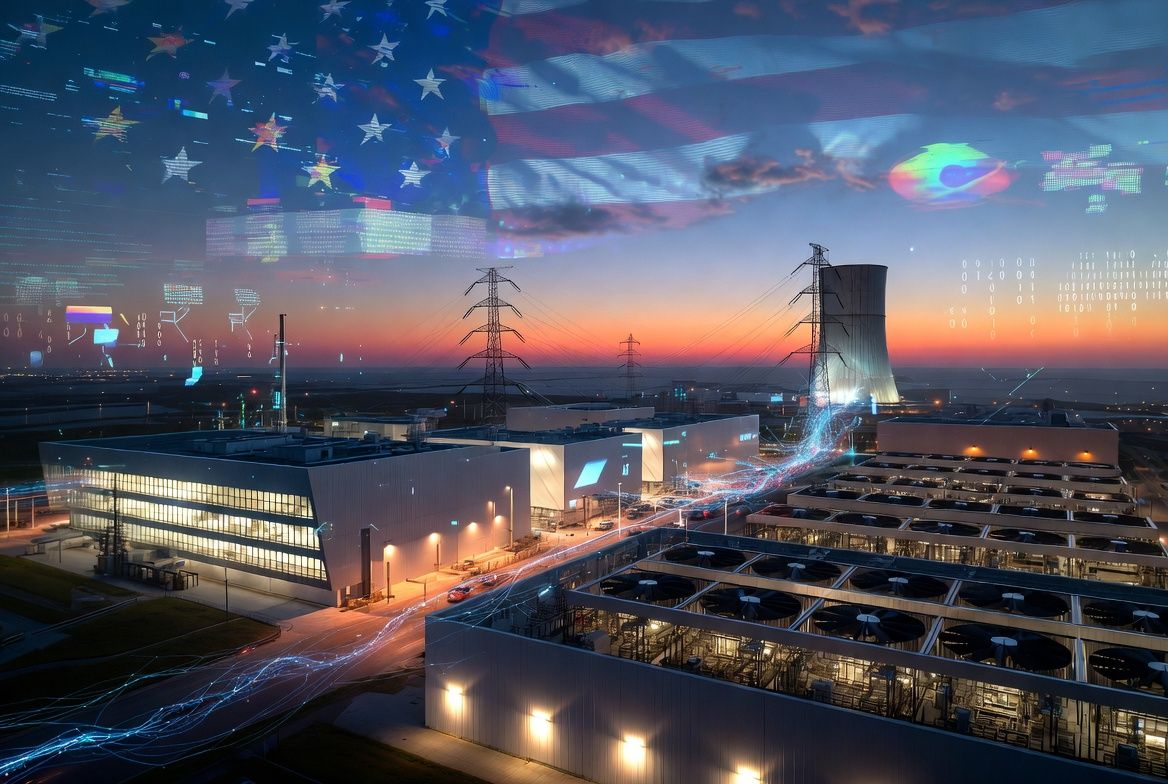
A coordinated push by foreign state actors is amplifying opposition to American data center construction, exploiting legitimate local concerns over water use, electricity demand, and noise while advancing geopolitical interests in the global race for artificial intelligence dominance.
Analyses by threat intelligence firms, including Alethea, have documented campaigns from China, Russia, and to a lesser extent Iran that seize on public ambivalence toward the rapid expansion of data centers needed to power AI systems. Between January and June 2026, state media outlets from these countries mentioned data centers roughly 700 times—an average of nearly four times per day—often framing U.S. facilities as burdens that raise household energy bills, deplete water supplies, and benefit elites at the expense of ordinary communities. Covert operations have included fabricated stories on spoofed websites, social media amplification, and AI-generated content designed to inflame local resistance.
OpenAI has identified Chinese-linked operatives using its tools to generate covert campaigns on platforms such as X that promote claims of spiking electricity costs tied to data centers. Russian influence networks, including known operations, have circulated videos and posts questioning the viability of specific projects and portraying the buildout as unsustainable. These efforts do not create the underlying grievances but systematically escalate them into broader narratives of American decline or elite overreach.
Local concerns about data centers are real and predate the foreign amplification. Cooling systems can consume significant volumes of water, particularly in arid regions or during construction, raising questions about impacts on municipal supplies and ecosystems. High electricity demand can strain local grids and contribute to rate pressures if infrastructure upgrades are not managed carefully. Continuous low-frequency noise, sometimes described as infrasound from cooling fans and turbines, has prompted resident complaints of headaches, sleep disruption, and other health effects. Projects near sensitive environmental areas, such as the Great Salt Lake region, have drawn particular scrutiny. Industry representatives note that overall U.S. data center water use remains a small fraction of national freshwater consumption—far below agriculture—and that technologies such as dry or hybrid cooling can substantially reduce demand. Economic analyses also highlight substantial local benefits, including construction and permanent jobs, high average salaries, and strong tax revenue returns relative to public services provided.
Tech industry groups and state lawmakers have begun pushing back against what they describe as a disinformation campaign that risks slowing critical infrastructure. NetChoice, whose members include major technology firms, has urged greater transparency from operators, emphasized that data centers can stabilize or even lower long-term electricity rates through infrastructure investment, and called attention to foreign exploitation of “AI anxiety.” State officials and organizations such as the American Legislative Exchange Council have advocated streamlining permitting while preserving community input. Federal actions under the Trump administration, including executive efforts to accelerate environmental reviews and remove permitting barriers, aim to support expansion without abandoning local safeguards.
The stakes extend beyond local economics. U.S. officials and industry leaders frame the buildout of data centers as essential to maintaining leadership in artificial intelligence against competitors, particularly China, which faces fewer domestic constraints on similar development. Delays driven by amplified opposition could hinder the computing capacity required for both commercial and national security applications. With the United States hosting thousands of data centers and plans calling for significant additional capacity, the interplay between genuine community issues and foreign influence operations has elevated the debate to a matter of strategic importance.
Investigators and analysts continue to track the volume and methods of foreign messaging. Meanwhile, operators are under pressure to address water, power, and noise impacts more proactively even as lawmakers and federal agencies work to ensure that legitimate development is not derailed by coordinated external campaigns.
Support Independent Conservative News
RWTNews is independent conservative news — no corporate backing, no agenda driven by advertisers. We rely entirely on readers like you to keep the lights on and the truth coming. If you've found value in what you read here, consider supporting us with a one-time or monthly contribution. Every dollar goes directly toward keeping this site running and growing.
Secured by Stripe. Your payment info is never stored on our servers.