Fauci Diary Entry Shows Private COVID Fatality Estimate Far Lower Than Congressional Testimony
Diary notes show Dr. Fauci privately estimated COVID’s fatality rate at just 0.2–0.3% in February 2020—comparable to a bad flu—only to tell Congress a month later it was roughly 10 times more lethal.
 Tommy Flynn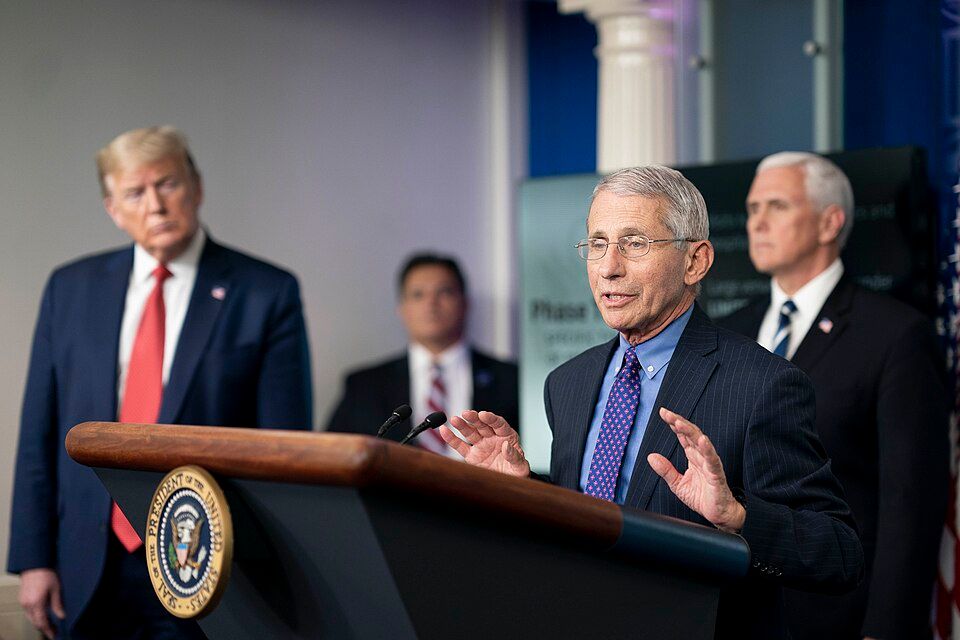
Newly released personal diary notes from Dr. Anthony Fauci reveal that in early February 2020 he privately assessed the case fatality rate of COVID-19 at 0.2 to 0.3 percent—comparable to a severe seasonal flu—roughly one month before he told Congress the virus was approximately 10 times more lethal than the flu.
On February 8, 2020, Fauci recorded a phone conversation with former Centers for Disease Control and Prevention Director Tom Frieden. In the entry, Fauci wrote that the two were “on the same page in thinking tht [sic] this is acting like a bad influenza in its transmissibility and that the denominator is much greater than 34,867 (above) making the case fatality rate (CFR) more like 0.2-0.3 % rather than 2.0%.” At the time, available figures cited in the notes showed roughly 34,867 cases and 724 deaths, producing an apparent rate near 2 percent. Fauci and Frieden attributed the higher figure to incomplete detection of milder or asymptomatic infections and concluded a substantially larger true denominator would lower the fatality rate into the range typical of a bad influenza season.
On March 11, 2020, Fauci testified under oath before the House Oversight Committee. Asked about comparisons to seasonal influenza, he stated: “The seasonal flu that we deal with every year has a mortality of 0.1 percent. The stated mortality over all of this when you look at all the data, including China is about three percent. It first started off as two and three.” He continued that accounting for minimally symptomatic or asymptomatic cases “probably brings the mortality rate down to somewhere around one percent, which means it is 10 times more lethal than the seasonal flu.”
The private diary estimate of 0.2–0.3 percent is approximately one-third to one-tenth the 1 percent figure Fauci presented to lawmakers as the adjusted rate, and far below the 2–3 percent range he initially referenced. Seasonal influenza mortality is commonly cited around 0.1 percent; Fauci’s contemporaneous private assessment placed COVID-19 in a similar range once the full case denominator was considered.
The diary pages form part of more than 1,100 pages of Fauci’s contemporaneous notes released by Sen. Rand Paul, chairman of the Senate Homeland Security and Governmental Affairs Committee. The documents cover Fauci’s activities during the early pandemic response while he served as director of the National Institute of Allergy and Infectious Diseases and a key member of the White House Coronavirus Task Force. The release occurred ahead of Fauci’s recent appearance before the committee.
Critics, including physicians who later served in related advisory roles, have argued that the discrepancy between the private assessment and public testimony contributed to heightened public fear. Others note that early data were incomplete and that fatality estimates evolved as more information became available. The diary entry itself shows Fauci and Frieden already accounting for a larger undetected case base in February and arriving at a significantly lower rate than the one later emphasized before Congress.The documents add to the public record of internal assessments made by senior health officials in the first weeks of the outbreak and stand in contrast to the higher lethality figures presented under oath roughly one month later.
Join the Team
Are you trying to break into news writing but struggling to get published at major outlets? At RWT News, we're always looking for talented, motivated writers who share our commitment to straightforward, factual conservative journalism. If you believe in honest reporting and want real experience and bylines, we'd love to hear from you.
Visit our Join the Team page to learn more and contact us directly.