Epic Trump Troll About the Hormuz Strait and the Media Falls For It... Again
Speaking at the David S. Mack Center for Training and Intelligence in Nassau County, New York, on August 14, Trump told the audience: “After we finish defeating Iran, which is being very badly defeated, pretty soon I’ll be declaring the Hormuz Strait a territory of the United States.”
 Tommy Flynn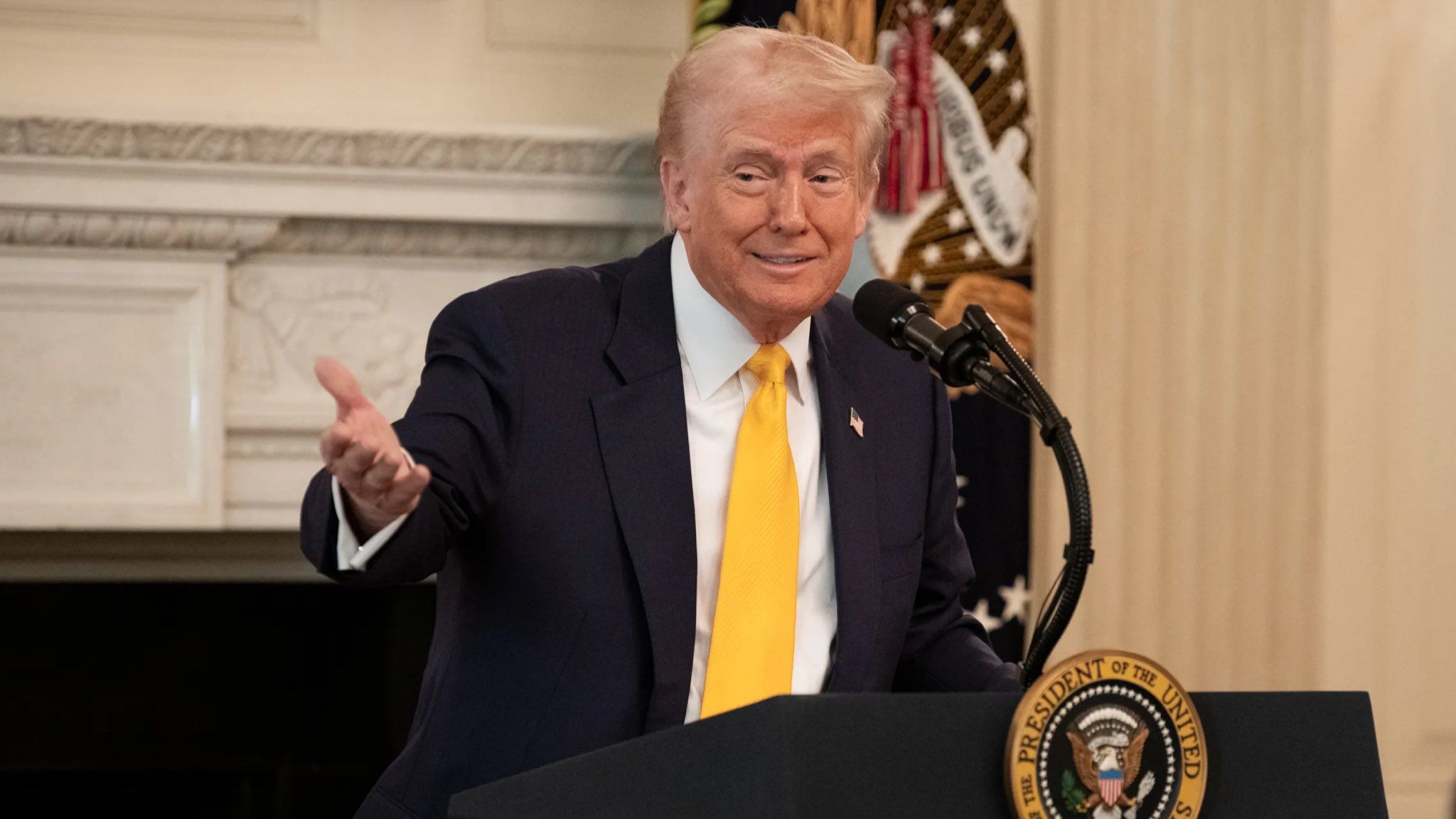
President Donald Trump said Friday that once the United States finishes defeating Iran, he would soon declare the Strait of Hormuz a territory of the United States, remarks delivered with a chuckle during a speech at a police academy on Long Island that quickly prompted both Iranian condemnation and clarification from a White House official that the comment was made in jest.
Speaking at the David S. Mack Center for Training and Intelligence in Nassau County, New York, on August 14, Trump told the audience: “After we finish defeating Iran, which is being very badly defeated, pretty soon I’ll be declaring the Hormuz Strait a territory of the United States.” He added “It’s true” after a chuckle. Trump also emphasized the existing U.S. naval presence, stating, “We have the blockade. No ships get through unless we want them to.”
A senior White House official later told the Wall Street Journal that Trump had not met with his advisers about any plan to declare the Strait of Hormuz U.S. territory after the war and was joking during the speech. No formal interagency process or serious policy planning on the idea has been reported. The delivery—in a political rally-style setting with laughter—fit a pattern of Trump’s provocative rhetoric on Iran and the waterway, including prior claims of total control and references to the strait in maximalist terms.
Iran’s Deputy Foreign Minister Kazem Gharibabadi rejected the suggestion in a post on X, writing that the Strait of Hormuz “cannot be seized by tweet, nor by aircraft carrier, nor by issuing an order, nor by an election speech.” He asserted that the waterway “has been Iranian, is Iranian, and will remain Iranian” and would only be opened or closed under Iran’s command. Iranian officials have previously dismissed U.S. claims of control as baseless.
The comments came against the backdrop of the ongoing conflict that began with joint U.S.-Israeli strikes on Iran in late February 2026. The Strait of Hormuz, a narrow chokepoint through which roughly 20 percent of the world’s oil typically flows, has been a central flashpoint. Iran has restricted commercial traffic through the waterway since early in the fighting. The United States has imposed and enforced a naval blockade of Iranian ports, which it temporarily eased under a mid-June memorandum of understanding before reimposing it amid renewed tensions and attacks on shipping. Defense Secretary Pete Hegseth has said the U.S. Navy can sustain the blockade of Iranian ports indefinitely by rotating ships.
While a formal declaration of the international waterway as U.S. territory would face insurmountable legal and diplomatic barriers—the strait is governed by principles of transit passage under the United Nations Convention on the Law of the Sea and is bordered by Iran and Oman—the U.S. blockade has given Washington substantial practical influence over maritime access involving Iranian facilities. Trump and administration officials have repeatedly described the arrangement as effective control or a “wall of steel,” even as Iran asserts its own authority over the strait and commercial volumes remain sharply reduced.
The exchange underscores the continued stalemate over the waterway more than five months into the conflict, with negotiations largely stalled and both sides maintaining competing claims of dominance. Trump’s remarks, framed by the White House as joking, nevertheless highlighted the strategic importance the administration places on the blockade as a tool of economic pressure against Tehran.
Join the Team
Are you trying to break into news writing but struggling to get published at major outlets? At RWT News, we're always looking for talented, motivated writers who share our commitment to straightforward, factual conservative journalism. If you believe in honest reporting and want real experience and bylines, we'd love to hear from you.
Visit our Join the Team page to learn more and contact us directly.