DOJ Returns to Supreme Court on Mail-Ballot Rules as Missouri Map Fight Splits
DOJ is back at the Supreme Court on the Postal Service mail-ballot rule. Same day, Kavanaugh refused to revive Missouri’s new House map — and a St. Louis judge then ordered the state to use that map anyway. Two emergency files, two conflicting commands, eight weeks out.
 Tommy Flynn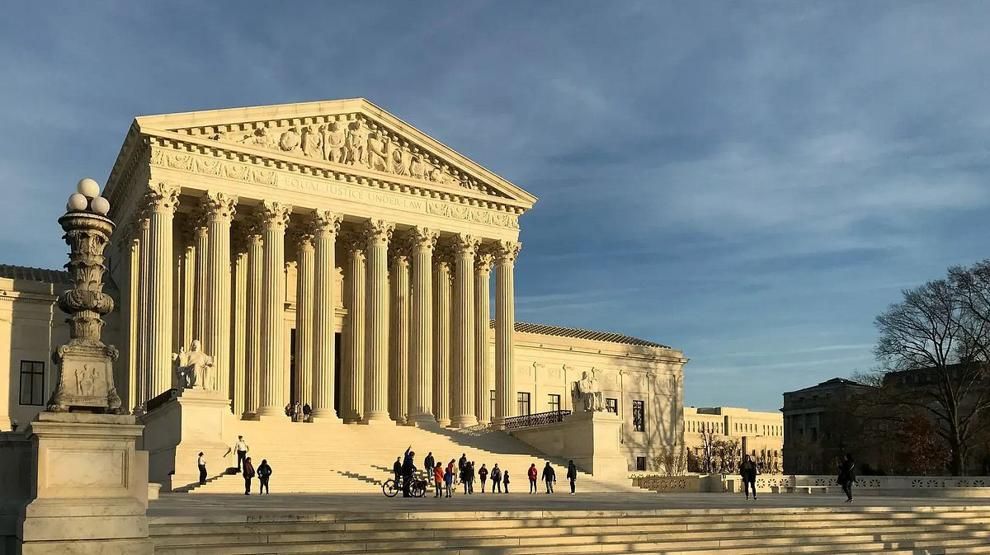
The Justice Department is back at the Supreme Court asking the justices to lift a Boston judge’s block on a Postal Service rule that would tighten how states send and return federal mail ballots. In a separate case Tuesday, Justice Brett Kavanaugh refused to revive Missouri’s Trump-backed congressional map, and a federal judge in St. Louis then ordered the state to use that same map anyway, leaving House races there under two conflicting commands eight weeks before Nov. 3.
Solicitor General D. John Sauer filed a new emergency application Sunday after U.S. District Judge Indira Talwani, an Obama appointee, converted her August temporary restraining order into a preliminary injunction on Sept. 4. The injunction bars the Postal Service from enforcing key parts of its August 22 final rule for elections through Nov. 3. The rule, written to implement President Trump’s March executive order, would require states that use USPS for federal ballots to submit lists of mail voters, use official Election Mail markings, and place unique barcodes on outbound and return envelopes. The Postal Service has said it could refuse to deliver ballots that do not meet those specifications. Sauer told the Court Talwani’s order “nullifies the Postal Service’s efforts to address the risk that the federal mails will be used to perpetrate voter fraud.” He described the rule as modest envelope-design and addressee requirements the agency has long recommended. Justice Ketanji Brown Jackson directed the challengers — Democratic-led states and voting-rights groups — to respond this week. The Court already lifted an earlier Talwani injunction in August after concluding the states had sued before the rule was final. This filing is the second trip up on the finished regulation. Early mail ballots have already begun going out in some states, including North Carolina.
Talwani wrote that the Postal Service likely exceeded its authority because the Constitution assigns federal-election rules to Congress and the states, and that last-minute compliance would “nearly guarantee significant disenfranchisement.” She said USPS had not shown states could finish voter-list uploads and envelope redesigns before ballots hit the mail. The administration and several Republican-led states appealed to the First Circuit the same night and then to the Supreme Court. The fight is distinct from the Court’s June 5–4 decision allowing states to count mail ballots postmarked by Election Day and received afterward. That case involved receipt deadlines. This one is about whether USPS can condition delivery on voter lists and barcoded envelopes.
Missouri is a different track: mid-decade redistricting, not mail handling. Republican legislators passed a 2025 map, known as HB 1 or Missouri FIRST, after Trump pressed GOP states to add House seats. The lines split Kansas City in a bid to unseat Democratic Rep. Emanuel Cleaver and move the delegation from 6–2 to 7–1. The map was used in August primaries. Opponents submitted more than 300,000 signatures for a referendum. On Sept. 3 the Missouri Supreme Court ruled unanimously that the state constitution allows a referendum on any act of the General Assembly, that the petition froze the new law, and that the 2022 post-census map governs the general election unless voters approve the 2025 lines. Trump called that ruling “ridiculous.” Attorney General Catherine Hanaway and Secretary of State Denny Hoskins asked the U.S. Supreme Court to stay it before a Sept. 8 ballot-change deadline. Kavanaugh, who handles Eighth Circuit emergencies, denied the request Tuesday without referring it to the full Court and without explanation.
Minutes later, Chief U.S. District Judge Stephen Clark in St. Louis issued a 14-day temporary restraining order in a separate suit by GOP Rep. Bob Onder and candidates nominated under the new lines. Clark, a Trump appointee, barred officials from using any map other than the 2025 districts. He wrote that switching maps after the primary would “wreak havoc on the fairness and orderliness” of the races and confuse voters. Hoskins then certified the 2025 map and told local clerks Clark’s order “takes precedence.” Missouri Supreme Court Chief Justice W. Brent Powell directed Hoskins to explain why that instruction does not violate the state court’s injunction. Opponents of the new map appealed Clark’s TRO to the Eighth Circuit. Republicans hold a 219–214 House majority. Which map Missouri uses could decide whether Cleaver’s Kansas City seat stays Democratic or becomes a GOP target. Both court orders remain in force unless a higher court picks one. The mail-ballot application and the Missouri map cases sit on the same emergency docket as early voting begins.
Support Independent Conservative News
RWTNews is independent conservative news — no corporate backing, no agenda driven by advertisers. We rely entirely on readers like you to keep the lights on and the truth coming. If you've found value in what you read here, consider supporting us with a one-time or monthly contribution. Every dollar goes directly toward keeping this site running and growing.
Secured by Stripe. Your payment info is never stored on our servers.