DOJ Deploys Dozens of FBI Agents and 200+ Subpoenas in Criminal Probe of Peltola ‘Decoy Dan’ Scheme After Alaska Senate Win
DOJ has deployed at least 50 FBI agents and more than 200 subpoenas in a criminal probe of Sen.-elect Mary Peltola’s campaign and Democratic operatives over the “Decoy Dan” namesake candidate scheme in Alaska’s Senate race. The investigation continues after her win. No charges announced.
 Tommy Flynn
Federal investigators have assigned at least 50 FBI agents and more than a dozen Department of Justice lawyers to a criminal probe examining Sen.-elect Mary Peltola’s campaign and Democratic operatives over the recruitment of a second candidate named Daniel J. Sullivan—“Decoy Dan”—to appear on Alaska’s Senate ballot opposite incumbent Republican Sen. Dan S. Sullivan.
The investigation, which involves multiple FBI field offices, more than 200 subpoenas, and nearly 100 records-preservation letters, continues after Peltola was projected the winner. A federal grand jury is meeting monthly in Alaska to review evidence, and sources say Attorney General Todd Blanche views the matter as egregious.
The Ballot Composition Project
The controversy centers on what The New York Times reported days before the November 3, 2026 election as an internally named “ballot composition project.” According to the Times, which based its account on interviews, text messages, and documents, Peltola campaign aides, Democratic Senatorial Campaign Committee (DSCC) staffers, and outside operatives worked for months to identify and recruit candidates who could siphon votes from the incumbent, including another person named Dan Sullivan.
The effort reportedly began in summer 2025 with instructions to a Peltola staffer to comb voter records for people named Dan Sullivan. It involved an operative (identified in reporting as Jerid Kurtz) who traveled in Alaska under aliases, meetings at brew pubs and cafes, and regular coordination between campaign aides and DSCC officials. Former Peltola campaign manager Elisa Rios told the Times that Peltola was not directly involved but was “definitely aware.” Rios later attempted to retract her statements as she prepared a potential lawsuit against the campaign; the Times reported her interviews were consistent with other evidence.
A pro-Peltola super PAC paid a firm linked to Kurtz roughly $87,000, according to Federal Election Commission records cited in coverage. The project also sought other candidates, including Gerald Heikes, who finished with about 6,105 votes. Daniel J. Sullivan Jr., a retired teacher from Petersburg who maintained he entered the race of his own volition, received roughly 4,760 votes as a non-party-affiliated candidate. He had little visible campaign presence.
Peltola’s campaign and the DSCC have denied recruiting any candidates or participating in the effort. Peltola has said she “knew nothing about any other candidates on the ballot except for me and the incumbent” and was “not interested in tricking voters.”
Alaska’s nonpartisan primary and ranked-choice system make it relatively straightforward to add candidates to the general-election ballot. The Alaska Supreme Court previously rejected attempts to remove Daniel J. Sullivan, finding no basis under state law or the Constitution. The incumbent was labeled “Incumbent” on the ballot; the other candidate appeared as “Sullivan, Daniel J. Jr.”
Scale of the Federal Response
The criminal investigation predates the Times report but accelerated afterward. U.S. Attorney Michael Heyman in Alaska publicly confirmed the probe in late October and noted a surge of law-enforcement resources. By early November the DOJ had issued more than 100 subpoenas; that number has since exceeded 200. Target letters went to several people, including high-profile Democratic election lawyer Marc Elias, whose firm represents the Peltola campaign (and has received payments from it). Preservation letters also went out widely.
Fox News reported on November 20 that at least 50 FBI agents and more than a dozen DOJ lawyers are assigned, with at least five field offices involved. An ally close to Attorney General Blanche said Blanche “sees the Peltola fraud as so egregious” and is committing substantial resources. The probe spans multiple states and has multiple criminal targets; Peltola’s victory does not alter its status, according to law-enforcement sources. No charges have been announced.
A separate DOJ civil lawsuit seeking to delay certification if votes for the second Sullivan could have altered the outcome was abandoned after the race was called, with the department telling the 9th Circuit the case is moot. A parallel state investigation ordered by Republican Gov. Mike Dunleavy remains open.
Results and the Election-Integrity Question
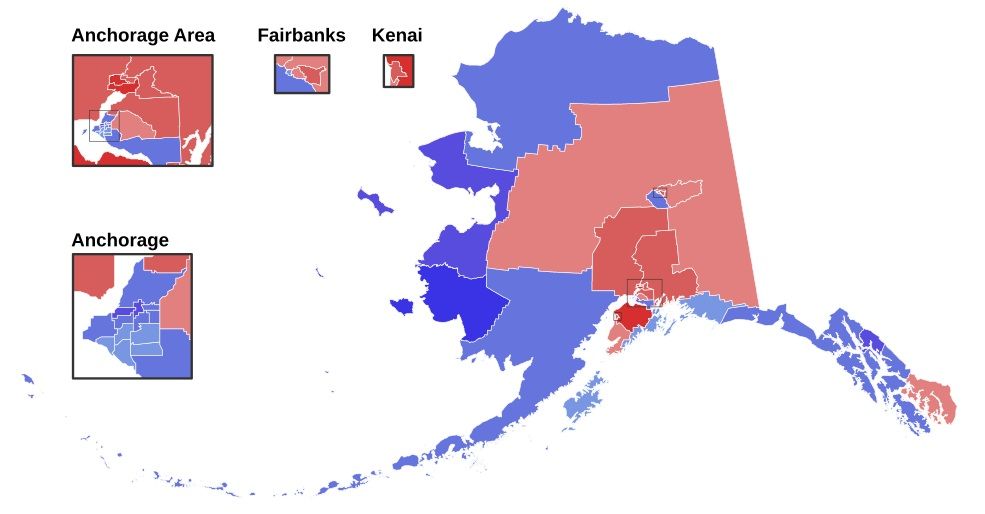
Peltola, the former House member and first Alaska Native elected to Congress, defeated Sullivan with roughly 144,300–144,500 votes (about 50.1%) to Sullivan’s 131,800–132,000. She cleared the 50% threshold on first-choice votes, avoiding ranked-choice tabulation. Certification is targeted for November 25. Her win flips the seat and contributes to a projected Democratic 56-44 Senate majority—the party’s ninth GOP-held pickup this cycle in a state Trump carried in 2024.
Peltola’s margin exceeded Decoy Dan’s total. Whether the second Sullivan’s presence (or Heikes’) changed individual votes or overall dynamics is a factual question the criminal investigation is examining. Ballot-stacking and spoiler tactics have occurred on both sides in Alaska and elsewhere and are often treated as legal political hardball. What distinguishes this case, according to the reporting and the scale of the federal response, is the documented, multi-month coordination involving a national party committee, campaign aides, and operatives specifically seeking a namesake candidate to create confusion on a ranked-choice ballot in a race that helped decide Senate control.
Mainstream coverage has frequently framed the episode as a curiosity or “voter confusion” issue that did not decide the final tally. The deployment of dozens of FBI agents, more than 200 subpoenas, a standing grand jury, and explicit statements from the Attorney General that the matter is egregious quantify a different level of official concern. The probe continues regardless of the certified winner.
Alaska election officials have not certified the results as of November 20. Neither the Peltola campaign, the DSCC, nor the Justice Department has announced charges or a timeline for concluding the criminal investigation.
Join the Team
Are you trying to break into news writing but struggling to get published at major outlets? At RWT News, we're always looking for talented, motivated writers who share our commitment to straightforward, factual conservative journalism. If you believe in honest reporting and want real experience and bylines, we'd love to hear from you.
Visit our Join the Team page to learn more and contact us directly.