DOJ Announces It Will Enforce Supreme Court Gerrymandering Ruling Nationwide
Acting Attorney General Todd Blanche stated the DOJ “will enforce the Supreme Court’s clear ruling that race cannot predominate in drawing congressional and legislative districts.”
 Tommy Flynn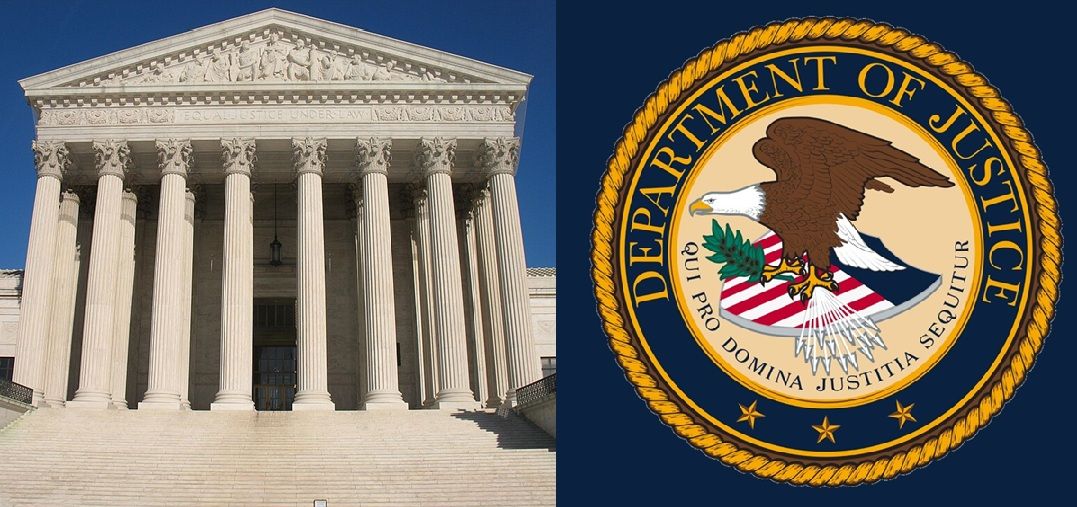
WASHINGTON — The Department of Justice announced on April 30, 2026, that it will actively enforce the Supreme Court’s landmark ruling striking down Louisiana’s congressional map as an unconstitutional racial gerrymander, sending a clear signal that race-based redistricting will face strict federal scrutiny across the country.
Acting Attorney General Todd Blanche stated the DOJ “will enforce the Supreme Court’s clear ruling that race cannot predominate in drawing congressional and legislative districts.” The department will review maps in states where Voting Rights Act challenges have been filed or are pending, with particular focus on Southern and Sun Belt states.
The Supreme Court’s 6-3 decision in Louisiana v. Callais, issued April 29, held that the Voting Rights Act does not require states to create additional majority-minority districts when race is the predominant factor in map drawing. The Court ruled that Louisiana lacked a compelling interest to justify drawing a second majority-Black district because traditional redistricting criteria — compactness, contiguity, and respect for political subdivisions — were subordinated to race.
For more than a decade, Democratic-led voting rights groups and the prior Justice Department had used Section 2 of the Voting Rights Act to pressure Republican legislatures into drawing additional Black and Hispanic districts after the 2020 census, even when those maps violated traditional districting principles. The Supreme Court’s decision overturns lower-court orders that had forced several Southern states to redraw maps, and the DOJ’s enforcement announcement means the federal government will now defend neutral maps and challenge those that rely too heavily on race.
The ruling and DOJ action come as multiple states are engaged in mid-decade redistricting ahead of the 2026 midterms. In Louisiana, the decision allows the state to return to its previous map or draw a new one that complies with the ruling. Similar challenges are pending or recently filed in Alabama, Georgia, Mississippi, South Carolina, and other states.
Republicans have welcomed the development as a long-overdue correction that ends what they called “racial gerrymandering by judicial fiat.” Democrats and voting rights groups warned that the decision and DOJ enforcement will dilute minority voting power and lead to fewer districts where Black and Hispanic voters can elect their preferred candidates.
The DOJ’s involvement is expected to include filing statements of interest in ongoing lawsuits, supporting states defending race-neutral maps, and potentially opening investigations into maps that appear to violate the new constitutional limits. Officials indicated the department will monitor compliance closely in the coming months.
The move is part of the Trump administration’s broader push toward stricter enforcement of color-blind redistricting principles. Combined with recent map approvals in Florida and Texas, it could deliver Republicans a substantial net gain in the U.S. House, strengthening their majority through the end of the decade. No specific states have been targeted for immediate action, but the DOJ’s stance is expected to accelerate redistricting efforts in Republican-led states.
Join the Team
Are you trying to break into news writing but struggling to get published at major outlets? At RWT News, we're always looking for talented, motivated writers who share our commitment to straightforward, factual conservative journalism. If you believe in honest reporting and want real experience and bylines, we'd love to hear from you.
Visit our Join the Team page to learn more and contact us directly.