Democrats Block Balanced Budget Amendment in House Vote
The resolution (H.J. Res. 139) received 211 votes in favor but was defeated 211-207. It needed approximately 290 votes to advance. Only one Democrat, Rep. Henry Cuellar of Texas, joined Republicans in support.
 Tommy Flynn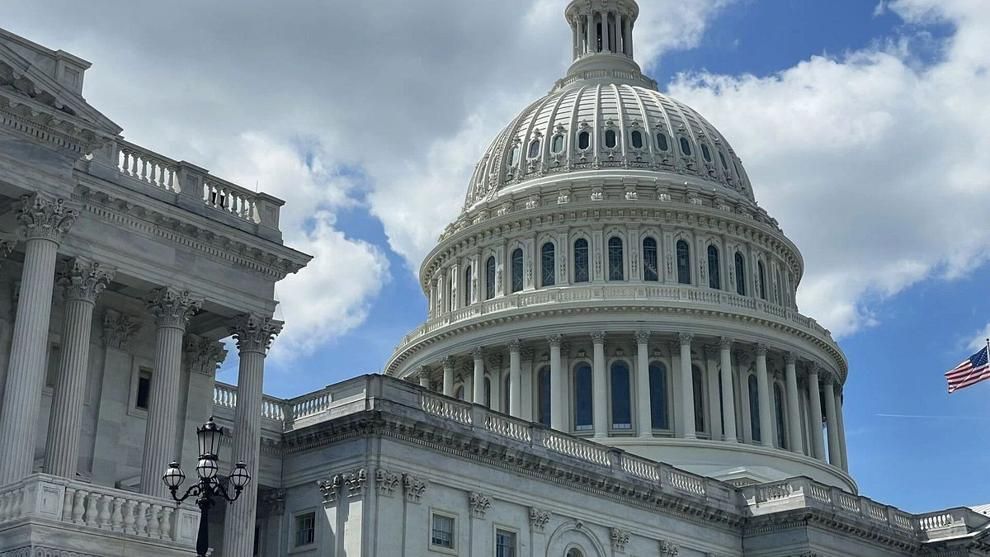
The U.S. House of Representatives on March 18, 2026, failed to pass a proposed constitutional Balanced Budget Amendment, falling well short of the two-thirds majority required despite strong Republican support.
The resolution (H.J. Res. 139) received 211 votes in favor but was defeated 211-207. It needed approximately 290 votes to advance. Only one Democrat, Rep. Henry Cuellar of Texas, joined Republicans in support.
House Budget Committee Chairman Jodey Arrington (R-Texas) urged passage, stating, “Congress has failed our country. Our out-of-control spending has jeopardized our economy, our security, our leadership in the world, and, worst of all, compromised our children’s future and the blessing of their inheritance of freedom and opportunity.” He added that fiscal irresponsibility “is not a Democrat problem or a Republican problem. It’s an institutional problem that will destroy the greatest nation in human history.”
The vote came as the national debt crossed the $39 trillion mark for the first time, roughly $3 trillion higher than one year ago. The federal government has been adding nearly $89,000 per second in debt over the past year.
Democrats opposed the measure, arguing it would force severe cuts to entitlement programs. House Democratic Whip Katherine Clark (D-Mass.) said the resolution left “virtually no way to balance the budget without drastic cuts to Medicare and Social Security.”
The proposed amendment would have capped federal spending at the average annual revenue of the previous three years, adjusted for population growth and inflation, while excluding debt payments. It could be overridden by a two-thirds vote in both chambers and would not apply during wartime.
Balanced budget proposals have been introduced hundreds of times over the past 50 years, yet only two have ever passed a chamber of Congress — the Senate in 1982 and the House in 1995.
Maya MacGuineas, president of the Committee for a Responsible Federal Budget, warned after the vote: “Choosing to abandon our fiscal responsibilities like this does not exist in a vacuum; in fact, it wreaks havoc on our economy and everyday life.”
The failed vote underscores ongoing partisan divisions over federal spending as the national debt continues its rapid climb. No immediate follow-up action on the issue is expected in the House.
Join the Team
Are you trying to break into news writing but struggling to get published at major outlets? At RWT News, we're always looking for talented, motivated writers who share our commitment to straightforward, factual conservative journalism. If you believe in honest reporting and want real experience and bylines, we'd love to hear from you.
Visit our Join the Team page to learn more and contact us directly.