Consequence Culture Takes Hold as Networks Pull Jimmy Kimmel Show Amid Backlash Over Kirk Assassination Remarks
As I was preparing to publish this story, news broke that Sinclair will take things a step further and air a tribute to Charlie Kirk during Kimmel's Friday timeslot.
 Tommy Flynn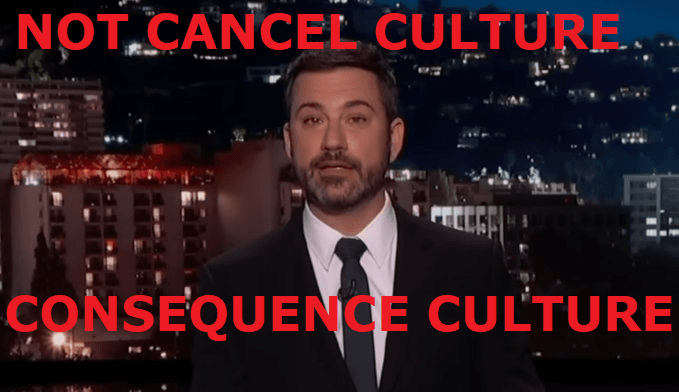
In a striking turn, major broadcasters including Disney-owned ABC, Nexstar Media Group, and Sinclair Broadcast Group have announced they will preempt "Jimmy Kimmel Live!" indefinitely, a decision that underscores the rising tide of accountability for inflammatory rhetoric in the aftermath of Charlie Kirk's tragic assassination. This move, effective starting September 17, 2025, reflects a broader shift from cancel culture to what many now term "consequence culture," where vile comments and actions face real repercussions. While the nation continues to mourn the loss of Kirk—a champion of American values, border security, and youth engagement—these developments suggest his death may mark a pivotal moment, exposing the dangers of leftist propaganda and forcing a reckoning with the extremism that has gripped the Democratic Party.
Nexstar, the largest owner of ABC affiliates, led the charge by declaring it would replace Kimmel's show with alternative programming "for the foreseeable future," citing strong objections to the host's recent monologue. Sinclair followed suit hours later, confirming its ABC stations would also halt broadcasts indefinitely, stating the decision was made after discussions with the network. ABC itself acknowledged the preemptions, pulling the show from air amid the controversy. These actions stem directly from Kimmel's September 12 monologue, where he made remarks about Kirk's killer, Tyler Robinson, that many viewed as minimizing the gravity of the assassination and fueling division.
The preemptions align with warnings from FCC Chairman Brendan Carr, who in a September 17 interview with podcaster Benny Johnson blasted Kimmel's comments as "some of the sickest conduct possible." Carr suggested the FCC could explore remedies, including scrutiny of ABC's broadcast licenses, emphasizing that such rhetoric crosses ethical lines in public broadcasting. This federal pressure highlights how consequence culture is gaining ground, holding media figures accountable for content that exacerbates political violence.
Kirk's murder on September 11, 2025, during a university event in Utah has become a defining flashpoint for America, not just for the loss of a key voice in the fight against open borders and socialist policies, but for the vile responses it elicited from the left. Democrats and their media allies have long demonized figures like Kirk, labeling them fascists or bigots to rally their base, creating a toxic environment that normalizes attacks on those defending core principles. In the days following the shooting, this rhetoric manifested in disgusting actions, such as the vandalism of Kirk memorials across the country. In Phoenix, a 19-year-old was arrested for destroying a memorial outside Turning Point USA headquarters, stomping on flowers and signs in an act caught on camera. Similar incidents occurred in Bentonville, Arkansas, where two women were charged with damaging a courthouse memorial, and in Goshen, New York, where a vandal was filmed wrecking tributes. These acts of desecration, rooted in hatred amplified by leftist propaganda, compound the tragedy, showing how far extremism has infiltrated public discourse.
The spread of false narratives has further fueled this demonization, with high-profile individuals pushing misleading information that justifies violence. Author Stephen King posted on X falsely claiming Kirk advocated "stoning gays," a complete fabrication that twisted Kirk's biblical discussions; King later apologized, admitting it demonstrated "how some people cherry-pick Biblical passages." Harvard Law scholar Laurence Tribe issued a false post on X claiming the assassin was "Ultra-Maga," retracting it with an apology after it spread widely. American Federation of Teachers president Randi Weingarten reposted a comment on X calling Robinson a "right winger who didn't want Charlie Kirk to speak" and "did what right wingers do and shot him," adding "This seems important to state," before deleting and apologizing amid backlash. Actor Billy Baldwin claimed on X that Robinson was a "white Christian, Conservative, Republican male with a gun... again," partially apologizing later to adjust to "Christian family. Conservative upbringing." Dallas megachurch pastor Frederick Haynes stated in a sermon that a "white Christian" killed Kirk, using air quotes to question Kirk's faith and disputing he was "assassinated" like Martin Luther King Jr.; no apology followed, and his church announced a medical leave. These examples illustrate how leftist figures propagate lies to dehumanize opponents, escalating rhetoric that leads to deadly deeds.
But now, consequences are hitting hard, signaling the dawn of accountability over unchecked vilification. Thousands of individuals across the country have been fired or placed on leave for their vile comments celebrating Kirk's death. Employers, from universities to corporations, have acted swiftly: Ball State University terminated a staff member for derogatory posts; Texas teachers faced backlash and potential discipline for similar remarks; and various companies reported dismissals after employees mocked the assassination online. This wave of firings represents a rejection of the hate that leftist propaganda has sown, holding people responsible for words that incite division and violence.
In a poignant twist, Kirk's organization, Turning Point USA, has seen an unprecedented surge in support since his death. Over 54,000 requests to start new high school and college chapters have flooded in within six days, a more than tenfold increase from normal rates. This outpouring reflects a national awakening, with young Americans inspired by Kirk's legacy to stand against extremism and promote principles of freedom and security. The organization's name now feels prophetic, as Kirk's murder appears to be catalyzing a true turning point for the country.
The Democratic Party's embrace of "90-10 issues"—like tolerating anti-Semitism in pro-Palestinian activism, pushing to defund the police, favoring open borders for illegal immigration, and adopting soft-on-crime policies—has alienated vast swaths of voters, leading to electoral wipeouts and internal fractures. This extremism, amplified by media allies, has not only cost the party power but also contributed to a culture where violence against opponents seems permissible. Yet, the backlash—through firings, network preemptions, and grassroots mobilization—suggests a shift. Consequence culture is overtaking cancel culture, demanding accountability for hate speech and actions that endanger society.
While the pain of Kirk's loss lingers for millions who admired his fight for America, this moment holds potential for renewal. If it spurs a rejection of divisive rhetoric and a return to principled debate, Kirk's sacrifice could indeed mark the turning point where the nation reclaims unity and strength. President Trump's administration continues to condemn the vilification, urging a focus on justice for Kirk and protection against radical threats. As investigations into Robinson proceed, the broader lesson is clear: Words have power, and unchecked extremism invites tragedy—but accountability can forge a better path forward.
Support Independent Conservative News
RWTNews is independent conservative news — no corporate backing, no agenda driven by advertisers. We rely entirely on readers like you to keep the lights on and the truth coming. If you've found value in what you read here, consider supporting us with a one-time or monthly contribution. Every dollar goes directly toward keeping this site running and growing.
Secured by Stripe. Your payment info is never stored on our servers.