Charlie Kirk Assassin Tyler Robinson Formally Charged with Aggravated Murder, Facing Death Penalty as New Evidence is Detailed
Utah County Attorney Jeff Gray detailed the case against Robinson, emphasizing the suspect's meticulous planning and ideological motivations.
 Tommy Flynn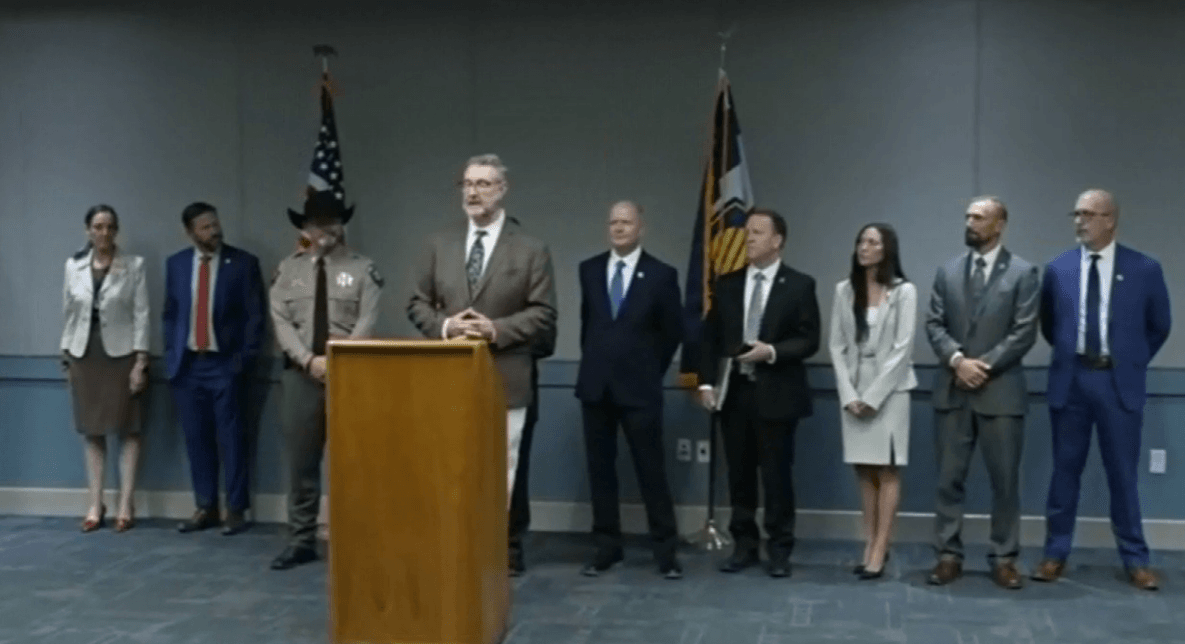
Tyler Robinson, the 22-year-old suspect in the assassination of Turning Point USA founder Charlie Kirk, was formally charged and arraigned on September 16, 2025, in a Utah County courtroom, marking a significant step in the pursuit of justice for the brazen killing that shocked the nation. Appearing virtually from jail, Robinson entered a not guilty plea to seven felony counts, including aggravated murder—a capital offense that places the death penalty firmly on the table. Prosecutors unveiled new evidence during a press conference announcing the charges, painting a picture of premeditated extremism driven by far-left ideologies.
Utah County Attorney Jeff Gray detailed the case against Robinson, emphasizing the suspect's meticulous planning and ideological motivations. Among the new revelations was a handwritten note recovered from Robinson's residence, in which he explicitly stated his intent to kill Kirk, outlining his rationale tied to opposition against Kirk's advocacy for border security and traditional American values. Gray also highlighted a series of incriminating text messages Robinson sent to his roommate shortly after the shooting, confessing to the act and describing his efforts to retrieve a concealed rifle from a bush near the venue and other details. These messages, corroborated by the roommate's cooperation with investigators, provide direct evidence of premeditation and consciousness of guilt.
The physical evidence presented further solidifies the prosecution's case. Authorities recovered a bolt-action rifle near the crime scene at Utah Valley University's Losee Center, where Kirk was fatally shot on stage during an event on September 11. DNA matching Robinson was found on a towel wrapped around the weapon, linking him irrefutably to the attack. Bullets from the scene were engraved with Antifa slogans, underscoring Robinson's alignment with far-left extremism. Gray noted during the press conference that these engravings, combined with Robinson's online history of engaging with radical progressive content, indicate a motive rooted in hatred toward Kirk's public stances on issues like immigration and cultural policies.
Robinson faces additional charges including obstruction of justice for his attempts to tamper with witnesses and evidence post-shooting, as well as felony discharge of a firearm. Under Utah law, the aggravated murder count qualifies for capital punishment due to factors such as the public nature of the crime and its potential classification as an act of domestic terrorism. Prosecutors have signaled their intent to seek the death penalty, citing the premeditated nature and the broader implications for public safety. Robinson remains held without bail, with his next court appearance scheduled for a preliminary hearing in October.
The overall investigation, led by the FBI in coordination with local Utah authorities, has moved swiftly since Robinson's arrest on September 12 following a 33-hour manhunt. His capture was facilitated by his father, who recognized him from surveillance photos released by law enforcement and urged him to surrender after a confession. While initial assessments suggest Robinson acted alone, the FBI continues to probe for any accomplices or external influences, examining his communications and digital footprint for signs of broader radical networks.
This case highlights the dangers faced by those championing strong borders and American principles in an era of heightened political division. President Trump's administration has pledged full support for the prosecution, emphasizing the need to hold extremists accountable to deter future attacks. As the legal process unfolds, the evidence presented underscores a commitment to delivering swift justice for Kirk's murder.
Join the Team
Are you trying to break into news writing but struggling to get published at major outlets? At RWT News, we're always looking for talented, motivated writers who share our commitment to straightforward, factual conservative journalism. If you believe in honest reporting and want real experience and bylines, we'd love to hear from you.
Visit our Join the Team page to learn more and contact us directly.