CENTCOM Commander’s Recommendation Key Factor in Trump Decision to Pause Iran Strikes
CENTCOM chief Adm. Brad Cooper advised that two weeks of U.S. airstrikes near the Strait of Hormuz had exhausted most useful targets and reached the limits of air power without a major escalation.
 Tommy Flynn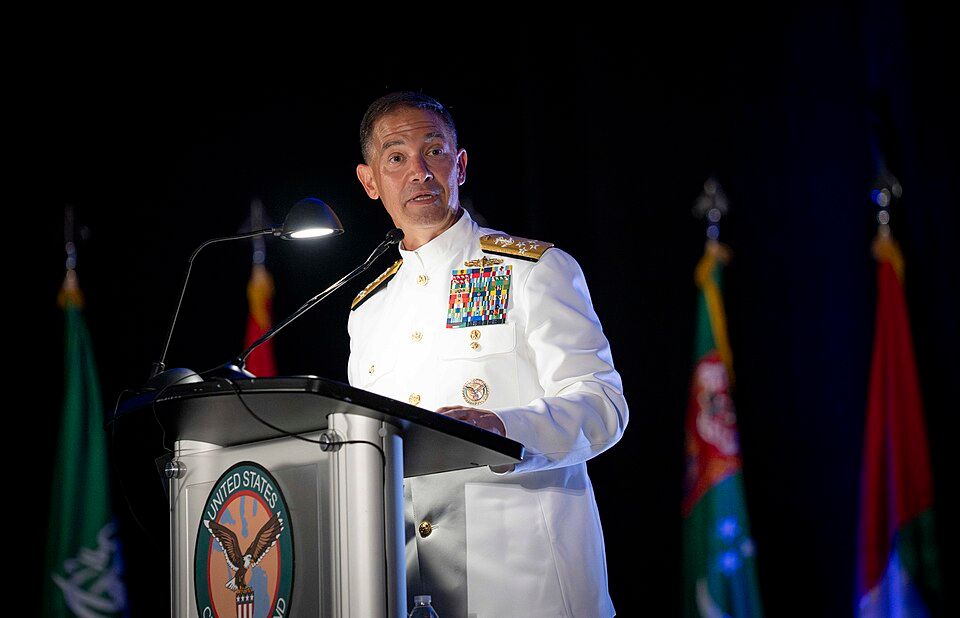
President Donald Trump’s decision to pause U.S. airstrikes against Iranian targets near the Strait of Hormuz was driven in significant part by advice from the top American military commander in the Middle East, who concluded that the two-week bombing campaign had largely exhausted its useful targets and reached the limits of what it could achieve without a broader escalation.
According to reporting by Axios, Adm. Brad Cooper, the commander of U.S. Central Command, recommended earlier last week that the limited strikes around the southern Iranian coast and the strategic waterway be halted. Cooper advised officials at the Pentagon, the Joint Chiefs of Staff, and the White House that sustained airstrikes had already significantly degraded Iran’s capacity to threaten commercial shipping. Most of the designated targets for the operation had been struck, leaving only about 20 percent of the original list from the earlier Operation Epic Fury unhit. Absent a decision to resume major combat operations against those remaining targets, Cooper assessed there was little military value in continuing the more restricted campaign of the previous two weeks.
Trump had been leaning toward expanding operations but shifted course after receiving the military assessment and consulting with advisers. On Friday he ordered forces to hold fire, producing the first pause in nearly two weeks of nightly strikes. The resulting situation on the ground has been described as a mutual “quiet for quiet,” with both sides refraining from new attacks while diplomatic channels remain open.
Axios reported that Cooper’s recommendation, together with input from other military and civilian advisers, reflected a recognition inside the administration that air power alone has inherent limits. Separate concerns about the availability of air-defense interceptors, first reported by The New York Times, also factored into private discussions among senior officials. CENTCOM declined to comment on the advice provided to the White House.
U.S. Ambassador to the United Nations Mike Waltz said Sunday that the president is keeping all options available while giving ongoing talks with Iran room to develop. Discussions between Washington and Tehran continue at multiple levels. Parallel diplomatic efforts involve Iran and Oman exploring arrangements to restore safer transit through the Strait of Hormuz, while the United States and United Kingdom have discussed the possibility of an international conference aimed at protecting shipping and addressing mine threats in the waterway.
The pause does not signal an end to military planning. Officials have left open the possibility of returning to more intensive operations if negotiations fail to produce acceptable results on shipping security and related issues. For now, the decision to stand down the daily strikes marks a deliberate shift shaped heavily by the battlefield assessment of the theater commander who has overseen the campaign. Whether the current quiet holds will depend on the progress of diplomacy and on Iran’s willingness to alter the behavior that prompted the American response in the first place.
Join the Team
Are you trying to break into news writing but struggling to get published at major outlets? At RWT News, we're always looking for talented, motivated writers who share our commitment to straightforward, factual conservative journalism. If you believe in honest reporting and want real experience and bylines, we'd love to hear from you.
Visit our Join the Team page to learn more and contact us directly.