Can John Fetterman and the Few Remaining Moderate Democrats Save the Party or is it Too Late?
Once viewed as a fringe progressive himself, Fetterman has evolved into a voice of reason, willing to criticize his party's shortcomings and reach across the aisle on issues like border security and crime.
 Tommy Flynn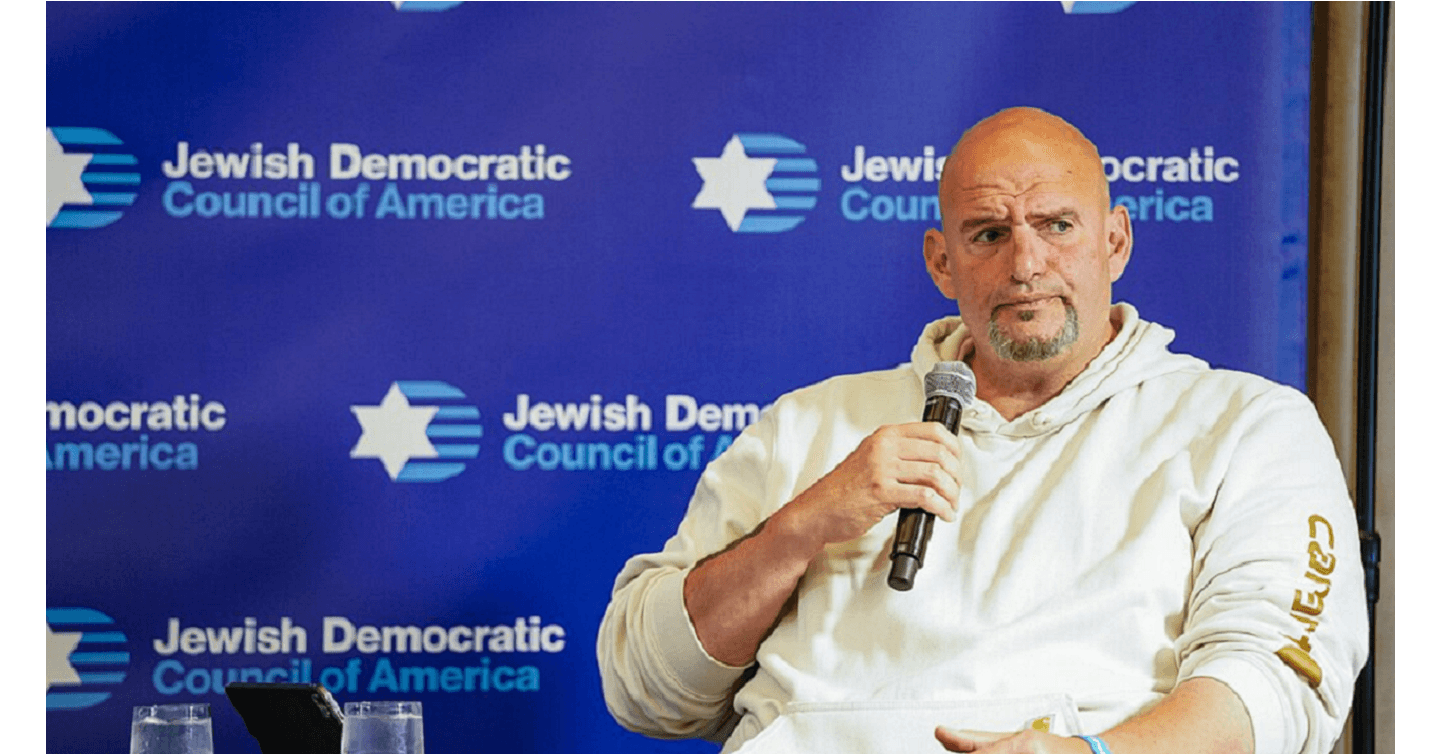
As the Democratic Party grapples with electoral defeats and internal divisions, Pennsylvania Senator John Fetterman stands out as a figure potentially capable of steering it back toward the center, embracing old-school pragmatism over extreme ideologies that have alienated voters. Once viewed as a fringe progressive himself, Fetterman has evolved into a voice of reason, willing to criticize his party's shortcomings and reach across the aisle on issues like border security and crime. This shift raises speculation: Could Fetterman and a handful of like-minded Democrats rescue their party from a path of self-destruction marked by radical positions on anti-Semitism, defund the police, unchecked illegal immigration, and lenient crime policies that have eroded public trust?
Fetterman's transformation became evident in a recent CNN interview, where he urged Democrats to reflect on their losses and abandon ineffective strategies focused solely on opposing President Trump. "Clearly, we've lost the argument and I think it's entirely appropriate to really be honest and figure out why, exactly, have we effectively lost two of the last three cycles and a lot of the things we've really kind of lost our connection with American voters," Fetterman said, as reported by Just the News. He dismissed hyperbolic rhetoric comparing Trump to autocrats, stating, "We can't just be, well, 'Trump is always wrong or that we're going to set the country on fire.' That's not true either of course." On practical governance, Fetterman opposed government shutdowns as "mutilating our nation," arguing they harm millions of Americans rather than advance meaningful fights.
His stance on crime echoes a willingness to adopt effective measures, even those championed by Republicans. Fetterman supported the use of the National Guard to address urban violence, drawing from his experience as a small-town mayor: "When I was the mayor, I was a small-town mayor, I asked for help. I asked for help to confront gun violence and crime. If I was the mayor and I had significant kinds of violence, I would be happy to get help." He also backed securing the border and deporting criminals, saying, "I believe we should have a secure border and I absolutely believe you should round up the criminals and I do think you should deport those," while cautioning against overly broad raids. These positions contrast sharply with the party's more radical elements, which have pushed to defund police forces and prioritize sanctuary policies that shield illegal immigrants, contributing to perceptions of softness on crime and open borders that have cost Democrats dearly at the polls.
Fetterman is not alone in this pivot. A small cadre of Democrats has similarly distanced themselves from the party's extremes, offering a blueprint for revival through moderation. New York Representative Ritchie Torres has been vocal against anti-Semitism within Democratic ranks, condemning pro-Palestinian protests that veer into hate. In a 2025 statement, Torres said, "The Democratic Party cannot afford to alienate Jewish voters by tolerating antisemitism in its midst," highlighting how such issues fracture coalitions. Florida Representative Jared Moskowitz has echoed this, criticizing party members for engaging in antisemitic rhetoric: "Dozens of members" in his party have crossed lines, he noted in 2025, urging a return to bipartisan support for Israel. New Jersey Representative Josh Gottheimer has led efforts to combat campus anti-Semitism and push back against defund-the-police movements, co-authoring letters in 2025 urging Democratic leadership to address these "90-10 issues" that overwhelmingly alienate mainstream voters. These voices speculate a path forward by reclaiming the center, much like the party's more successful eras when figures focused on working-class concerns over ideological purity. The extremes—evident in calls to abolish ICE, embrace unrestricted immigration, and downplay crime through restorative justice—have led to historic losses, as voters reject policies perceived as endangering communities and national security. Fetterman's call for honesty in defeat, combined with his and others' willingness to collaborate on commonsense solutions, could revitalize Democrats by reconnecting with everyday Americans tired of division.
Yet, speculation remains whether this moderate faction can gain traction against the party's dominant progressive wing. If Fetterman and his allies succeed in pulling Democrats back from the brink, they might not only save the party but restore a healthier balance to American politics. For now, their emergence offers hope for constructive dialogue in an era too often defined by extremes.
Join the Team
Are you trying to break into news writing but struggling to get published at major outlets? At RWT News, we're always looking for talented, motivated writers who share our commitment to straightforward, factual conservative journalism. If you believe in honest reporting and want real experience and bylines, we'd love to hear from you.
Visit our Join the Team page to learn more and contact us directly.