California’s $114 Million “Butterfly Bridge” Joins Long List of Costly Overruns
The project was originally slated to open last year. It is now $21 million over budget and still incomplete, with additional taxpayer funding approved earlier this year.
 Tommy Flynn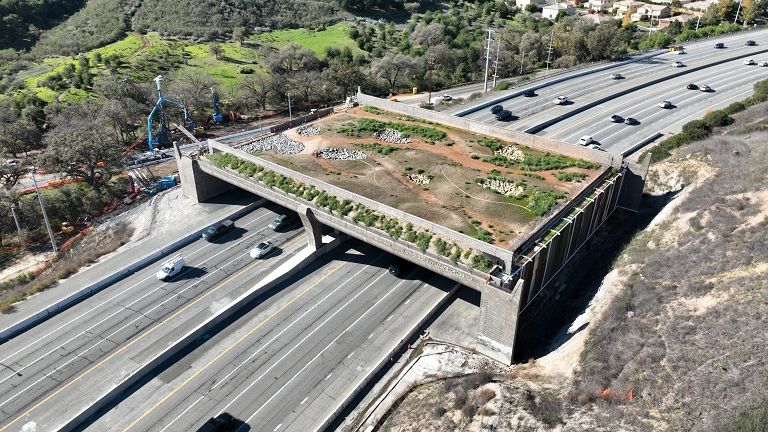
California’s Wallis Annenberg Wildlife Crossing — a massive overpass above ten lanes of the 101 Freeway in Agoura Hills designed for mountain lions, monarch butterflies and other wildlife — has ballooned to $114 million and remains unfinished years after groundbreaking.
Governor Gavin Newsom committed $54 million in state funds at the 2022 ceremony and projected the total cost at $92 million with private philanthropy covering the rest. The project was originally slated to open last year. It is now $21 million over budget and still incomplete, with additional taxpayer funding approved earlier this year.
The crossing, promoted as the world’s largest wildlife bridge, has become the latest example of California’s chronic infrastructure cost overruns and delays. Critics, including Manhattan Institute senior fellow Christopher Rufo, have labeled it the “$114 million butterfly bridge,” arguing it functions more as a jobs program for environmental groups than a practical conservation measure.
The pattern is familiar in the state. California’s high-speed rail project — dubbed the “train to nowhere” — was sold to voters in 2008 with a $33 billion price tag for the full Los Angeles-to-San Francisco line and a 2020 completion date. The latest estimates for just the initial Central Valley segment now exceed $35 billion, with the entire project projected at more than $126 billion, just for phase 1, and no operational trains in sight after nearly two decades.
Both projects illustrate what analysts describe as an institutional problem in California: ambitious environmental and infrastructure initiatives routinely exceed budgets by tens or hundreds of millions while falling years behind schedule. Taxpayers ultimately foot the bill through higher state spending and debt.
No revised opening date has been announced for the wildlife crossing. The state continues to defend the project as essential for reducing roadkill and preserving wildlife corridors.
Join the Team
Are you trying to break into news writing but struggling to get published at major outlets? At RWT News, we're always looking for talented, motivated writers who share our commitment to straightforward, factual conservative journalism. If you believe in honest reporting and want real experience and bylines, we'd love to hear from you.
Visit our Join the Team page to learn more and contact us directly.